Dirty Static // The Verdict
Use dreaming if your Claude agent runs for weeks and keeps tripping on the same errors, and you can get research preview access. The idea is sound and the test gains are large, but every result so far comes from Anthropic, the cost depends on how often you run it, and a wiki can grow until it helps nothing.
Best forTeams building long running agents on Claude Managed Agents who need memory that stays accurate between sessions, and who will review what a dream changes before trusting it
What works
- Dreaming checks notes against the original transcripts, so a wrong note can be caught and rewritten instead of being trusted by every later session
- In Anthropic tests, memory lifted scores on a continual learning database task for every model tested, with the largest gains on older models that used memory poorly on their own
- A dream leaves the input memory store untouched and writes a new store, so a team can inspect the result and discard a bad reorganisation
- The same pass can build linked wikis, repair broken links between pages, and keep the small layer that loads into every session small
What does not
- Every performance figure published so far comes from Anthropic tests, including a game run with one run per model and a wiki test on documents from a company Anthropic owns
- Access is a research preview on Claude Managed Agents by request, not a switch in the consumer Claude app, and the platform docs say dreams are not eligible for zero data retention or HIPAA cover
- Dreaming costs compute at standard token rates for the model you choose, and Anthropic gives no rule for how often a dream is worth its cost
- More memory is not always better in Anthropic own tests: one wiki grew larger than its source documents and gave no clear gain over plain search
Research review: based on published testing, specifications, and documentation, not hands on testing.
A wrong note is a quiet kind of failure. Claude writes down that a building sits on the east side of a mountain. The note is wrong. Every later session reads it, trusts it, and walks off the same ledge, three times in a row in one test Anthropic ran inside a game of Pokémon Red.
Dreaming is Anthropic answer to that failure. Between sessions, while the agent is idle, Claude goes back over its transcripts, compares them with the notes it saved, and rewrites the notes that do not match what actually happened. Anthropic published the full account on November 6, 2026, in an engineering post by Lance Martin called The components of agent memory. This review tests that account against the platform documentation for the Dreams API and against the limits Anthropic itself states in the post.
What It Is
Agent memory, in Anthropic definition, is knowledge Claude gains from experience and keeps between sessions as context it can read later. The definition is narrow on purpose. It does not cover training, where the model weights change. It does not cover learning inside one conversation, and it does not cover compaction, the summaries that replace older turns inside a single session.
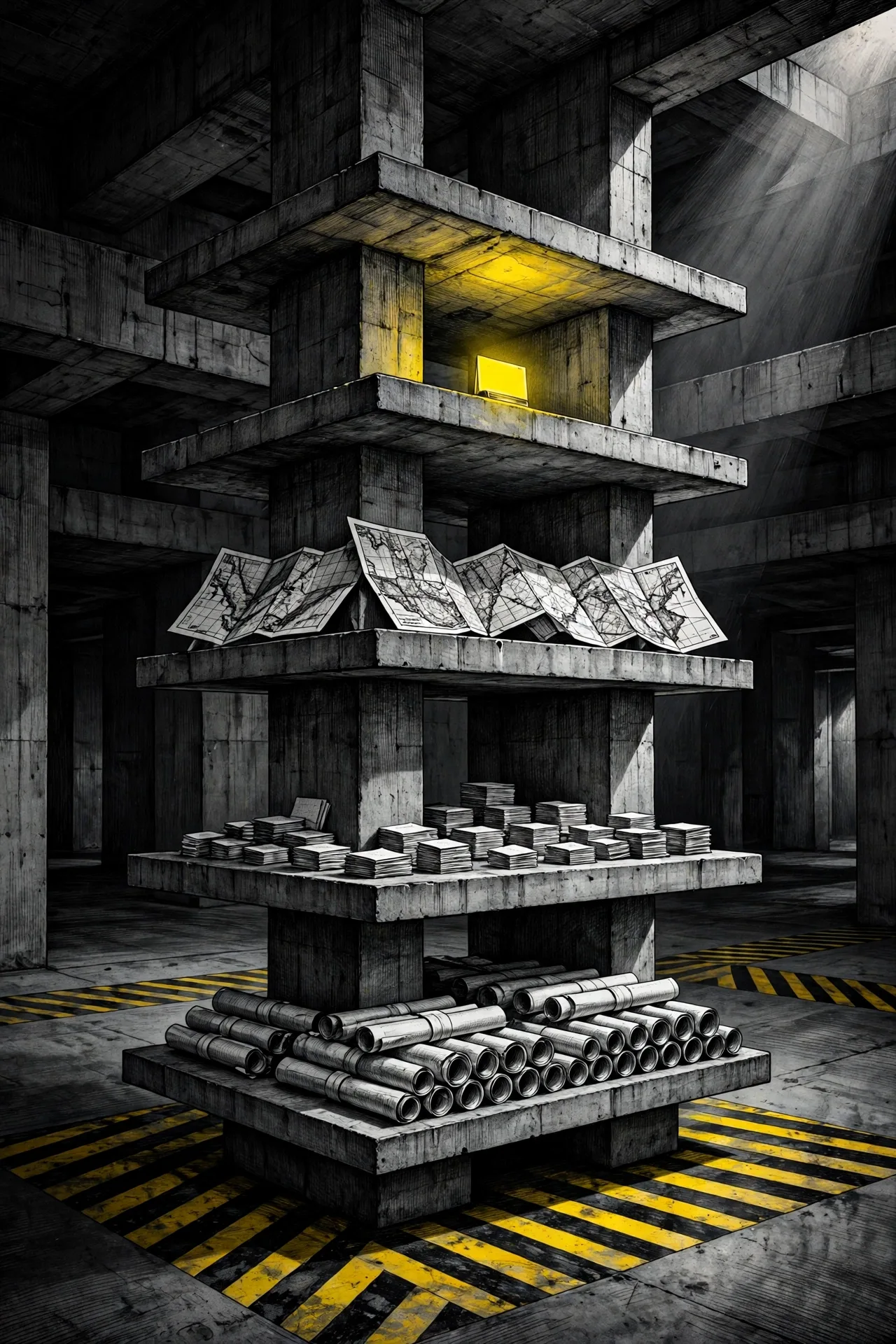
Anthropic describes four layers. Transcripts sit at the bottom: a searchable log of what was said and done. Above them sit memory notes, the lessons and rules Claude writes for itself while it works. Above those sit representations, organised structures such as a wiki of linked pages. At the top sits injected context, a small set of notes loaded at the start of every session whether Claude goes looking for them or not.
Dreaming is the pass that moves between those layers. The idea builds on sleep time compute, a proposal from researchers at Letta and UC Berkeley to use idle time between interactions to reorganise context a model already has. Anthropic first introduced dreaming as a research preview for Claude Managed Agents on May 6, 2026, at its Code with Claude conference. The November post is the research account behind that feature, not a new product launch.
Features and Specifications
The product shape matters because it decides who can use this and who cannot. A dream is not a setting inside a chat. It is an API job on Claude Managed Agents, the hosted service where developers run agents built on Claude. A team passes in a memory store and a list of past sessions. The job runs in the background, usually minutes to a few hours per the documentation summaries, and returns a brand new memory store.
Specifications
- Maker
- Anthropic
- Announced
- May 6, 2026, as a research preview for Claude Managed Agents
- Explained
- November 6, 2026, in The components of agent memory, by Lance Martin
- Type
- Offline memory consolidation between sessions; no change to model weights
- Inputs
- One existing memory store and 1 to 100 past sessions
- Output
- A new reorganised memory store; the input store is left untouched
- Work done
- Correct notes against transcripts, merge duplicates, replace stale entries, build or repair wikis, promote or demote notes in the memory hierarchy
- Billing
- Standard API token rates for the model selected; no separate dreaming fee stated
- Access
- Research preview, by request, on the Claude Platform only
- Limits in the docs
- Dreams are not eligible for zero data retention or HIPAA cover during the preview
Two design choices stand out. First, the output is a new store, never an edit in place. That makes a dream reviewable. A team can diff the result, reject it, and keep the old memory, which is the right shape for a process that rewrites what an agent believes.
Second, Anthropic best design rule is about restraint. In the post, the team says it helps to tell Claude what memory is for, but not how to use it. When Anthropic imposed a fixed rule on stronger models, such as a rule to record only failures, the gain from memory fell sharply. The system works best when the model judges for itself what is worth keeping, and dreaming then audits those judgments later, with the transcript open beside the notes.
Real World Experience
This is a research review. Dirty Static has not run the Dreams API, holds no preview access, and claims no hands on testing. What follows draws on Anthropic engineering post, the Dreams documentation as published, and independent coverage of both the May launch and the November post.
The strongest evidence is the database task from Continual Learning Bench 1.0. Claude started each question in a fresh session and could carry only a memory directory forward. After each answer it was told the correct solution and could write a note for next time. Memory helped every model Anthropic listed, and it helped weakest users of memory most. Opus 5 was the first model in the test to close the full loop on its own: its notes carried a rule, how it knew the rule was true, and warnings about traps it had found.
Mean reward with memory on the Continual Learning Bench database task
Mean reward scores, higher is better, from the figure in Anthropic November 6, 2026 post, checked November 9, 2026. Stateless scores for the same models ran from 0.330 to 0.655. All figures are Anthropic results.
The Pokémon test shows the failure dreaming exists to fix, and also the limit of the evidence. Claude used a landmark note that placed the PokéCenter on the wrong side of Mt. Moon, announced the cave was behind it, and dropped off a one way ledge back to the route it came from. It did that three times, then wrote that it would stop rather than keep looping. A dreaming pass checked the note against the transcript, caught the error, and rewrote it. With the corrected note, Claude went back through the cave and reached Cerulean City. One repaired note in one run proves the mechanism works. It does not tell you how often dreaming catches errors, or how often it writes a fresh one.
The wiki test is the largest and the easiest to oversell. Anthropic gave Opus 5 agents a corpus of about 350,000 internal files, roughly 420 million tokens, from Stainless, a software company Anthropic says it acquired in May. Over as many as 128 dreaming sessions, agents built a linked wiki from those files. On 25 questions, answers drawn from the wiki alone rose from 13 percent of graded criteria at two sessions to 48 percent at 128 sessions. Wiki plus search reached 61 percent, against 53 percent for search alone, and saved about 20,000 tokens per question.
Read those numbers with the source in view. The corpus belongs to a company Anthropic owns, the questions were written by Anthropic, and no outside team has repeated the test. One customer figure from the May launch needs the same care: Anthropic reported that legal technology company Harvey saw task completion rates rise about six times in its internal testing after enabling dreaming. Harvey has not published a baseline or a method alongside that figure, so it is a directional claim from an early customer, not a benchmark.
For a contrast in approach, our review of Perplexity Teammates covered agents that keep a standing job for weeks inside a hosted product, while our Hermes setup guide covers an agent that keeps its memory in a folder on your own machine. Dreaming sits between those poles: hosted, API driven, and focused on cleaning memory rather than on the job itself.
What Works
The correction loop is the real advance. A note is a prediction about what a future session will need, and predictions go wrong. Giving the agent a scheduled pass that tests its notes against the ground truth of its own transcripts is a simple idea with a clear payoff, and the Pokémon case shows the payoff in its cleanest form: one fixed fact unblocked a task that repetition alone could not.
The discipline about size is just as valuable. Anthropic is blunt that the top layer of memory must stay small, because an injected note spends tokens in every session and a wrong injected note poisons every session. Claude Code auto memory follows the same rule in a product readers can inspect today: only the first 200 lines or 25 KB of the MEMORY.md index load at the start, per Anthropic post. Dreaming does the unglamorous work of moving detail down the hierarchy and leaving a link behind.
The repair work generalises beyond single notes. In one wiki task, a second dreaming pass found nine links that pointed at a page that did not exist, repointed them to the right page, and added three new pages including an index. In a contracts task, a reflection loop rewrote the build instructions so each contract got its own page with terms quoted rather than summarised into a shared table. The graded brief then met 100 percent of its criteria, up from 72 percent. That is dreaming improving its own instructions, not just its notes.
What Does Not
Start with provenance. Every number in this review traces back to Anthropic: its benchmark figures, its game runs, its wiki test, and the Harvey figure it reported at launch. That does not make the numbers false. It does mean there is no independent check on any of them yet, and the game comparison rests on one run per model, a limit Anthropic states in its own text.
Next, the wiki can fail by succeeding too well. On one legal benchmark task, the wiki grew larger than the documents it summarised and showed no clear gain over search. Anthropic reaches for the Borges story about a map drawn at the same scale as the empire, and the comparison is fair. A representation that copies everything abstracts nothing, and maintaining it still burns compute on every dream.
Access is the practical limit today. This is a research preview on one hosted platform, gated by a request, with data cover exclusions that will rule it out for some regulated work. Developers who build on the plain API, or who run agents on their own machines, get the research and the cookbooks Anthropic points to, not the managed feature. And a dream that runs for hours in the background cannot help an agent that needed the corrected note ten minutes ago. Offline maintenance and live work will always trade against each other.
There is also a trust question Anthropic leaves open. Dreaming can promote a note into the layer that loads into every session. If a dream promotes a wrong note, or writes one, the error spreads further than the note it replaced. The new store design lets a team review the change first, but a team that stops reviewing, because the dreams usually look fine, has built a quiet way to teach its agent a false fact at scale.
Competition
Dreaming competes less with other products than with simpler habits a team can adopt today. Anthropic own tests supply most of the comparison, which is itself part of the verdict on the evidence.
| Option | What it does | The trade |
|---|---|---|
| Dreaming on Managed Agents | Offline pass that corrects notes, merges duplicates, builds wikis and curates what loads each session | The fullest maintenance, gated to a research preview on one platform and billed per token |
| Transcript search alone | Later sessions search the raw log when they need a fact | Scored 53 percent on Anthropic wiki questions against 61 percent for search plus wiki, and spends about 20,000 more tokens per question in that test |
| Wiki plus search, built by dreaming | A linked map over the corpus that later sessions navigate before searching | Best scores in Anthropic tests, at the cost of up to 128 sessions of building and upkeep, with no gain on some tasks |
| Claude Code auto memory | Memory maintained during the session, with a small index loaded each time | Available in a shipping product and simple to inspect, but it lacks the offline audit against full transcripts that defines dreaming |
| Build your own pass from the cookbooks | Your prompts, your models and your schedule run the same idea on your own stack | Full control of cost and data, and full responsibility for the prompts, checks and failure modes Anthropic has already hit |
The honest summary is that search remains the foundation, as Anthropic itself says when it floats transcript search as the base of the whole system. Dreaming earns its place on top of that foundation when memory is large, long lived and reused often enough that stale notes cost more than the dreams that fix them.
Final Verdict
Request access if your agents already live on Claude Managed Agents, run for weeks, and fail in repeatable ways that better notes would prevent. Start with the review step switched on, read the first few output stores in full, and measure task success before and after on your own work. That is the test Anthropic numbers cannot run for you.
Wait if your agent is short lived, your memory is small enough to read yourself, or your data cannot sit inside a preview feature without zero data retention cover. For you, the post itself is the useful product today: keep transcripts as ground truth, keep the always loaded layer small, tell the model what memory is for and not how to use it, and schedule your own audit pass with the cookbooks as a starting point. Dreaming is a good idea, carefully evidenced by its maker and not yet evidenced by anyone else. Treat it exactly that way and it will probably help. Treat the headline numbers as settled fact and you have missed the point of a system built to distrust its own notes.
Sources
- Anthropic: The components of agent memory
- Claude Platform Docs: Dreams
- explainx.ai: Agent Memory: Anthropic Dreaming Tests, 13% to 48%
- AgentsPulse: Claude Dreaming: How Anthropic Dreams Fixes Agent Memory
- Crypto Briefing: Anthropic gives Claude agents a dreaming mode to tidy up their memories
- Images: Hero, layers and wiki illustrations are generated Dirty Static house style artwork.
END OF TRANSMISSION
Stay curious. Question everything.