
Dirty Static // The Verdict
The clearest pitch yet for an agent that owns a job, gated to a $200 plan with a credit meter that decides the real price.
Best forMax subscribers with one bounded recurring job in Slack, GitHub or Gmail who will cap credits and review output before widening scope
What works
- A standing role with memory between runs, so each task builds on goals, history and shared files from the last one
- Each teammate gets its own isolated computer and browser, can start parallel agents, and can hand work to other teammates
- Proactive monitoring of connected tools such as Slack, GitHub and Linear, with approval requests sent where the team already works
- Model choice per teammate, with Claude Opus 5.5 as the default for new teammates per Perplexity
What does not
- Research preview for individual Max subscribers on the web only at launch, with Enterprise accounts not included by default
- Max costs $200 a month and teammates draw on the same 10,000 monthly Computer credits, with parallel work burning credits faster
- No published limit on teammate count and no typical consumption figure from Perplexity, so budgeting starts as guesswork
- No hands on independent testing at launch in the sources checked, so every workflow example so far is a company example
Research review: based on published testing, specifications, and documentation, not hands on testing.
Most agents finish a task and forget you. Perplexity Teammates does the opposite pitch. You give it a job that lasts for weeks, such as tracking a pipeline, triaging bug reports or researching a market, and it keeps that job, watches the tools you connect, and brings work back for review when something changes.
Perplexity launched Teammates on November 5, 2026 as a research preview. That label matters. This is a new layer on top of Perplexity Computer, the agent system Perplexity launched in February 2026. Computer runs a single project to completion. A teammate stays on the project after that first delivery.
What It Is
A teammate starts with a responsibility, not a prompt. In the help center, Perplexity puts it plainly: give a teammate a job such as triaging bug reports, tracking your metrics or researching a market, and it plans the tasks and follows through until the result is ready for your review.
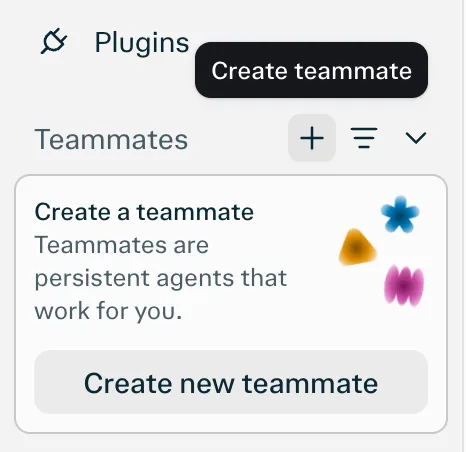
You name the teammate for the work it should own. You connect the tools it needs, describe where work comes from, what it should deliver and when it should act, and you assign it to a Project. A Project is the shared space in Computer that holds files, goals and instructions. Teammates in the same Project share that context while keeping their own roles.
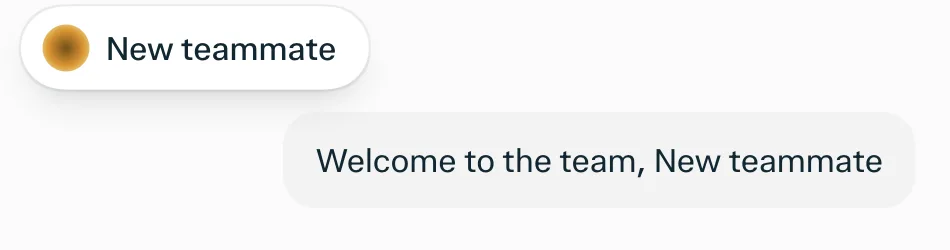
Each teammate also gets its own thread in the sidebar. You can hand it more work there, ask for a status update, redirect it mid task, or take over its desktop when it gets stuck. That thread is the audit trail for a worker that is meant to act when you are not watching.
Features and Specifications
The feature list reads like a job description for a junior operator who never sleeps. Read it with that frame, and the gaps stand out as clearly as the strengths.
Specifications
- Product
- Perplexity Teammates, inside Perplexity Computer
- Maker
- Perplexity
- Launched
- November 5, 2026, research preview
- Access
- Individual Max subscribers on the web; Enterprise Pro and Enterprise Max not included by default
- Platforms
- Web at launch, iOS soon per Perplexity
- Default model
- Claude Opus 5.5 for new teammates, changeable per teammate and per task
- Environment
- One isolated computer and browser per teammate, with sessions and cookies kept separate
- Memory
- Project goals, task history and shared files persist between runs
| Capability | What Perplexity documents |
|---|---|
| Planning | Breaks a goal into tasks, runs tasks in parallel across agents, adds agents as work grows |
| Monitoring | Watches connected tools such as Slack, GitHub and Linear, starts work when something arrives and follows up |
| Tools | Uses Connectors, files and code from Computer, plus plugins such as Slack, GitHub and Gmail |
| Working with others | Can pass work to other teammates in the same Project and can be tagged as an app in Slack, GitHub and Linear |
| Oversight | Shows work in its thread, sends progress updates and approval requests, lets you take over the desktop or redirect it |
| Security | Saved credentials are encrypted and entered securely, and teammates cannot view them per Perplexity |
Pricing has two layers, and the second layer is the one to watch. Max is the entry ticket. Credits are the meter inside.
| Item | Figure, checked November 8, 2026 |
|---|---|
| Max, monthly billing | $200 a month |
| Max, annual billing | $2,000 a year, about $167 a month |
| Computer credits included with Max | 10,000 credits a month, per Perplexity credit reporting cited in coverage |
| Credit value | 100 credits equal $1, per Perplexity credit reporting cited in coverage |
| Extra credits | Bought at the same rate, with spending controls on the Usage page |
Perplexity also offers a short launch promotion with free teammate use before standard credits apply, per launch coverage. The size and end date of that grant were not specified in the sources checked. Treat the promo as a trial window, not as the price.
Reference values Perplexity publishes for Computer task types show why a standing agent needs a budget. A quick fact costs far less than a report, and a report costs far less than a build.
| Task type, Perplexity reference values as reported November 2026 | Credits | Rough dollar value |
|---|---|---|
| Quick fact or definition | 15 to 70 | $0.15 to $0.70 |
| Research report with several steps | 350 to 950 | $3.50 to $9.50 |
| Data dashboard | 2,400 to 9,800 | $24 to $98 |
| Full app or build over several days | 15,000 or more | $150 or more |
Run the daily maths on a simple example. A teammate that sums up one Slack channel each weekday does about 22 runs a month. At research report size, that one habit alone could pass the full monthly credit pool. Perplexity warns in its own help center that complex projects use more credits, in particular when agents run in parallel, work with large files or run frequent automations. That warning is the most honest line in the launch.
Real World Experience
This is a research review. Dirty Static did not run hands on tests of Teammates for this article. What follows draws on Perplexity launch material, the Perplexity help center, and published coverage that names its sources. Company examples are labelled as company examples.
The strongest company examples share a shape. Work arrives on a rhythm, the right response is mostly known, and a human still approves the outward step.
In sales, Perplexity says a teammate notices when a regular customer stops buying. It reviews order history and support issues, works out what changed, then drafts an offer or flags a problem to fix before outreach. In operations, a teammate chases missing items when a deadline is 72 hours away. In support, a teammate reviews the complaints from the day before, sums up trends, flags cases that need a personal reply, and drafts those replies for review.
The feedback loop is the part worth testing first in real use. Tell an operations teammate that an agency needs two weeks of notice, and Perplexity says it factors that lead time into later schedules. If that memory holds in practice, the agent gets more useful the longer it owns a job. If it forgets or applies the rule in the wrong place, you get confident errors at scale. No independent test in the sources checked has stressed that claim yet.
Our recent Claude in Chrome and Cowork review made a similar point for Anthropic. The daily value of an agent is mundane work in signed in tools. The risk is also there, in access to accounts and files that matter. Teammates raises both sides of that trade because it acts without a fresh prompt each time.
The control set is sensible on paper. Each teammate runs in a separate environment. Browser sessions stay with that teammate. For GitHub, you choose which repositories it can reach. In Slack, you set the workspace, the channels and what it should monitor. Its own chat stays visible only to its owner, while shared chats are read only for others per the help center. Those controls help only if you set them narrow at the start.
What Works
The standing role is a genuine step past a chat session. Most agent products still make you restate context, restate rules and restate the goal each time. A teammate that keeps goals, history and files between runs removes that tax, and that tax is why a lot of agent use quietly dies after week one.
The isolated computer per teammate is the second strength. A teammate can work in sites that have no Connector, test a site from start to finish, and keep its own cookies and sessions apart from other teammates. You can watch, steer or take over that desktop. For work that lives in web tools, that is a more complete setup than an agent trapped inside a chat pane.
The third strength is where approval happens. A teammate can be added to a Slack channel, colleagues can hand it work there, and it can message coworkers in Slack when it needs a decision. Approval in the tool the team already reads beats approval buried in a product nobody opens.
What Does Not
Start with access. Free and Pro users get nothing here. You must hold individual Max, on the web, in a research preview. Enterprise accounts, the very accounts with the admin controls this kind of agent needs most, are not included by default. That is a launch that targets individuals with a team sized promise.
Next, the meter. Ten thousand credits sounds large until parallel agents and daily automations start drawing on the same pool. Perplexity has not published a typical monthly cost for one teammate doing one real job, and it has not published a maximum number of teammates per account. The vision quote from chief executive Aravind Srinivas, that every organisation could have hundreds of teammates for each person, is a vision statement in launch coverage, not a budgeted plan. At current credit rates, hundreds of active teammates would be a finance problem before it was a productivity win.
Last, the proof gap. Every workflow in the launch post is a company example. There are no published benchmarks for task success, no failure rates for proactive actions, and no independent review of how often a teammate stalls, invents a next step or needs a human rescue. For a product whose whole claim is trust over time, that missing record is the review. It can only be built by weeks of real use, and early buyers will build it at their own cost.
Competition
Teammates does not compete with chatbots. It competes with other agents that claim ongoing work inside tools teams already pay for.
| Rival | Form | Cheapest entry | Main contrast with Teammates |
|---|---|---|---|
| Perplexity Computer, single session | Agent workspace inside Perplexity | Included on paid plans that offer Computer, with Teammates itself Max only | Finishes a project and stops; no standing role or memory of ownership between projects |
| Claude Cowork, from Anthropic | Agent across files, folders and connected tools | Claude Pro at $20 a month | Far cheaper entry and strong on document work, but centred on work you start in Claude rather than a named agent that owns a role in Slack and GitHub |
| Microsoft Copilot Cowork | Agent inside Microsoft 365 | Microsoft 365 Copilot licence at $30 per user plus usage, per coverage | Lives where many firms already work, in Microsoft 365, with enterprise admin as the starting point rather than a later add on |
Teammates stands out on the mix, not on any single feature. A dedicated computer per agent, a standing role with memory, and handoffs between agents and into Slack in one product is a distinct bundle. Rivals match parts of it at lower prices or with stronger enterprise controls. None of the sources checked shows a rival matching the full bundle at launch, and none shows Teammates matching rival prices either.
Final Verdict
Try Teammates only if you already hold Max, or if one recurring job is worth $200 a month plus credits on its own. Pick that job with care. Good first jobs are narrow and easy to check: sum up yesterdays support complaints each morning, watch one repository for new issues and draft a cause and fix, or track one pipeline and draft follow ups for approval. Keep every outward action behind human approval for the first month.
Skip it if you are on Pro and hoping a single agent will justify a tenfold plan jump, if your work needs enterprise controls today, or if you cannot watch credit use each week. A standing agent with a meter is a budget line, not a novelty, and it should be managed like one.
The idea earns respect. Owning a job over weeks, remembering feedback and asking for help in Slack is the right shape for agent work that helps in real life. The launch earns caution for the same reason. Perplexity asks for wide access, a premium plan and open ended credit trust, while offering a research preview with company examples as the proof. Start small, cap the spend, measure three numbers after a month, tasks delivered right, times you had to step in, and credits burned, and let those numbers decide if a second teammate ever gets hired.
Sources
- Perplexity: Teammates are agents for complex, ongoing work
- Perplexity Help Center: Get started with Perplexity teammates
- Coverage: Perplexity Teammates take over a project for weeks, and here is what that colleague really costs
- Coverage: Perplexity Teammates: $200 AI Agents for Ongoing Work
- Product images: Perplexity Help Center, credited at each image. Hero image is a generated Dirty Static house style illustration.
END OF TRANSMISSION
Stay curious. Question everything.