Dirty Static // The Verdict
A fast and cheap 4K image model through the API, with strong reference handling on paper, but the downloadable weights carry a licence that bars the US, EU, UK and South Korea, and no independent quality ranking backs the launch claims yet.
Best forCreators and developers who can work through the hosted API, want 4K output and many reference images in one call, and do not need to run the weights under their own licence terms
What works
- Native output up to about 16 megapixels, with 4096 by 4096 at a square ratio and no separate upscaler step in the API guide
- One checkpoint handles generation from text and edits with 1 to 16 reference images
- API example prices are low, at 0.02179 dollars for a 1K picture and 0.06879 dollars at 4K before the launch discount
- MiniMax reports median 4K times of 16.0 seconds in Standard mode and 10.3 seconds in Highspeed mode
- Prompts can run to 32,000 characters, and the API returns the revised prompt it actually used
What does not
- The community licence for the weights excludes the United States, the European Union, the United Kingdom and South Korea
- Firms above 1 million dollars in yearly revenue, and anyone offering a hosted service, need written permission from MiniMax
- MiniMax published no benchmark table for image quality, and no independent ranking had placed the model in the coverage checked on November 15
- The API guide lists masked edits and transparent backgrounds as not supported
- Self hosting is heavy work, with a 33.1 billion parameter model and a package reported at 68.65 GB
Research review: based on published testing, specifications, and documentation, not hands on testing.
MiniMax wants the still image job back from the video team. H3 built its name on clips with sound. H3 Image, released on November 10, 2026, takes the same family name and points it at a single frame, at up to 4096 by 4096 pixels, with up to 16 reference images in the same call. The pitch is speed, size and references at once, at a price that undercuts most hosted rivals.
This review is based on published material only. Dirty Static did not run the model. The facts below come from the MiniMax API guide and pricing page, the model card on Hugging Face, the licence text, and outside coverage that read those same documents in November. Where a number is a MiniMax claim, the article says so.
What It Is
MiniMax-H3-Image is a still image model from MiniMax, the Shanghai lab behind the Hailuo app and the H3 video model. One checkpoint does two jobs. It creates a picture from a written prompt, and it edits pictures you supply, using a prompt plus 1 to 16 reference images.
The model card describes a diffusion transformer with 33.1 billion parameters, built from the H3 design with the audio parts removed. A diffusion model builds a picture by clearing noise in steps. MiniMax says this checkpoint was distilled down to 6 sampling steps and runs without a guidance pass that many other models still use. Fewer steps is the main reason the speed claims are plausible on paper. Plausible is still the right word until outside labs publish their own timings on their own hardware.
A second model, MiniMax-H3-Image-PE, expands short prompts into longer ones. The API applies prompt work by default for generation from text, and always for edits. It also returns the revised prompt for each picture, so a user can see what the model actually read, edit that text, and run it again with the expansion switched off. That is a small feature with real value. Most image tools hide that step.

Features and Specifications
| Area | MiniMax-H3-Image |
|---|---|
| Maker | MiniMax |
| Released | November 10, 2026 |
| Tasks | Generation from text, and editing with reference images |
| Parameters | 33.1 billion, per the model card |
| Sampling | 6 steps, no guidance pass, per the model card |
| Output area | 655,360 to 20,000,000 pixels |
| Ratio range | 1:3 to 3:1 |
| Pictures per request | 1 to 10 |
| Reference images | 1 to 16, each up to 64 MiB in the API guide |
| Prompt length | Up to 32,000 characters |
| Output formats | JPEG, PNG, WebP |
| Not supported | Masked edits, transparent backgrounds, preview images |
| Licence for weights | MiniMax-H3-Image Community License |
The size tiers need a plain reading. MiniMax calls its top tier 4K, and the guide defines that tier by area. At a square ratio the 4K tier gives 4096 by 4096 pixels, about 16.8 million pixels in total. At 16:9 it gives 5472 by 3072. At 21:9 it gives 6272 by 2688. The point for a buyer is that the model draws the full frame at that size in the API guide. It does not draw a small frame and stretch it later.
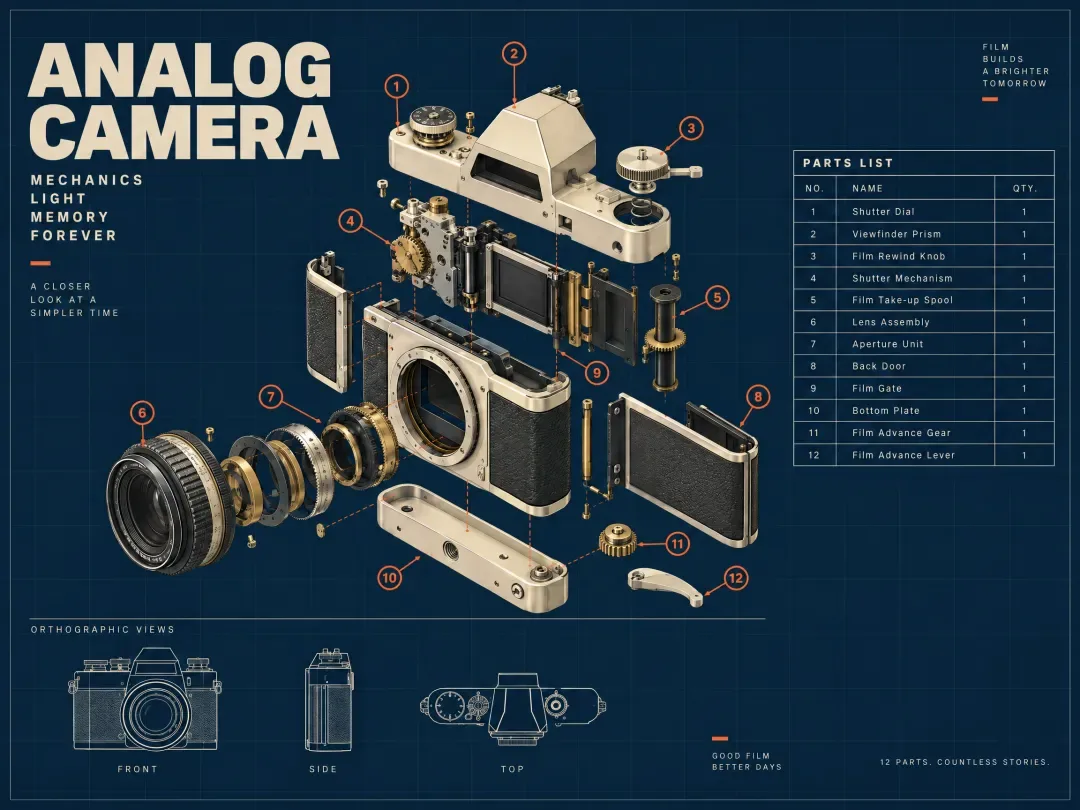
Reference handling is the other half of the pitch. MiniMax Design says each reference can carry a role, one for the subject, one for colour, one for layout. The worked examples lean on game art, product diagrams and rooms filled from cutout furniture pictures. Those are company examples, chosen to flatter the model. They still show the intended use clearly. This is a tool built for composed scenes with many inputs, not just for a lone prompt and a hope.
Real World Experience
This section is a research based discussion, not a test log. It draws on the API guide, the pricing page, the model card, the licence, and November coverage from outlets that read those documents closely.
Start with price, because the numbers are concrete and checked. MiniMax bills by tokens, then gives example totals per picture. For the Standard model, generation from text costs 0.02179 dollars at 1K, 0.02333 dollars at 2K, and 0.06879 dollars at 4K. An edit with one 1K reference costs 0.02654 dollars at 1K output and 0.07312 dollars at 4K. Until November 17, 2026 at 16:00 UTC, pictures with at least 16,600,000 pixels carry a 50 percent discount, which puts the 4K generation example at 0.03439 dollars.
Standard API example cost per picture, US dollars
Example totals from the MiniMax pricing page, checked November 15, 2026. The 4K bar shows the full price before the launch discount, which halves it until November 17.
Speed is a claim with a chart behind it, and the chart needs care. MiniMax reports a median 4K generation time of 16.0 seconds in Standard mode and 10.3 seconds in Highspeed mode. Its launch post says a 4K picture in under 10 seconds. Outside coverage noted a wrinkle in the comparison chart. MiniMax measured its own model again in a second round, while rival figures came from the first round. Read the times as a sign that the model is fast for its size, not as a settled league table. Highspeed also costs about twice as much per picture, at 0.13001 dollars for a 4K generation before the discount.
Quality is where the evidence runs thin. MiniMax calls the model strong on following instructions. The model card publishes no benchmark table to back that line, and coverage checked on November 15 found no independent ranking that had placed H3 Image yet. Sample pictures on MiniMax Design look polished, as launch samples always do. A review that graded picture quality from a vendor gallery would be grading the gallery, not the model. This one will not.
The licence is the part most launch coverage buried, and it changes the decision for many readers. The weights are public on Hugging Face. The community licence grants rights worldwide except in the European Union, the United Kingdom, South Korea and the United States. It also says that users above 1 million dollars in yearly revenue, and anyone who offers the model as a hosted service to others, need written permission from MiniMax. It bars using the model or its outputs to improve another AI model. A reader in Canada can weigh those terms on their merits. A reader in the United States is not being offered the weights at all under this licence, whatever the download button suggests.
That split explains the shape of this release. Through the API, H3 Image is a normal commercial product, priced low and ready now. As a download, it is a large model with a narrow grant, a 68.65 GB package reported in coverage of the model files, and a serving job that needs serious hardware through tools such as SGLang, vLLM, Diffusers or ComfyUI, which the launch coverage lists as supported paths. Most teams will rent the API long before they serve 33.1 billion parameters themselves.
What Works
The single checkpoint design is genuinely useful. Generation and editing often live in separate models, which forces a team to learn two tools and accept two sets of quirks. Here the same model takes a prompt alone or a prompt with references, and the API shape stays close to the OpenAI image shape that many tools already speak. Our coverage of ChatGPT Images 2.6 and its editing tools showed the same lesson from the other side. Editing is where image models earn repeat use.
The revised prompt return also works in the user favour. A tool that shows its working lets a creator fix the actual instruction instead of guessing at it. Add the long prompt limit, the wide ratio range and output in WebP as a native format, and the API reads like it was built by people who ship pictures for a living.
What Does Not
The missing evidence comes first. A model launched on quality claims, with no quality table and no outside ranking in its first week, asks buyers to trust the seller. MiniMax may be right about instruction following. On November 15, the public record did not prove it.
The gaps in the tool itself come second. No masked edits means no way to mark one region and leave the rest alone through the API guide as written. No transparent backgrounds means no clean cutouts for design work without a second tool. Those are common jobs, and rivals that cover them will keep that work.
The licence comes third, and for the weights it is not a footnote. Territory limits, a revenue line and a ban on training other models make this a community licence in name and a controlled licence in effect. Calling the release open weights is accurate about the files. It says nothing honest about the rights, and readers deserve both halves.
Competition
| Route | What you get | Price or terms in the sources checked |
|---|---|---|
| MiniMax-H3-Image, Standard API | Generation and editing, up to 4K area, 1 to 16 references | 0.02179 dollars at 1K, 0.06879 dollars at 4K, before the launch discount |
| MiniMax-H3-Image-Highspeed API | Same limits, faster reported times | 0.03529 dollars at 1K, 0.13001 dollars at 4K, before the launch discount |
| MiniMax-H3-Image weights | The 33.1 billion parameter checkpoint to serve yourself | Free to download, under a licence that excludes the US, EU, UK and South Korea, with written permission needed above 1 million dollars in yearly revenue or for hosted services |
| MiniMax image-01, legacy API | Earlier MiniMax image generation | 0.0035 dollars per image, per the pricing page |
The table stays inside the MiniMax family on purpose. Cross vendor quality claims would need a shared test, and none had been published for this model in the coverage checked. On price and limits alone, the Standard API is the sweet spot in its own house. Highspeed buys seconds at double money. The legacy model buys cheap drafts at far lower output sizes. The weights buy control only for teams whose territory and revenue keep them inside the licence.
Final Verdict
Use H3 Image through the Standard API if you need large pictures, many references or long briefs, and you want to learn what it can do for a few cents a frame. The price is low enough that your own prompts will teach you more in an afternoon than any launch chart can. That is the honest trial, and it is open now.
Think hard before building on the weights. Read the licence for your territory and your revenue first, and get permission in writing if the licence asks for it. A download that your licence does not cover is not a foundation for a product. For readers in the markets the licence excludes, the verdict is simpler still. The API is the product. The weights, for now, are a press release with a file attached.
This is a research review. It draws on the MiniMax API guide and pricing page, the Hugging Face model card and community licence, MiniMax Design, and November 2026 coverage that checked those documents. No hands on testing was performed. Facts checked November 15, 2026.
Sources
- MiniMax, Image Generation Guide, updated November 13, 2026. Endpoints, output sizes, ratios, formats, reference limits, prompt limits and the list of unsupported features.
- MiniMax, Pricing Overview, checked November 15, 2026. Token rates and example costs per picture for Standard and Highspeed, the launch discount terms, and the legacy image-01 price.
- MiniMax, MiniMax H3 Image in MiniMax Design, checked November 15, 2026. Reference roles, stated strengths in game art and concept work, prompt expansion and the sample pictures credited in this article.
- MiniMaxAI, model card and MiniMax-H3-Image Community License on Hugging Face, November 10, 2026. Parameter count, sampling steps, excluded territories, the revenue and hosted service permission rule, and the ban on improving other models.
- Neurohive, MiniMax H3-Image open model report, November 2026. Median API times of 16.0 seconds in Standard mode and 10.3 seconds in Highspeed mode, the second round measurement note, and the absence of published quality metrics.
- Product images: MiniMax via MiniMax Design, credited at each figure. Hero image: Dirty Static.
END OF TRANSMISSION
Stay curious. Question everything.