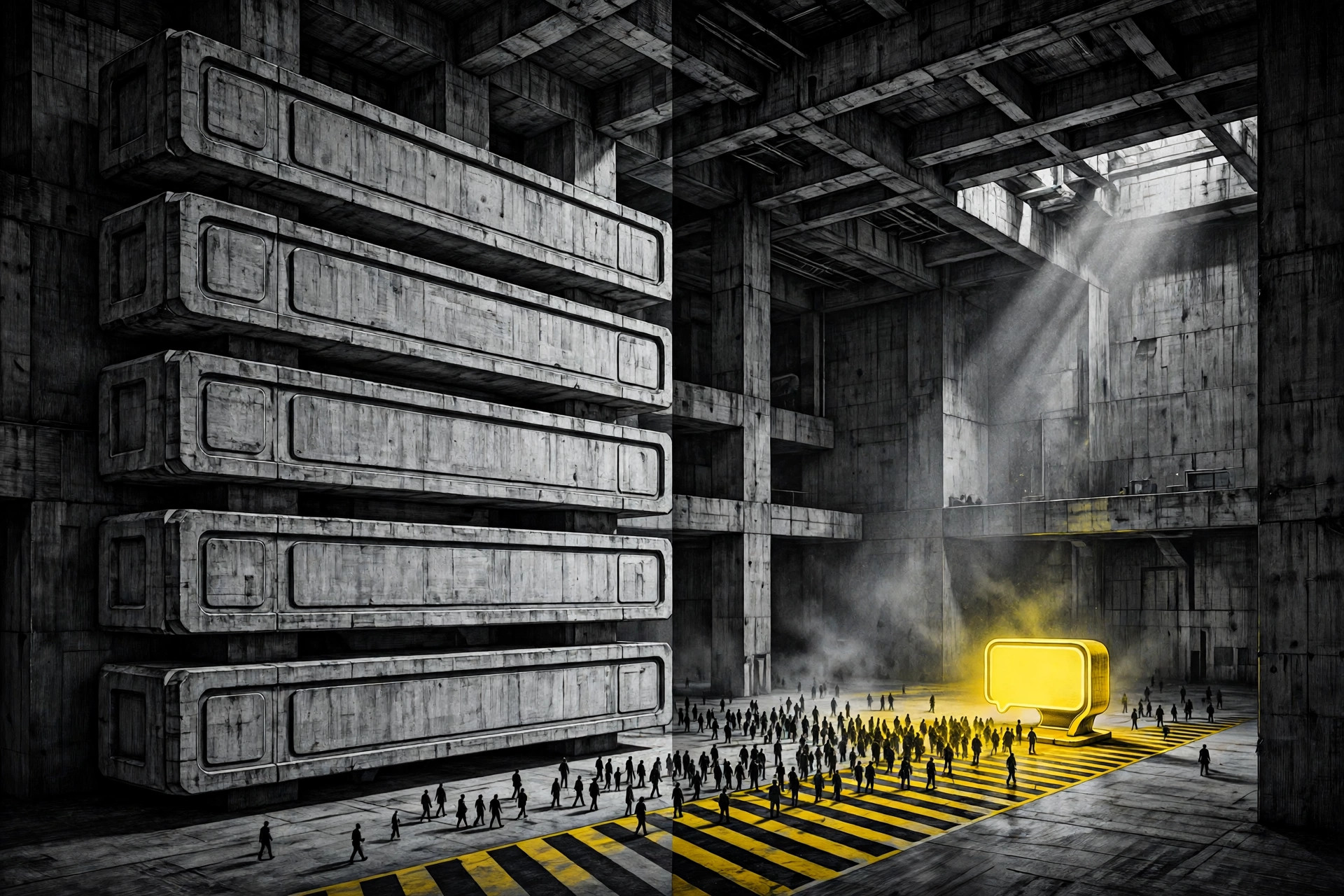
In Ashville, Ohio, the question on the ballot was not abstract. Voters were asked whether to keep their own village deal with EdgeConneX, covering two data centres and a gas plant on close to 200 acres. They struck the deal down with more than 81 percent of the vote, according to counts reported by Fast Company from Ballotpedia results.
Ashville was not an outlier with a grudge. It was the pattern. Across the country on November 3, the buildings that power AI went in front of the public as a direct vote, perhaps for the first time at this scale, and the public said no in town after town, often by margins that left nothing to argue about.
The Bigger Story
Ballotpedia, the nonpartisan site that tracks ballot measures, counted at least 50 local data centre measures across 13 states in 2026, with 41 of them set for November 3. As of November 4, it recorded 47 measures as decided over the year, and in 46 of those cases the majority favoured greater limits on development. The lone exception was Harwood, North Dakota, where voters rejected extra review rules for large industrial projects.
The shape of the losses matters as much as the count. In Edgewater, Florida, 77 percent voted to write a ban on new data centres into the city charter. In Alhambra, California, 82 percent voted to prohibit data centres in the city. In Granville, Ohio, 82 percent backed a ban, and in Urbana, Ohio, 77 percent did the same. Where the question was softer, the answer barely softened. Grove City, Ohio, produced one of the closest results in the state, and voters there still chose, by 55 percent, to require public approval for large projects.
Ohio was the centre of the revolt for a simple reason. It held 21 of the measures Ballotpedia tracked, spread across 18 places, in a state that has become one of the fastest growing data centre markets in the country. Reuters reported before the vote that capacity under construction in the United States had risen 48 percent between December 2025 and June 2026, citing figures from Cushman and Wakefield. Growth at that speed creates neighbours at that speed, and neighbours eventually get a vote.
The revolt reached the top of the ballot as well. In Texas, Democrat Gina Hinojosa beat incumbent Governor Greg Abbott after campaigning on a moratorium on new construction, an end to data centre tax breaks, and tighter rules on water and power use. Fast Company reported that she called the late moratorium Abbott introduced a “scam,” noting that he had backed the industry for years and raised about 9 million dollars from data centre donors, citing the Texas Tribune. Texas is not a fringe market. Cleanview counts more than 781 data centres operating, under construction, or planned in the state, across close to 300 campuses.
In Georgia, Keisha Lance Bottoms won the governor race after making a statewide pause on new data centres a key part of her campaign. In Ohio, Amy Acton won with a conditional moratorium, under which new projects would have to cover the full cost of their utility use, build with union labour, and sit on brownfield or industrial land. In Pennsylvania, Governor Josh Shapiro, once a supporter of the boom, signed an order in August that restricted some projects and required local approval, then won a second term. His line from that moment, reported by NBC News, deserves to sit in this story without decoration.
We will not be bulldozed by the lawyers working for these big tech companies.
Campaign money followed the same current. Fast Company, citing Axios, reported that campaigns and outside groups spent more than 173 million dollars on advertising against data centres across both parties during the midterms. Voters were not imagining that this issue had arrived. Their screens told them so every night, and then their ballots asked them directly.
Context
None of this came from nowhere, and the polls saw it coming months in advance. Gallup found in March that 7 in 10 Americans opposed a data centre in their own area, with close to half strongly opposed. An NBC News Decision Desk poll, run with SurveyMonkey from August 20 to September 1, put opposition to a local AI data centre at 69 percent. A movement that wins 77 and 82 percent votes in November does not surprise anyone who read the spring and summer numbers. It only surprises an industry that treated those numbers as background noise.
The reasons voters give are concrete, and they are not really about chatbots. The AP NORC poll with the Energy Policy Institute at the University of Chicago, published in September, found 84 percent of Americans concerned about what data centres do to local electricity prices, 79 percent concerned about water supply, and 78 percent concerned about power outages. Gallup asked opponents to explain themselves in their own words, and about half pointed to resources, with water and electricity each named often. About one in five pointed to money, meaning higher bills, living costs, and public subsidies.
The timeline shows how fast a local complaint became a national political force.
| When | What happened |
|---|---|
| March 2026 | Gallup finds 7 in 10 Americans oppose a data centre in their area |
| July 2026 | New York becomes the first state to enact a one year moratorium on large new data centres, reported by Gizmodo |
| August 2026 | Governors and candidates in Pennsylvania, Texas, and Ohio all move toward pauses or strict conditions |
| September 2026 | AP NORC and EPIC find concern about AI and the environment up sharply, with power prices the top local worry |
| November 3, 2026 | Voters decide 41 data centre measures, and moratorium candidates win in Texas, Georgia, and Ohio |
| November 4, 2026 | Elon Musk posts that data centres in space are looking pretty appealing right now |

There is a useful distinction buried in the polling, and honest coverage has to keep it visible. The same AP NORC survey found that about half of adults still thought data centres would help technology advance and create jobs. The public has not turned against computing, or even against AI as a tool many of them now use each week. The NBC poll found 52 percent of Americans use AI tools often or sometimes. What the public turned against was a specific bargain, in which a very large building arrives with public subsidies, heavy power and water demands, and a small number of permanent jobs, and the people who live beside it learn the details late.
That is why the word moratorium did so much work this year. A moratorium is not a ban forever. It is a demand to stop and read the terms before signing. Candidates who offered a ban in some towns and conditions in others were, in effect, offering the same thing at different volumes. Slow down, show us the bill, and prove the town gains more than it gives.
Different Perspectives
The case for building deserves to be stated in its strong form, because voters heard it and much of it is true. Data centres are the physical base of services people rely on, from hospital systems to the AI tools now built into work and school. Supporters, including President Donald Trump, argue that the building brings jobs during construction, tax revenue for towns that need it, and national strength in a contest with China over AI capacity. A town that refuses every project does not stop the demand. It exports the building, and its tax base, to the next town over.
There is also a fair warning inside the supporter case. Local bans are blunt tools. They can block a well designed project that pays for its own power and water along with a careless one, and a patchwork of town bans makes long term grid planning harder, not easier. Gizmodo, citing work from the Brookings Institution, noted that data centres do create jobs, even if the effect is smaller than advocates claim, and that studies link nearby development to higher home prices. Both halves of that sentence matter. The benefit is real and modest. The cost is real and close to home.
The voter case, at its strongest, was never that no centre should ever be built. Organizers in Ohio made that clear long before election day. Jessica Baker of Conserve Ohio told Reuters that support for banning some large centres came from both Democrats and Republicans, driven by electricity and water demands. Nick Owens, a Republican who helped residents draft ballot measures through the same group, is about as far from a caricature of an anti technology activist as this story offers. When the person writing the ban voted for Trump and the person cheering it voted against him, the issue is not party. It is consent.
Ohio also shows the argument moving in real time, because even the losing side moved. Vivek Ramaswamy, who lost the governor race to Acton, had himself proposed blocking new projects unless they met conditions that included support for neighbours, a shift CNN traced to voter pressure during the campaign. Read that again for what it signals. In the loudest data centre state in the country, both major candidates for governor ended up promising some form of pause with conditions. The debate on the ballot was no longer whether to restrain the boom. It was whose restraint voters trusted more.
A third view sits between the ban and the boom, and it may be where policy actually lands. The AP NORC numbers show the largest support not for bans but for cost rules, with 73 percent backing a requirement that data centres cover grid upgrade costs. Third Way polling earlier this year found a similar split, with voters far warmer toward projects when developers reimburse towns for water and power. That middle position has a plain logic. Build if you must, but pay your own bill, in public, with the town in the room from the start.
Why It Matters
For a decade, the politics of AI lived in opinion pieces about jobs, art, and the far future. The technology was debated as an idea, and ideas are easy to support in the abstract. A data centre ends that comfort. It is AI with an address, a water meter, and a power line, and it turns a national argument about the future into a local argument about a field, a bill, and a planning meeting. This election is what happens when an abstract technology acquires a street name.
The industry response on the night told its own small story. Elon Musk, whose companies need enormous amounts of computing power, posted on X as results came in that data centres in space were looking pretty appealing right now. It was a joke, and it landed as one, but jokes of that kind are also a map of frustration. Orbit has no zoning board, no charter amendment, and no village referendum. Dirty Static has covered the orbital data centre idea as engineering. This week it also read as an escape fantasy, and the ballot results explain the appeal of escaping.

The harder question is what the revolt does to the build itself. Most results from Tuesday are still unofficial, and local bans do not cancel projects already under construction. State level moratoriums still need laws, and laws still need votes in legislatures where the industry spends heavily. Analysts who warned on the night that a political shift could slow the build were describing risk, not a finished outcome. What has already changed is the price of permission. No developer can now walk into a town in Ohio, Texas, or Georgia and assume that a quiet deal with a council will hold. The Ashville result, where voters overturned a deal their own village had made, is the lesson every project team in America read on Wednesday morning.
There is a wider mood underneath the zoning fights, and it connects this vote to the rest of the culture around AI right now. In the same year that slop became a public slur for output nobody asked for, voters were asked, formally and in writing, whether they wanted the physical plant of AI in their towns. Their answer tracks the logic of that slur with uncomfortable precision. The objection is not to the tool. It is to being served something large, costly, and hard to refuse, without ever being asked. Asked at last, the country answered at volume.
Closing Reflection
The most honest reading of Tuesday is not that America rejected AI. A country where half the adults use AI tools each week, and half still credit data centres with jobs and progress, has not done anything that simple. America rejected a method. It rejected the quiet land deal, the tax break explained afterwards, the power bill treated as someone else’s problem, and the assumption that resistance was a public relations issue to be managed rather than an answer to be respected.
That leaves the industry with a choice it cannot outsource to orbit. It can treat November 3 as a communications failure and spend the next cycle on better messaging, or it can treat it as the first honest market research it ever received on consent. The towns have now stated their terms in the only language that cannot be spun, counted votes. Pay for your power. Show your water use. Ask before you build. Whether the next wave of data centres rises under those terms, or stalls while lawyers test every ban, will say more about the future of AI in America than any model release this year.
Reporting draws on Ballotpedia tracking of data centre ballot measures in 2026, Fast Company and Reuters reporting on the November 3 results and the races in Texas, Georgia, and Ohio, the AP NORC and EPIC survey of September 2026, Gallup polling from March 2026, and the NBC News Decision Desk poll of August and September 2026, checked November 4, 2026. Most election results cited are still unofficial.
Sources
- Ballotpedia, Data center related ballot measures, 2026: https://ballotpedia.org/Data_center-related_ballot_measures,_2026
- Fast Company, Midterm elections 2026: AI data centers lost big, November 4, 2026: https://www.fastcompany.com/91635527/midterm-elections-2026-ai-data-centers-lost-big-list-state-ballots
- Reuters, AI data center boom faces backlash at US ballot box, October 29, 2026, syndicated at: https://d2233.cms.socastsrm.com/2026/10/29/ai-data-center-boom-faces-backlash-at-us-ballot-box/
- AP NORC and EPIC, poll on concern about the environmental impact of AI, September 16, 2026: https://apnorc.org/wp-content/uploads/2026/09/2026-AP-NORC-EPIC-Press-Release.pdf
- Gizmodo, America’s AI Backlash Is Coming to the Ballot Box, November 2, 2026: https://gizmodo.com/americas-ai-backlash-is-coming-to-the-ballot-box-2000833999
- Elon Musk on X, November 4, 2026: “Data centers in space looking pretty appealing right now”
- Illustrations: Dirty Static
END OF TRANSMISSION
Stay curious. Question everything.