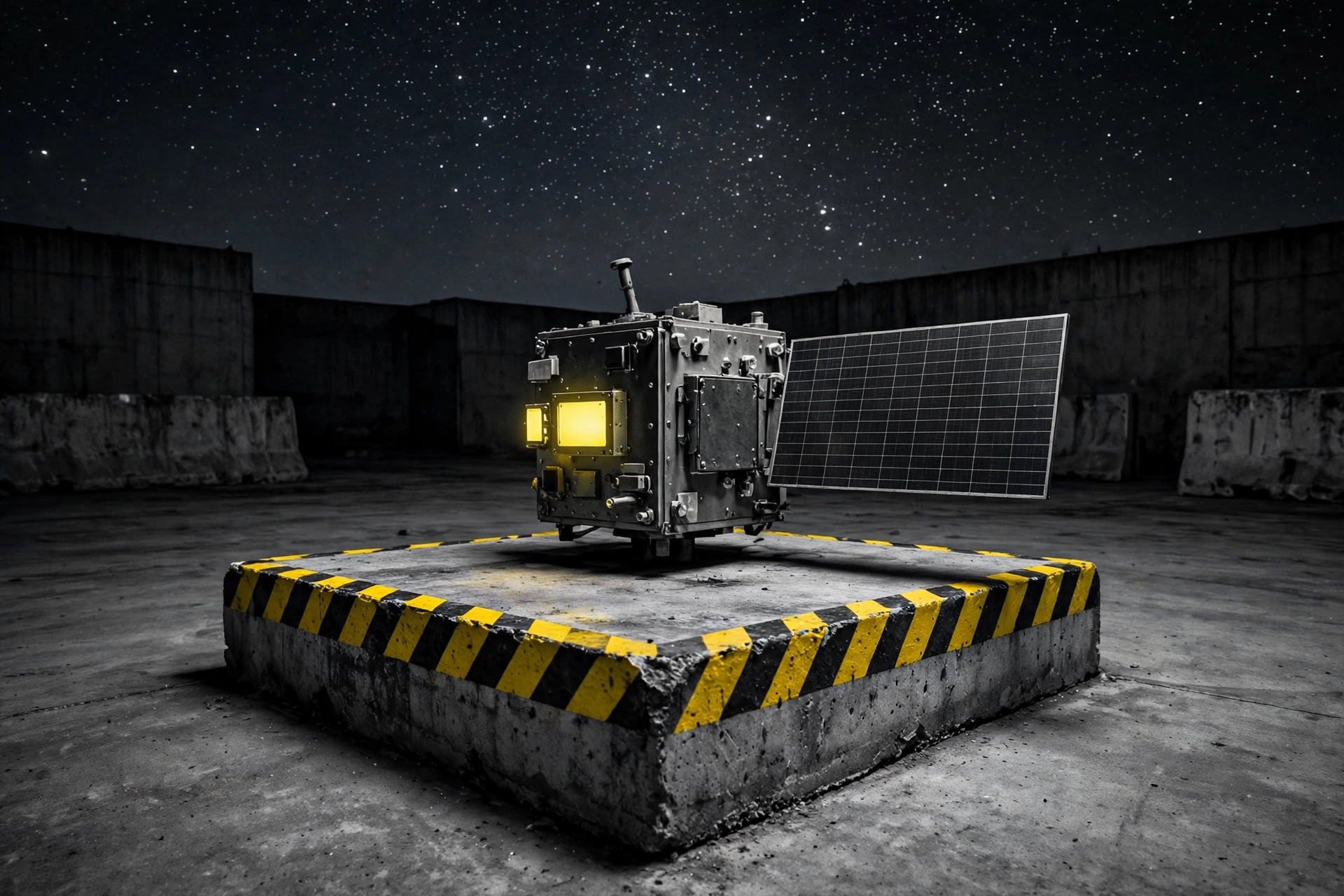
Google has received the first AI response from a data centre class TPU in orbit. Its Project Suncatcher prototype satellite, launched on October 1, booted its TPUs and ran the onboard Gemma 4 model on a prompt sent from Earth, then downlinked a haiku about being in space as it passed over Svalbard, Norway.
The first job Google gave its orbital data centre was poetry. Engineers used a ground station pass this week to uplink a prompt to the Gemma 4 model stored aboard the Project Suncatcher prototype satellite, asking for a haiku about being in space. The answer came back as the satellite passed Svalbard, Norway:
Blue marble below
Data streams in silent grace
Starlight feeds my core.
The Announcement
Google announced the result on October 30, calling it the project “Hello World” milestone: the first AI response from a data centre class TPU in orbit. The prototype satellite launched on October 1 aboard the Transporter-18 rideshare mission with SpaceX, built in partnership with Planet, and the team confirmed contact with it the same day.
The weeks since launch went to commissioning. Google says the checklist included powering up the host and the TPU trays and running early machine learning tests before the first prompt went up. After the haiku, the team also tested space themed limericks and telemetry prompts that report the technical status of the payload systems.
Google published its own short video of the milestone:
Important Details
| Item | Detail |
|---|---|
| Project | Project Suncatcher, a Google Research moonshot |
| Prototype launch | October 1, 2026, on SpaceX Transporter-18 |
| Built with | Planet |
| Model on board | Gemma 4, Google’s open model |
| First prompt | A haiku about being in space |
| Answer downlinked | Over Svalbard, Norway |
| Also tested | Space themed limericks, telemetry prompts |
| Research paper | Peer reviewed in Joule |
Reporting by TechCrunch, including a correction to its first story, fills in the scale. The satellite carries four TPUs and generates up to 1 kW of power, and it can run only one TPU at a time, for about 20 minutes a stretch. A Google spokesperson told TechCrunch the satellite is operating nominally. Read those numbers again and the shape of the thing becomes clear: this is proof the plumbing works, not a data centre.
Google set out the idea in November 2025. Suncatcher imagines constellations of solar powered satellites carrying TPUs and linked by free space optical links, flying an orbit where, by Google’s own research, solar panels can be up to eight times more productive than panels on Earth and produce power nearly continuously. The research behind the mission is peer reviewed and published in Joule.
The tempering is on the record too. Google leadership has said in public that nothing usefully operational is expected for several years, and The Register, doing the rude arithmetic, calculated that the same short output would cost about $0.000012 through the Google Cloud API. Both facts belong in the story: the milestone is real, and so is the distance between a haiku and a business.
What Is Next
The confirmed next step is a series of tests on how the TPUs hold up under thermal stress and radiation exposure in orbit. Radiation can flip bits in memory and corrupt results without any visible error, and heat in space has no air to carry it away. Google has run radiation testing in the lab on Earth; orbit is the version of the exam that counts.
If the chips pass, Google says the next milestone is twin interconnected satellites in 2027, a test of the optical links a real constellation would need to act as one machine. Anything beyond that is projection. Google’s own research ties the economics of orbital compute to launch costs falling steeply by the mid 2030s, which is a polite way of saying the business case rides on rockets getting cheaper. For now the scoreboard reads one satellite, one model, one haiku, and a very long road.
Sources
- Google: Google receives response from Project Suncatcher prototype satellite in space
- Google: Google’s Project Suncatcher prototype satellite is in orbit
- Google (video): Our first response from the Project Suncatcher prototype satellite
- Notebookcheck: Google’s first orbital AI data center is up and running — and it wrote a strange little poem
- The Register: Google’s AI satellite sends a very expensive haiku to Earth
END OF TRANSMISSION
Stay curious. Question everything.