
Dirty Static // The Verdict
The right first step for Samsung and Google, with sound choices on sound and battery, and one big blank where the price should be. Judge it on November 12, not before.
Best forPhone users who want spoken help, a camera and directions without a screen in the lens, and who accept how Gemini handles their data
What works
- No display means no screen competing for your eyes, and the whole product works through voice, a camera and speakers
- Up to nine hours on one charge with up to seven more full charges in the case, per Samsung
- Frames from Gentle Monster and Warby Parker, two brands people already wear by choice
- Gemini can answer questions about what you see, give spoken directions, summarise messages and translate speech and signs
What does not
- No price has been announced, and Samsung has not published a full spec sheet or its own launch date
- Key figures in circulation, camera resolution, weight, memory and storage, come from reports and leaks, not from Samsung
- Google says the glasses pair with Android phones and iPhones, while Samsung footnotes warn that some features need a compatible Galaxy device
- Gemini activity is kept for 18 months by default under Google terms, and chats picked for human review can be kept for up to three years
Research review: based on published testing, specifications, and documentation, not hands on testing.
Samsung could have started with a screen. It started with sound instead. Intelligent Eyewear, the first smart glasses from Samsung and Google, has no display in either lens. A camera sees what you see, microphones hear what you ask, speakers in the frame speak the answer back, and Gemini does the thinking through your phone. That restraint is the most interesting decision here, and this week it finally got dates attached to it, just not by Samsung itself.
On November 5, Warby Parker told investors that preorders for its first Intelligent Eyewear collection open on November 12, with deliveries during the holiday season and the full collection and pricing revealed that same day. On November 6, Gentle Monster said its collection launches in December. Google has not confirmed either date, per Engadget reporting, and Samsung has still not published a price, a full spec sheet, or a launch date of its own beyond fall 2026. Facts checked November 7, 2026.
What It Is
Intelligent Eyewear is the name Samsung and Google use for this category, and Galaxy Glasses is the name most coverage uses instead. Samsung introduced the product at Galaxy Unpacked in London on July 22, 2026, building on what Google had shown at Google I/O on May 19. Samsung makes the hardware, Google supplies Android XR and Gemini, Qualcomm supplies the chip, and the two eyewear brands supply the frames and the taste.
Google splits this category in two. Audio glasses offer spoken help in your ear. Display glasses show you information in the lens. Google said in May that the audio kind launches first, and it gave no launch window for the display kind. The first Samsung model is firmly in the audio camp. Reports point to a display model in 2027, but neither company has confirmed that timing in its own announcements.
The job of these glasses is narrow and clear. They are a companion to a phone, not a replacement for one. You say Hey Google or tap the side of the frame, then ask Gemini about the restaurant you are passing, the sign you cannot read, or the route you need to walk. The glasses capture the context. The phone and Gemini services do the heavy work.
Features and Specifications
Start with what Samsung has put its own name to, because the gap between confirmed facts and circulating claims is the story of this launch. Samsung July release confirms the platform, the chip, the camera, the battery figures and the two frame partners. It does not confirm a price, a weight, a camera resolution, a memory figure or an ingress rating.
Confirmed by Samsung, July 22, 2026
- Product
- Samsung Intelligent Eyewear, introduced at Galaxy Unpacked in London
- Platform
- Android XR, built by Google with Samsung and Qualcomm
- Assistant
- Gemini, woken by Hey Google or a tap on the frame, per Google
- Chip
- Qualcomm Snapdragon AR1 Gen 1 Platform
- Display
- None; answers come through speakers in the frame
- Camera
- Built in camera for visual context; resolution not disclosed by Samsung
- Battery
- Up to nine hours on a single charge, per Samsung
- Case
- Up to seven additional full charges from the charging case, per Samsung
- Frames
- Gentle Monster and Warby Parker, in a range of styles, colours and lens options
- Phone pairing
- Google says both Android and iOS phones; Samsung notes some features may need a compatible Galaxy device
- Price
- Not announced
Then there is the second spec sheet, the one built from reports. Multiple outlets report a 12 megapixel Sony camera with 3K video, 2 GB of memory and 64 GB of storage, from leaks and supply chain reporting. Reports also disagree on weight, with figures near 41 grams in some coverage and near 50 grams in other coverage. None of that came from a Samsung spec sheet, so treat all of it as provisional until November 12. A review that prints leaked numbers as facts would be doing marketing work for free.
What Gemini is confirmed to do, from Google May announcement and Samsung July release, covers the daily tasks this category keeps promising:
- Ask about what you see, from reviews for a place you pass to the words on a menu or a sign, with translation spoken back
- Spoken directions that know where you stand and which way you face, with stops added to a route on request
- Calls, texts and summaries of missed messages, plus music through private speakers in the frame
- Photos and video captured on command, with editing help from Gemini tools on the phone
- Tasks across phone apps, such as ordering a ride or preparing a food order, with the final confirmation left to you
- Capturing a whiteboard or a meeting point into Samsung Notes, per Samsung, with follow up work on the phone
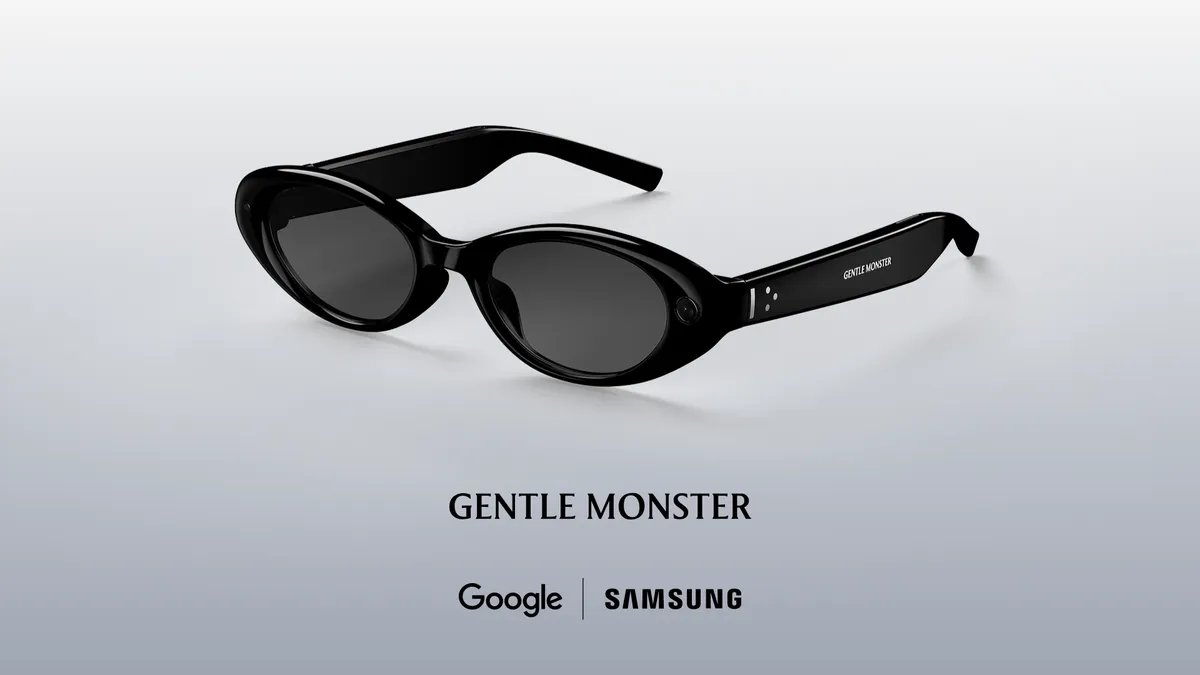
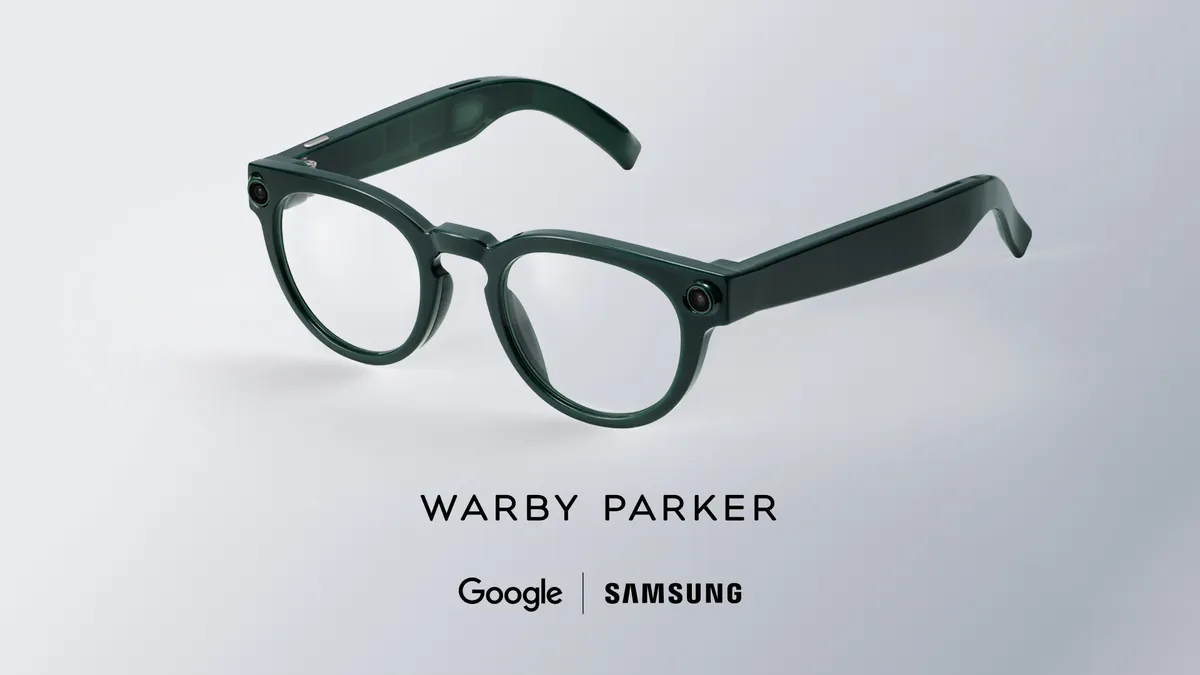
The frame split matters more than it looks. The Gentle Monster design is slim and black, with a straight upper rim and softly rounded lower edges, built to read as fashion first. The Warby Parker design has a raised brow line in a rich brown hue, built to read as ordinary eyewear. Samsung says it worked with both brands on fit points at the forehead and the ears. Glasses live or die on faces, not on spec sheets, and Samsung outsourced the face part to people who sell glasses for a living. Smart move.
Real World Experience
This is a research review. Dirty Static has not worn Intelligent Eyewear, and almost nobody outside the partners has. Press at Galaxy Unpacked in July were allowed to handle the frames. They were not allowed to put them on, per VR.org reporting from the event. There is no published independent testing of battery life, camera quality, translation accuracy or all day comfort to draw on, and any review that sounds like there is should be read with care.
What can be judged now is the shape of the experience from the confirmed feature list, and it has one clear strength. Sound leaves your eyes alone. A display in the lens asks for attention every time it lights up. A spoken answer ends when it ends. For directions on foot, a message summary on a train, or a translation in a market, that is often the right amount of interface, and it is why the audio category is shipping first across the whole industry.
The cost of that shape is dependence. The glasses need a paired phone, a network connection and a Google account for the Gemini features that justify them, and Samsung footnotes add that some experiences may require a compatible Galaxy device or a supported app. Google says the glasses pair with both Android phones and iPhones. Samsung sells them as an extension of the Galaxy experience. Both statements are in the official material, and buyers with an iPhone should wait for the November 12 detail before assuming every feature travels across.
Privacy is the second cost, and it is written down if you look. Under Google Gemini Apps Privacy Hub, activity with Keep Activity on is saved and auto deleted after 18 months by default, and data reviewed by human reviewers is disconnected from your account and saved for three years. With Keep Activity off, future chats are still saved for 72 hours. Those are Google stated terms for Gemini, and a camera and microphones on your face will feed that system far more context than a chat box does. Samsung July release speaks of clear controls and safeguards in general terms. The specific controls are another November 12 question.
What Works
The battery claim leads, because it targets the weakness of this whole category. Samsung rates the glasses at up to nine hours of active use on a single charge, even during demanding use such as Gemini and video recording, with more than seven full recharges from the case. That matches the best claim in the audio glasses class and beats the eight hours Meta claims for Ray-Ban Meta Gen 2. Claims are not tests, and Samsung’s own footnote says battery life varies with network, features, apps and settings. Still, nine hours is the right target. A product pitched for all day wear that dies by lunch has no pitch at all.
Maker battery claims, hours on one charge
Stated figures from Samsung and Meta product material, checked November 7, 2026. Claims, not independent tests. Case charges are extra and are not counted here.
The second strength is Gemini itself. The assistant on the glasses can draw on Search, Maps, your messages and your phone apps in one conversation, and the May demo list leans on that breadth: directions that add stops, translations that match the tone of a speaker, photos edited by voice, and tasks prepared in the background for your confirmation. Meta AI has narrowed this gap, but Gemini starts with the deeper bench of services behind it.
Third, the frame strategy is sound. Two collections, two price signals and two style languages widen the pool of faces these fit and the pool of buyers who will consider them. Warby Parker also brings stores. Its chief executive told investors that demonstrations will run at 65 stores in the United States starting next week, per earnings call reporting. Smart glasses are a try before you buy product, and Meta’s strongest asset has always been retail presence. Samsung’s partners just gave it one.
What Does Not
The missing price is not a detail. It is the decision. Reports have put the United States price anywhere from $349 to $499, with $379 named as a starting point in some coverage, and every one of those figures is a reported estimate, not an announcement. At $349 these glasses undercut Ray-Ban Meta Gen 2 and argue that Gemini is the smarter buy. At $499 they cost more than Ray-Ban Meta Gen 3 and ask buyers to pay a premium for a first generation product with no display and no test record. Samsung and its partners have let that range float for months. November 12 ends the float, one way or the other.
The launch map is also narrow, as reported. Coverage of Gentle Monster and Warby Parker plans puts the first collections in the United States, with Gentle Monster also selling in South Korea, and other markets following in 2027. Europe, China and Japan sit outside the first wave in the reporting. Samsung has not confirmed that map itself, which is its own problem: a buyer in London, where Samsung unveiled the product, cannot yet get an official answer on when they can buy it.
Then there is the spec sheet fog. A company confident in its camera publishes the resolution. A company confident in its weight publishes the grams. Samsung published neither in July and has added neither since, while leaks filled the silence with numbers that may or may not survive launch day. Add the moving launch window, from fall, to November in early October reporting, to December in the eyewear brands’ own announcements, and a pattern forms. The product looks ready. The launch operation does not.
Competition
The audio glasses market is suddenly crowded, and every rival makes a different trade. Meta sells capture and social sharing today. Brilliant Labs sells a screen and open code. Samsung sells Gemini and frame choice, starting next month if its partners’ dates hold.
| Glasses | Price | Display | Assistant | Battery claim |
|---|---|---|---|---|
| Samsung Intelligent Eyewear | Not announced; reported estimates $349 to $499 | None | Gemini on Android XR | Up to 9 hours, per Samsung |
| Ray-Ban Meta Gen 2 | $379 | None | Meta AI | Up to 8 hours, per Meta |
| Ray-Ban Meta Gen 3 | $449 | None | Meta AI | Up to 9 hours, per Meta |
| Meta Ray-Ban Display | $799 | Colour display in one lens | Meta AI | Up to 6 hours, per Meta |
| Brilliant Labs Halo | $399 | Colour display in one eye | Noa | Up to 14 hours, per Brilliant Labs |
Against Gen 2, the Samsung case rests on one more claimed hour, a newer assistant story and frames from two brands instead of one. Against Gen 3 at $449, the case gets harder, because Meta’s newer glasses are on sale now with a known price and a known camera. Against Halo, covered in our Brilliant Labs Halo review, Samsung offers the opposite bet in almost every row: closed platform, no display, a giant assistant, and retail stores. Buyers who want a screen today should read that review before they preorder anything here.
The honest summary is that Samsung has built the right rival and priced it in pencil. Meta’s advantage is not a feature. It is certainty. You can walk into a store, try Ray-Ban Meta, pay a known price and walk out wearing them. Samsung reaches that position in December at the earliest, and only in the first launch markets.
Final Verdict
Preorder with conditions, or wait with confidence. Both are defensible, and which one fits you depends on a price nobody has announced yet. If November 12 lands the Warby Parker frames at or below $379, with the full spec sheet published and iPhone features spelled out, Intelligent Eyewear becomes the strongest audio glasses launch of the year on paper: Gemini, nine claimed hours, frames people want to wear, and no screen shouting for attention. If the price lands near $499 with specs still foggy, Ray-Ban Meta Gen 3 at $449 is the safer spend today, and Samsung first model becomes a product to revisit when the display version forces its price down.
What should not survive November 12 is the fog. Samsung asked for patience through a fall of teases, partner leaks and moving windows. Patience was reasonable while the product was a preview. At preorder time, buyers are owed numbers. Give us the price, the weight, the camera and the phone rules in writing, and this verdict can turn into a recommendation. Until then it stays what the evidence supports: a well judged product, launched in a messy way, one announcement away from being easy to recommend.
Sources
- Samsung Newsroom: Samsung Brings Galaxy Ecosystem Into Everyday Eyewear
- Samsung Newsroom: Interview with James Choi on Intelligent Eyewear
- Google: Intelligent eyewear with Gemini is coming this fall
- Google: Gemini Apps Privacy Hub
- Engadget: Google eyewear partners share preorder and December launch timing
- 9to5Google: Android XR glasses officially get a December release date
- SammyGuru: Gentle Monster confirms December launch for Samsung Intelligent Eyewear
- TechBriefly: Samsung Android XR glasses open for preorder on November 12
- VR.org: Samsung Android XR Glasses release date, price and specs tracker
- Images: Hero image is a generated Dirty Static house style illustration. Body images are official Google product images of the Gentle Monster and Warby Parker designs, via the Google Android XR post.
END OF TRANSMISSION
Stay curious. Question everything.