OpenAI and Anthropic will take about 26 million Google TPUs in 2028 and 2029 between them, if a new analyst survey is right. Ming-Chi Kuo of TF International posted the estimate on X on November 16. He put OpenAI at about 12 million chips and Anthropic at about 14 million.
None of the three companies named has confirmed those counts. Kuo described the figures as takeaways from his latest industry survey, not as company disclosures. That distinction runs through the whole story, and readers should keep it in front of every number below.
The Announcement
There was no company announcement. The news is a post on X by Kuo, a supply chain analyst based in Taiwan who is closely watched for calls on Apple and Nvidia suppliers. TradingView and Stocktwits reported the post the same morning, and a detailed reading of the full post was published by FourWeekMBA.
Kuo wrote the lead line himself:
“Strong new orders from OpenAI and Anthropic have extended Google TPU shipment visibility to 2029, ahead of Nvidia GPUs and other AI ASICs (mostly 4Q27–2Q28).”
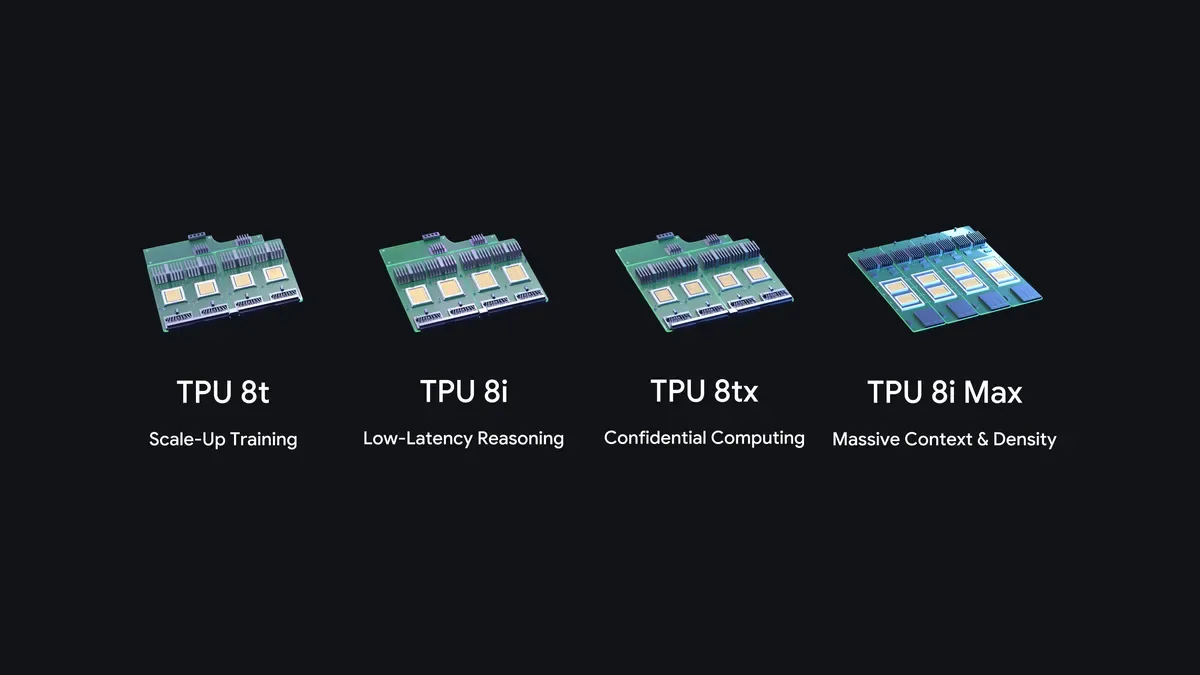
A TPU is a Tensor Processing Unit, a chip Google designs for AI work. An ASIC is a chip built for one kind of task rather than for general use. Kuo said the two labs will use chips from the eighth generation family. OpenAI demand points to TPU 8t, the training chip designed with MediaTek. Anthropic demand points to TPU 8i, the inference chip designed with Broadcom. Inference means running a trained model to answer requests.
Kuo added a structural point that matters for reading the numbers. From 2028, he said, Google will build its own capacity mostly on the next generation, called v9. Orders for the v8 family can therefore be viewed as coming from OpenAI and Anthropic, in his reading. He also said demand from both labs grows year over year, and that the v8 family should stay the bulk of shipments through 2029 because early v9 packaging capacity is limited.
Important Details
The split is the story. Anthropic takes the larger share in Kuo estimates, and the two labs pay in different ways.
| Item | Kuo estimate |
|---|---|
| OpenAI demand, 2028 and 2029 | About 12 million TPU 8t chips, designed by MediaTek |
| Anthropic demand, 2028 and 2029 | About 14 million TPU 8i chips, designed by Broadcom |
| Combined demand, 2028 and 2029 | About 26 million chips |
| How OpenAI pays | Outright purchases |
| How Anthropic pays | A mix of leasing and outright purchases |
| Total TPU shipments, 2027 | 8 million to 9 million |
| Total TPU shipments, 2028 | 14 million to 15 million |
| Total TPU shipments, 2029 | 16 million to 18 million |
Set the combined demand against the shipment ranges and the scale lands. Shipments for 2028 and 2029 together come to 30 million to 33 million in Kuo ranges. A combined 26 million for two labs is about 79 percent to 87 percent of that total. That share is arithmetic built from two separate Kuo estimates. It is not a measured share reported by Google.
Kuo TPU shipment estimates, millions of units
Midpoints of the ranges Kuo posted on November 16, 2026. Ranges are 8 to 9 million for 2027, 14 to 15 million for 2028, and 16 to 18 million for 2029. All figures are Kuo estimates, not Google disclosures.
We covered the chips at the centre of this claim when Google expanded the family last week, in Google Unveils TPU 8tx And 8i Max Chips. That launch gave the base specs that RCR Wireless also reported this month: TPU 8t supports pods of 9,600 chips and carries 216 GB of HBM3e memory per chip, while TPU 8i raises memory to 288 GB and adds 384 MB of SRAM on chip. HBM is memory stacked close to the processor so data moves faster. Google claims for the family remain Google claims until outside buyers publish results on their own workloads.
Kuo also named the suppliers who gain if the plan holds. MediaTek will be the sole design supplier for v9 and for v10, which he said is now called Quillfish with mass production expected in 2029. He put MediaTek share of total TPU supply at about 45 percent to 50 percent in 2027, 50 percent to 55 percent in 2028, and 55 percent to 60 percent in 2029. Broadcom leads the 8i design, and Kuo said its focus in coming years will shift toward other custom chips and AI networking, with that revenue passing TPU revenue as early as 2027.
What Is Already On Record
Kuo numbers sit on top of a record that is already large, and that record is in dollars and gigawatts more than in chip counts.
Anthropic announced on October 23, 2025 that it would expand its use of Google Cloud TPUs to up to one million chips, bringing well over a gigawatt of capacity online in 2026, in a deal the companies valued in the tens of billions of dollars. In April 2026 Anthropic, Google and Broadcom added an agreement for multiple gigawatts of TPU capacity from 2027. Broadcom filing at the time put that expansion at about 3.5 gigawatts.
The filing record has grown since then. FourWeekMBA read Anthropic amended S-1, filed on November 10, as committing the lab to at least about 121.3 billion dollars under its Google hosting agreement between April 2026 and July 2033, plus an estimated 125 billion to 150 billion dollars for added TPU compute expected to be delivered between 2028 and 2031. The same reading lists Broadcom equipment leases with rent of about 161.2 billion dollars, excluding interest, for access to TPU based compute. The filing gives dollars. It gives no 2028 or 2029 chip count that matches Kuo 14 million figure, and that gap should stay visible.
For OpenAI, the record is thinner. The Information reported on October 27 that OpenAI plans to buy Google AI chips, and Bloomberg reported the next day that final terms were not yet known and that both companies declined to comment, according to FourWeekMBA summary of that coverage. RCR Wireless reported that OpenAI has rented Google AI chips since June 2025. A plan to buy, reported by others, is not the same as a confirmed order for 12 million chips. Kuo post is the first source to put a unit count of that size on the OpenAI side, and it remains his estimate.
What’s Next
Confirmed steps are short. No company has confirmed the 26 million figure, the split, or the payment mix. No delivery schedule, price, or contract term for these 2028 and 2029 orders has been published by Google, OpenAI or Anthropic.
Kuo made two wider claims that readers should treat as his view, not as fact. He said uncertainty over Nvidia chief executive succession helps Google discuss plans beyond 2028 with customers. He also noted that the market broadly expects AI spending to peak in 2028, while his TPU plan shows shipments still growing in 2029, driven by direct orders from OpenAI and Anthropic. Both points depend on his survey and on events that have not played out.
- October 23, 2025Anthropic announced access to up to one million Google TPUs, with well over a gigawatt of capacity online in 2026
- April 2026Anthropic, Google and Broadcom agreed multiple gigawatts of added TPU capacity from 2027
- October 27, 2026The Information reported OpenAI plans to buy Google AI chips, per later coverage summaries
- November 10, 2026Anthropic amended S-1 was filed, stating Google and Broadcom commitments in dollars
- November 16, 2026Kuo posted estimates of about 12 million TPUs for OpenAI and about 14 million for Anthropic in 2028 and 2029
What to watch is boring and useful. Watch for a Google, OpenAI or Anthropic statement that names chip counts or contract terms. Watch Anthropic filings for any move from dollars to units. Watch whether Oracle, which RCR Wireless reported will offer TPUs from 2027 as the first outside cloud to do so, names OpenAI or Anthropic capacity in its own launch. Until one of those lands, the honest label for the headline number is reported, not confirmed.
That does not make the post easy to dismiss. Kuo has a record that markets trade on, the Anthropic dollar commitments in the filing point in the same direction, and Google has spent this autumn turning the TPU from an internal chip into a thing it sells, leases and lets others resell. If even half of the 26 million arrives, Nvidia will be competing for the two biggest labs in the field on hardware Google designed. If none of it is confirmed, that silence will say something too, and it will say it loudly.
Facts in this report were checked on November 16, 2026 against Kuo post on X as quoted in full by FourWeekMBA, TradingView and Stocktwits coverage of the same post, RCR Wireless reporting on TPU distribution, and the Anthropic announcements and filing summaries cited above.
Sources
- FourWeekMBA, Kuo: OpenAI, Anthropic to Buy or Lease 26M TPUs in 2028-29, November 16, 2026. Source for the full text of Kuo post, the 12 million and 14 million estimates, the shipment ranges, the MediaTek and Broadcom shares, and the Anthropic S-1 dollar figures as read from the filing.
- TradingView News, via Stocktwits, More Pain For NVDA? Top Supply Chain Analyst Says New OpenAI, Anthropic Chip Orders Boost Google’s TPU Outlook, November 16, 2026. Source for same day coverage of Kuo post and the payment mix.
- RCR Wireless, Google is taking its TPUs outside Google Cloud, November 3, 2026. Source for Oracle reselling TPUs from 2027, TPU 8t and TPU 8i specs and Google performance claims, the October 2025 Anthropic deal, and OpenAI renting Google chips since June 2025.
- Hero image: Dirty Static, generated in house style. Body image: Google, the eighth generation TPU family.
END OF TRANSMISSION
Stay curious. Question everything.