Dirty Static // The Verdict
The most useful display glasses for speakers and caption readers who refuse a camera, held back by one overloaded button and a paid memory feature that undermines the privacy pitch. Buy for the teleprompter and captions, and leave Moments off.
Best forPresenters, creators, travellers and meeting heavy workers who want a teleprompter, live captions and translation in view, with no camera on their face
What works
- No camera at all, which removes the objection that keeps most smart glasses out of meeting rooms, classrooms and clinics
- A bright binocular display for text at 2000 nits per the maker, with published reviewers calling it sharp and readable in daylight
- The teleprompter, captions and translation all worked in published testing, with the teleprompter rated on par with the Even G2
- Speakers in the temples, where the closest rival has none, plus eight core features with no subscription required
What does not
- Moments, the paid memory feature, records speech around you when active, which clashes hard with the no camera privacy story
- One button carries nearly every control, and published reviewers found it easy to trigger the wrong action
- Prescription support covers single vision lenses only, and the maker pages disagree on range, language count and paperwork
- Audio is the weak part in published testing, described as tinny for music with an echo reported on calls
Research review: based on published testing, specifications, and documentation, not hands on testing.
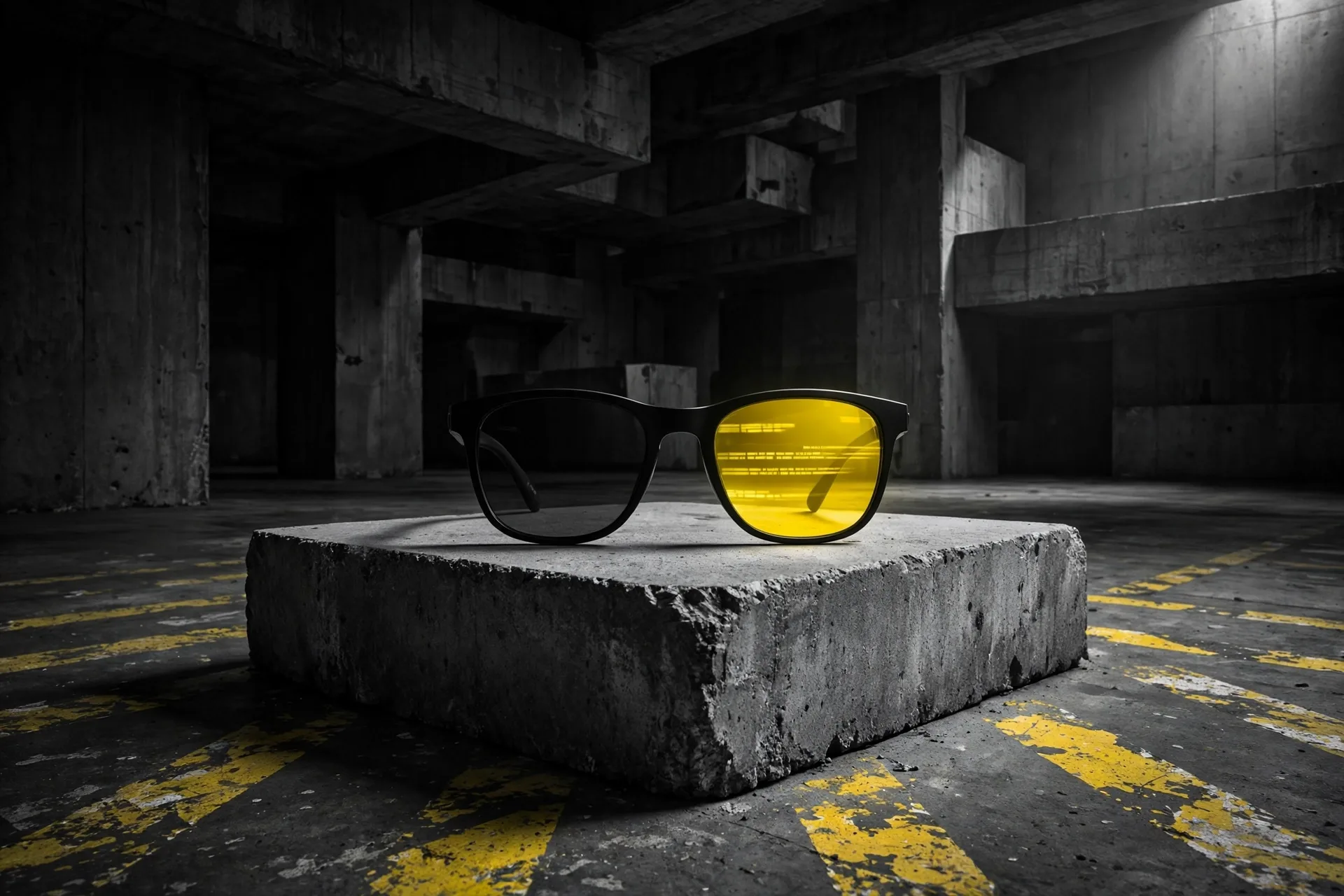
Most smart glasses ask the people around you to accept a camera on your face. MemoMind One starts from the opposite choice. There is no camera in the frame at all, and in its place sit two small projectors that put green text in front of your eyes: a script while you speak, captions while someone else speaks, translation, directions and the next item on your calendar.
That trade defines the product. It also defines the argument in this review, because a device sold on privacy then adds microphones and a paid feature that can record your day. The glasses themselves earned praise in published testing. The memory feature earned the opposite, from the same reviewers, in the same reviews.
What It Is
MemoMind is an AI hardware brand incubated by XGIMI, the projector maker, and MemoMind One is its first glasses product. It was shown at CES in January 2026, sold through a Kickstarter campaign that the campaign reporting put well past its goal, and is now sold through the maker store. Three frame styles share the same electronics: Nomad, Gotham and Archive, in materials the maker lists as magnesium and aluminium alloy, beta titanium and acetate.
Think of it as a second screen for your phone, worn on your face. The glasses pair with an iOS or Android app by Bluetooth and need that phone link for their core work. A dashboard appears when you tilt your head up, holding notifications, calendar items, tasks, notes, stocks and lyrics. Everything the display shows is text and simple graphics by design, which is why the maker built the feature list around words: prompts, captions, translation and summaries.
That focus separates it from camera glasses such as the Meta line, and puts it in direct contest with the Even G2 from Even Realities. Both rivals in that contest skip the camera and show text. We covered a different answer to the same problem in our Brilliant Labs Halo research review, where an open source build carries the privacy argument, and a no display answer in our Samsung Intelligent Eyewear research review.

Features and Specifications
The display is a binocular Micro LED waveguide system, one projector per lens. Text appears to float between one and five metres in front of you, with height, depth and brightness you can adjust. The maker rates brightness at up to 2000 nits of perceived brightness and calls the display readable in full sunlight. That figure is a maker claim, not a measurement, and published impressions split on it, as the experience section below records.
Specifications
- Maker
- MemoMind, incubated by XGIMI
- Display
- Dual Micro LED waveguide, binocular, 640 by 350 per eye, green only
- Field of view
- 25 degrees, 30 Hz refresh
- Brightness
- Up to 2000 nits, maker claim
- Camera
- None
- Audio
- Harman AudioEFX speakers in the temples, three microphones
- Weight
- 46.6 g for the Gotham frame with plano lenses, per the maker
- Battery
- More than 16 hours of mixed use per the maker, from an estimate that mixes standby, music, calls, translation, navigation, recording and teleprompter use
- Standby
- 3 plus days connected, 10 plus days disconnected, per the maker
- Water protection
- Splash resistant, not waterproof, per the maker
- Frames
- Nomad, Gotham and Archive
- Prescription
- Single vision only, ZEISS XRRX in the United States, added cost applies
Display brightness, maker figures in nits (higher is brighter)
Maker published figures checked November 10, 2026. MemoMind One and RayNeo iO and Even G2 figures from MemoMind comparison pages. Brightness claims are not independent measurements.
The eight included features are Memo AI for questions, the AI Translator, the AI Recorder for meetings with summaries, AI Captions, the AI Teleprompter, Maps, Calendar and Idea Notes. The maker says those stay included with or without a subscription. Three more features sit behind Memo Plus at $19.99 a month: Moments, Up Next and Memo AI Plus, which search and organise what the glasses capture.
Real World Experience
This is a research review. Dirty Static has not tested MemoMind One, and nothing below is presented as our own hands on work. The account draws on published testing by Engadget on June 18, 2026 and by Gizmodo in July 2026, plus the maker product and FAQ pages. Facts were checked on November 10, 2026.
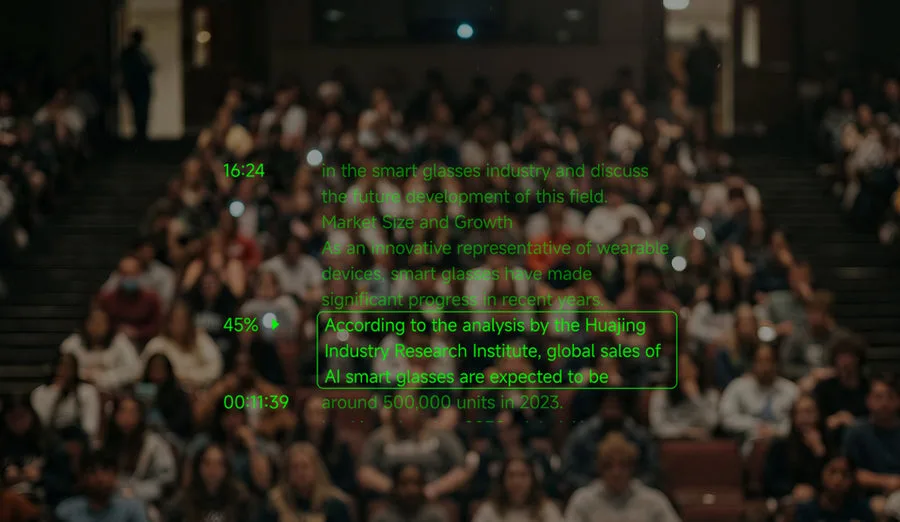
Start with the teleprompter, because it is the reason this product leads its category pitch. Gizmodo found that the glasses listen to your voice and scroll the script as you read, and rated the feature on par with the Even G2. For a speaker, a teacher, a creator filming to camera or anyone who presents from notes, that is a concrete daily use, not a demo trick. The script sits in your line of sight and moves at your pace, and nobody in the room sees it, since the maker designed the optics to limit light leakage toward other people.
Captions and translation drew the same qualified praise. Gizmodo reported that closed captioning turned speech into text on the display well, and that translation worked well in a Spanish video test, while noting the limit that hearing a translation does not let you speak back in that language. Engadget called translation and captioning effective enough, with a momentary delay that can slow a conversation, and noted that the translation censored profanity in what it displayed. The maker product page claims translation in 53 languages. Its FAQ and earlier material put the count at more than 26, a split the pricing section below returns to, because a buyer who needs one specific language needs the right number.
The display itself split reviewers on one point only. Gizmodo called it decently sharp and bright, able to handle daylight decently well, while also noting that the waveguide edges can show in your view and distort things when your eyes catch them. A TechRadar impression summarised in later coverage found green text hard to read against a bright sky even at full brightness. The fair reading is that 2000 nits helps a lot indoors and in ordinary daylight, and that a bright sky remains the hard case for green text at this resolution.
Battery and comfort held up in use. Engadget put the weight at 47 grams, found the glasses comfortable for a full day with weight split between the front and the temple tips behind the ears, and reported that fairly heavy use across notifications, music, calls and AI questions did not trouble the battery. That account supports the shape of the maker claim of more than 16 hours of mixed use, without turning an estimate into a measured result.
What Works
The no camera decision works every hour of the day. It lets the glasses into rooms where camera glasses cause a problem on sight, and it answers the first question strangers ask about smart glasses. Engadget said plainly that a camera on the face is the wrong idea, and praised the concept behind these glasses as rock solid. Removing the lens does not remove every privacy question, as the next section shows, but it removes the loudest one.
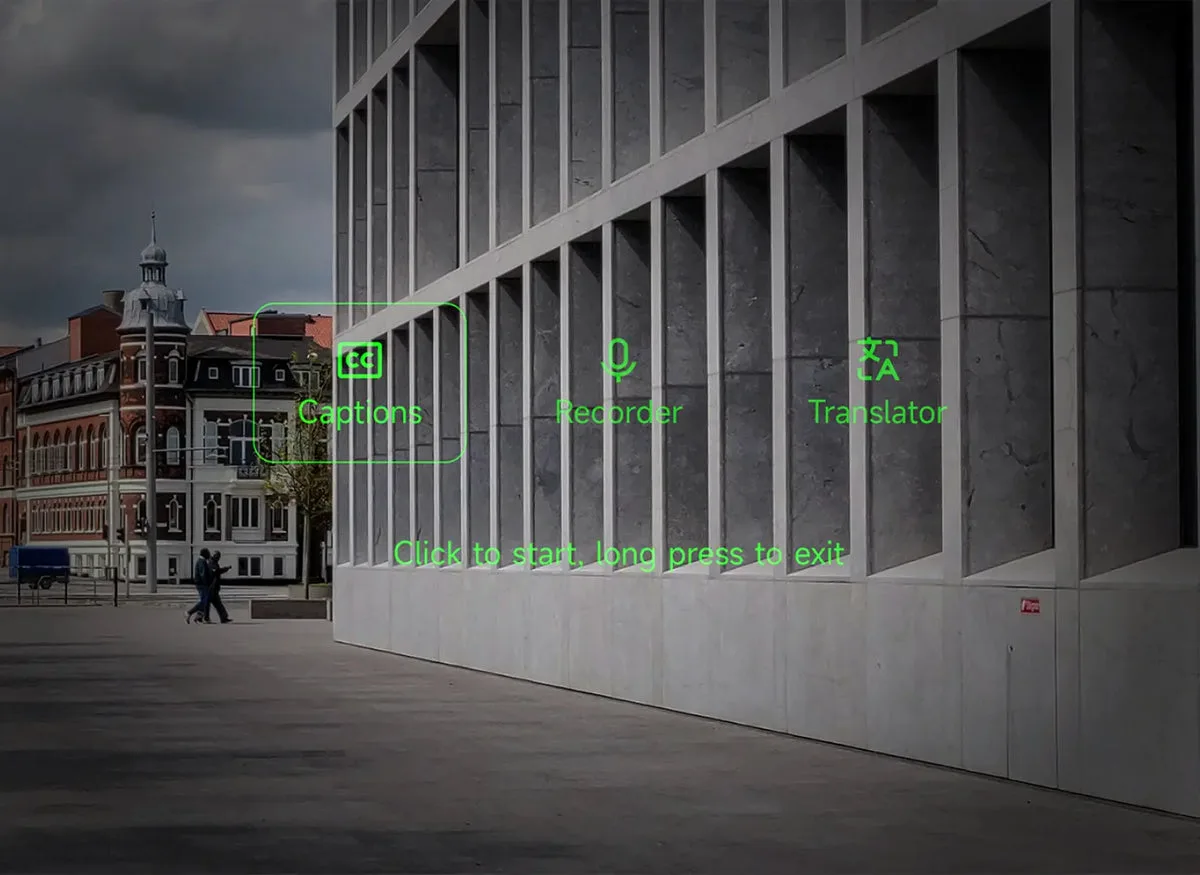
The core reading tools work as a set. A teleprompter that follows your voice, captions that keep up with speech, translation you can read, a recorder that produces meeting summaries and a dashboard you can glance at form one coherent product. Each tool uses the same display and the same microphones, and none of them needs a subscription, per the maker. That coherence is rare in this category, where feature lists often read as parts from three products taped together.
Sound is present, and that matters against the closest rival. The Even G2 has no speakers in the glasses at all, per the MemoMind comparison and published coverage. MemoMind put Harman AudioEFX speakers in the temples, so calls, prompts, navigation cues and music can play without earbuds. The quality limits sit in the next section, but the presence of speakers changes what the glasses can do alone.
Value, at the campaign price, is the fourth strength. At $399, MemoMind One undercut the Even G2 at $599 by a wide margin while adding speakers and a brighter rated display. Engadget still listed too expensive among its cons, and that verdict was aimed at the retail price and the paid tier. The hardware at the lower price is the easier case to make.
What Does Not
Moments is the problem, and both major reviews put it at the centre of their criticism. When active, the feature records what you say through the day and builds a journal with summaries, wishes and goals drawn from that audio. It sits inside Memo Plus at $19.99 a month. Gizmodo called constant recording creepy, noted that a recording light sits on the side of the right temple where people around you are unlikely to see it, and noted that people in your conversations take part in the record whether they know it or not. Engadget found the journal itself unreliable, crediting the reviewer with things other people had said, done or watched, and logged wishes from television dialogue as if they were his own.
Controls are the daily friction. One button on the right frame has to wake the dashboard, cycle pages, wake the AI on a long press and open a quick menu on a double click, with head tilts picking options. Engadget called the limited controls a bear and described repeated attempts that landed on the wrong action. Gizmodo also asked for better input methods and noted that the rival Even G2 offers an optional ring controller, while MemoMind offers no extra input device. For a product you operate while speaking to a room, that matters.
Audio quality trails the feature list. Gizmodo described music as tinny and poor sounding, and reported that a person on a call heard an audible echo. Engadget was kinder, calling the audio more than acceptable for music and calls given the size. The shared ground is modest: fine for prompts, cues and calls at moderate volume, not a replacement for earbuds on a long listen.
Buying one takes care. The maker pages checked in late October 2026 disagreed with each other on translation language count, on the prescription range and on whether a signed prescription is required, per a detailed guide that compared the product page with the FAQ. Prescription support covers single vision distance lenses only, so progressives and bifocals are out, and the product page said plus power lenses were expected to ship around January 2027. Confirm your language and your prescription in writing with support before you pay, because prescription orders cannot be changed or returned once production starts, per the maker policy reporting.
Competition
| Option | Starting price | What it offers instead |
|---|---|---|
| Even Realities Even G2 | $599 | The closest rival with no camera and a green display, lighter at 36 g per MemoMind comparison, with a wider field of view and no speakers in the glasses, plus an optional ring controller at extra cost |
| Meta Ray-Ban Display | $799 at launch reporting | A colour display and a camera, with the Meta assistant and a wrist band for gestures, for buyers who want capture and colour and accept a camera on the frame |
| Brilliant Labs Halo | $399 | An open source path with code and schematics public, a colour display in one lens and a camera used for AI context, for buyers who want to inspect what the device does |
| MemoMind One | From $399 campaign, $599 retail | The only entry here with speakers, no camera and a voice paced teleprompter at this price, with the paid Moments tier as the point to refuse |
The choice turns on what you want in front of your eyes. For colour and capture, Meta owns that shelf and charges for it. For the lightest frame and a ring to control it, Even charges more and gives up speakers. For reading scripts, captions and translations with sound included, MemoMind makes the strongest case on this list, provided you buy the glasses and not the memory subscription pitch that comes with them.
Final Verdict
Buy MemoMind One if you present, teach, film, travel or sit through meetings where captions and prompts in view would save you from a phone, and if a camera on your face is a deal breaker. At $399 the hardware case is strong: a bright text display that published testing found sharp, a teleprompter rated level with the established rival, speakers the rival lacks and a fit reviewers wore for full days. At the $599 retail price the case narrows, and checking the current store price before you order is part of the job.
Skip the Memo Plus trial unless you have read exactly what Moments records, where that audio goes and how to turn it off for good. The glasses earn their recommendation as a reading tool. The journal that listens all day earns the criticism it got, and it is optional, so leave it that way. A privacy product should be judged by its loudest feature, and here the quiet choice, no camera and no constant record, is the right one.
Sources
Facts checked November 10, 2026.
- MemoMind, MemoMind One official product page, for display, audio, battery, frame, lens and feature specifications, the eight included features, and the Memo Plus price of $19.99 a month. All performance figures from this page are maker claims.
- MemoMind, MemoMind One FAQs, for prescription limits, display figures and battery wording.
- MemoMind, MemoMind One vs Even G2, for the comparison figures on brightness, field of view, weight, audio and starting prices. This is a maker comparison, so its framing favours MemoMind.
- Engadget, XGIMI MemoMind One review, Daniel Cooper, June 18, 2026, for the 7.4 out of 10 rating, comfort, battery in use, control problems, translation delay and censorship, the Moments and Wishes account, and preorder and retail pricing.
- Gizmodo, MemoMind One review, Raymond Wong, July 2026, for teleprompter and caption testing, translation testing, display and audio findings, call echo, weight in hand and the Moments recording light account.
- OXIVUE, MemoMind AI glasses guide, checked October 31, 2026, for the comparison of maker product page and FAQ wording on price, prescription range and language counts.
- Product images: MemoMind, credited in the captions above.
END OF TRANSMISSION
Stay curious. Question everything.