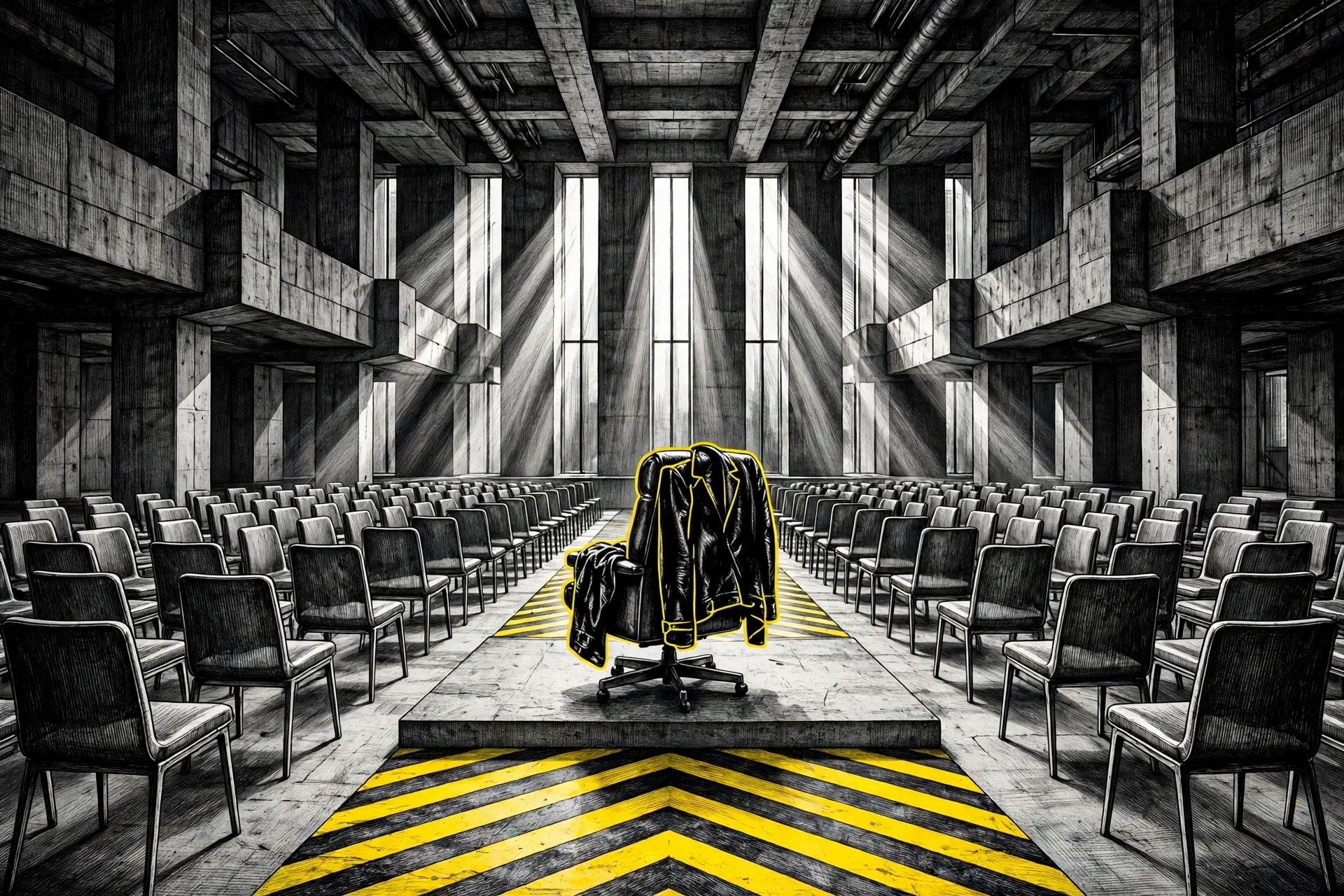
On Thursday, November 12, Nvidia told the world that its founder was gone. Jensen Huang resigned as president, chief executive and board member, effective at once. The company gave no reason in its announcement, and it named finance chief Colette Kress as interim chief executive in the same breath.
Consider what that sentence has to carry. Huang co founded Nvidia in 1993 with Chris Malachowsky and Curtis Priem, and he led it for 33 years without interruption. He was the only chief executive the company has ever had. There was no prior holder of the job to copy, no former leader to call, and, by every public account, no named successor waiting in the next office.
The Bigger Story
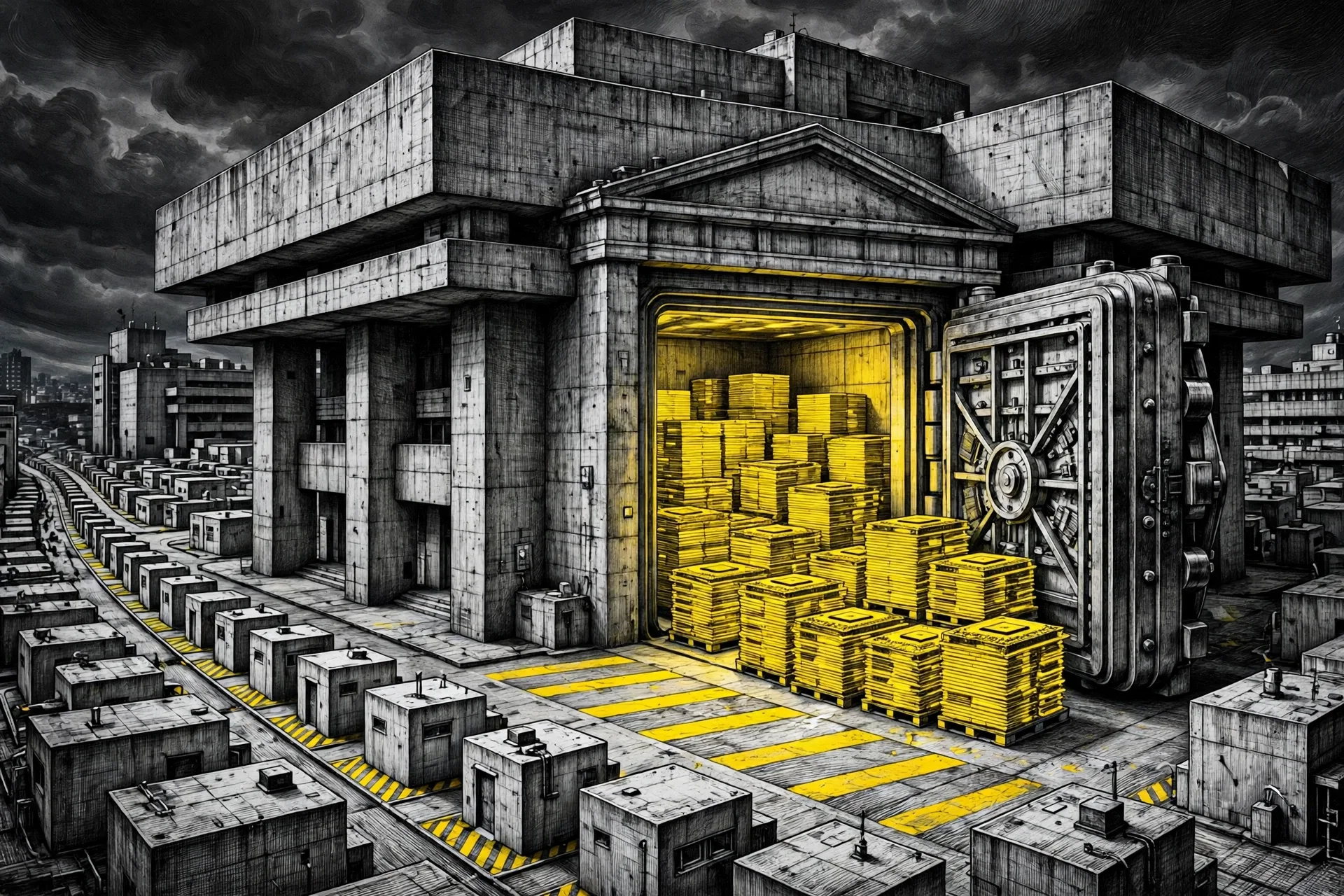
Nvidia is not a normal large company losing a normal boss. Its chips are the base layer for most advanced AI work, from the DGX Spark desktop to the largest training clusters, and the company itself became a funder of the industry built on top of them. Reporting this week described Nvidia as a central bank of AI, a phrase that captures its role better than any market rank.
Gary Marcus, a cognitive scientist and a longtime critic of the industry, put the funding role plainly on NPR. Nvidia, he said, has put itself in a position of being a bank, backstopping everything. He pointed to circular financing, in which Nvidia invests in AI firms that then spend the money on Nvidia chips, with OpenAI, Anthropic and CoreWeave among the firms that have relied on that support.
Marcus also named the personal element in that system. Huang, he said, was a swashbuckler, willing to make bets of arbitrary size. Agence France Presse reporting listed a financing guarantee of more than 100 billion dollars for a new data center in Ohio for OpenAI, and a commitment to buy 10 billion dollars of shares in the Anthropic public offering. Deals at that scale are not routine treasury work. They are founder bets, signed by a man who believed his own map of the future and had the balance sheet to act on it.
That is why the question in the headline is not really who gets a title. It is who, if anyone, inherits the authority to make calls like that. A board can appoint a chief executive in an afternoon. It cannot appoint three decades of credibility with investors, customers, engineers and heads of government in the same vote.
Context
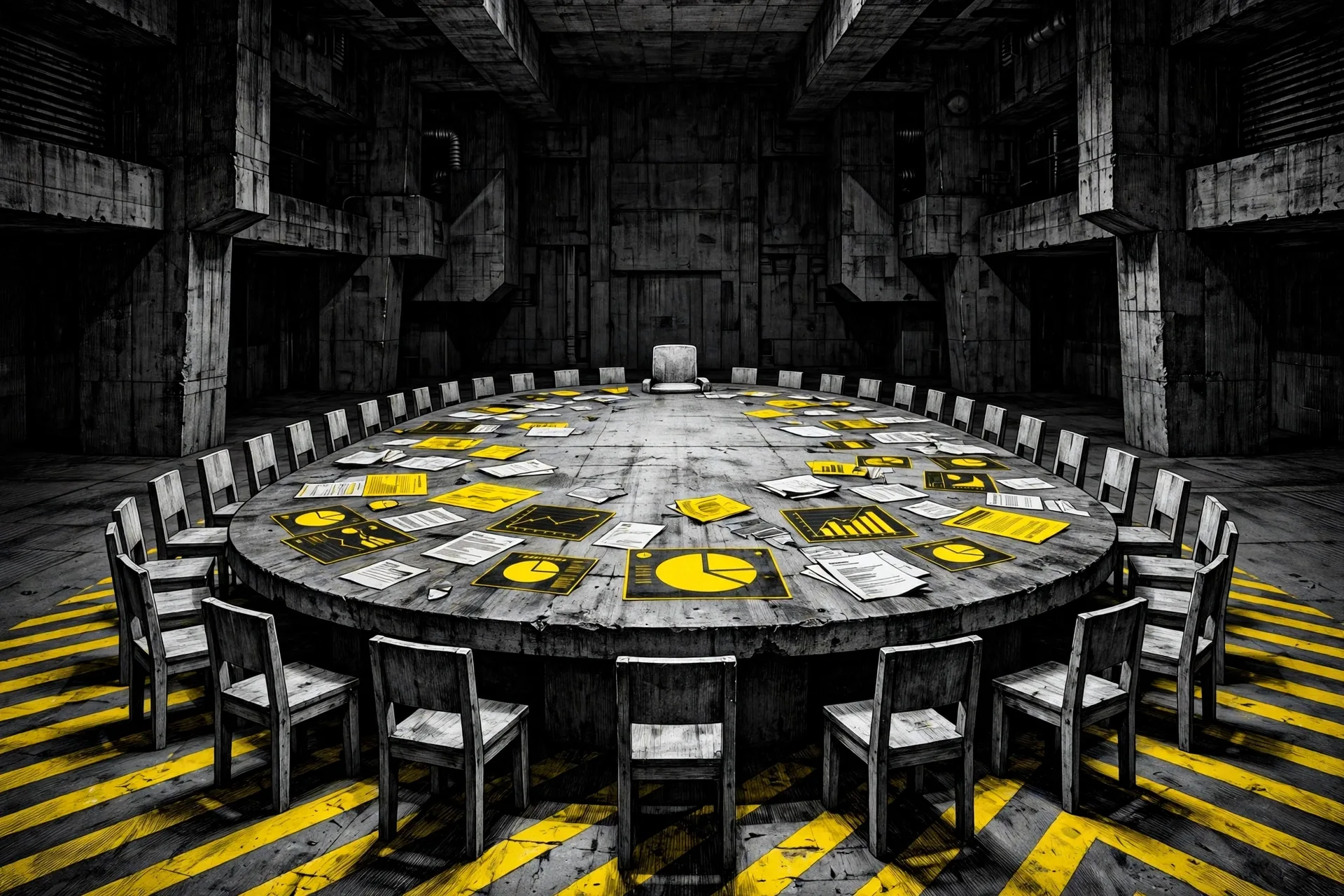
The structure Huang built helps explain the scramble now under way. By his own account in September 2025, about 60 executives reported directly to him. Most large company chief executives work through a handful of deputies and a clear second in command. Huang rejected that shape on purpose, argued that a flat company moves faster, and gave feedback in group settings rather than in private meetings.
The flat shape had a real logic while he sat at the centre of it. Information reached the top without passing through layers, and talented people across the company got direct access to the person who decided. The cost stayed hidden for years, because the centre never moved. A structure built around one person produces no obvious heir, since no deputy ever runs the whole show in public view.
His public role grew just as personal. The leather jacket, the keynote stage and the direct line to Washington became part of how Nvidia did business. The Associated Press noted that Huang stood often at President Donald Trump side, lobbied for looser limits on chip sales to China, dined at the White House and travelled on Air Force One. When a company chief becomes a diplomatic channel, replacing him means replacing a channel, not just a manager.
Kress brings a very different kind of weight. She joined Nvidia in September 2013 as executive vice president and chief financial officer, after eight years at Texas Instruments, 13 years at Microsoft and three years at Cisco, according to a Reuters factbox. Revenue in the fiscal year she joined was 4.13 billion dollars. In fiscal 2026 it was 215.9 billion dollars. She has presented the numbers beside Huang on earnings calls for 13 years, and investors know her voice well.
In her first statement in the new role, quoted by the Associated Press, Kress said the company strength has always come from its people. She added that she was committed to building on the foundation Huang created over the last 33 years. The board, for its part, named director Harvey C. Jones as its first ever chair. Jones is a former chief executive and executive chairman of Synopsys, the chip design software firm. Nvidia has never had an outside chair before, and it got one on the same day it lost its only chief executive.
The timing sharpens everything. Nvidia will report results for the third quarter of fiscal 2027 on Tuesday, November 17, at about 1:20 p.m. Pacific time, with a call at 2 p.m., and the company says that schedule has not changed. Kress will face investors in the top job five days after taking it, in a role she holds on an interim basis while still doing her finance job.
The market gave its first verdict in hours. Shares fell more than 4 percent by the close on Thursday, after a far deeper drop during the session, and Reuters reported a selloff of about 600 billion dollars in value across the week as the crisis around Huang grew. Numbers that large are not a judgment on Kress. They are a measure of how much of the company value investors had stored in one person.
A word on the reasons, stated carefully, because this feature is about leadership and not about scandal. The Nvidia announcement gave no reason and did not address the reports about Huang private life. The Associated Press reported that Huang apologised to staff on Sunday for being unfaithful to his wife, after reports about a relationship with a businesswoman whom United States intelligence suspects of acting for Beijing. Beijing has denied the spying allegation and called it unsubstantiated. Nvidia said on Sunday that it had no reason to believe national security or company secrets were compromised, and that its internal review would examine all available information. Reuters later reported a second relationship with an Nvidia executive, citing unnamed sources. None of those reports has been settled by a court or by a published review, and readers should hold them as reports, not as findings.
If Nvidia stabilizes quickly under new leadership, the AI infrastructure boom will have demonstrated resilience. If its stock, financing relationships, or ecosystem commitments remain under sustained pressure, that would add evidence to the fragile side of the AI bubble ledger.
Different Perspectives
The steady hand case starts with Kress herself. Josh Gilbert of eToro told Reuters that she is the obvious choice to steady the ship, a familiar and trusted voice for a market that badly needs one. That view treats the next few months as a credibility task. Keep the earnings call calm, keep supply promises intact, and show that the machine runs without its founder at the wheel.
The engineer case argues that calm is not enough for the permanent job. Reuters reported that many analysts and investors see Ian Buck as the other leading internal name. Buck joined Nvidia in 2004, helped build CUDA, the software layer that tied developers to Nvidia chips, and now leads product for hyperscale AI. Shay Boloor of Futurum Equities told Reuters that his bigger concern was the next decade, since Huang was the person who kept spotting where computing would go next. On that reading, Buck is the strongest long term internal candidate because he helped create the platform the whole industry now stands on.
Outside names carry a third logic. Reuters reported speculation around Rene Haas, chief executive of Arm and a former Nvidia executive, along with Jeff Fisher, a Nvidia veteran of 32 years. President Trump, in a social media post reported by the Associated Press, urged the company to pick Tim Cook, the former Apple chief, and critics in Congress objected at once to a president weighing in on a company choice. Nvidia has said only that it will consider internal and external candidates. No report checked for this feature says any candidate has been offered the job, and prediction market odds that favoured Buck over Kress rested on small trading volume, as Reuters noted.
Then there are the two forecasts that pull in opposite directions. Analyst Ming Chi Kuo, cited in Agence France Presse reporting, argued that the transition would not affect product development or competitiveness until 2028 at the earliest, since chip road maps are set years ahead. Marcus, by contrast, warned of chaos and argued that things will never be the same for Nvidia or for the industry as a whole. Both can hold a piece of the truth. The chips already designed will ship on schedule. The bets not yet placed, the funding not yet promised and the political fights not yet fought are where a new leader changes the story.
There is a fairness point buried in all of this, and Culture should state it. Kress, Buck and any other candidate will be judged against a founder who had 33 years to become a myth. No successor gets that runway. The honest test is not whether the next leader feels like Huang on stage. It is whether Nvidia decisions stay fast, whether its funding promises hold, and whether a company built as a flat wheel around one hub can learn to turn around a team. We examined a related habit of concentrated power in the lawsuit that uses the labs own warnings against them, where a handful of firms also hold choices that affect everyone else.
Why It Matters
AI leadership has a supply problem that has nothing to do with talent. The industry spent a decade rewarding founder figures who could raise money, charm governments and bet company scale sums on unproven demand, all at the same time. That model works while the founder stays. It leaves a vacuum the moment the founder goes, because the skills were never spread across an institution. They lived in a person.
Nvidia is the largest case, but it is not the only one. Across AI, a small set of leaders personify their firms to investors, staff and regulators. Each such firm carries the same hidden line in its risk register, whether it prints it or not. What happens here on a random Tuesday in earnings week, with no warning and no heir? Nvidia is now running that test in public, at full scale, and every other board in the sector is watching the results as if they were its own.
The funding web makes the test wider than one company. If a more cautious Nvidia trims the scale of its bets, firms that counted on Nvidia money could face gaps, as Marcus warned in his NPR and television remarks this week. He gave a concrete illustration, in which a cut to expected Nvidia support for the Anthropic offering could leave a hole that others would struggle to fill. That scenario is his warning, not a reported decision. Kress has announced no such cut. Still, the warning lands because the dependence is real, and dependence on one firm is dependence, in the end, on whoever runs that firm.
There is also a governance lesson that reaches beyond tech. Huang held about 3.6 percent of Nvidia shares, according to the company annual report cited in coverage this week. He did not control the company through a special share class. He controlled it through performance, tenure and the belief, shared by his board for decades, that the founder was the strategy. That kind of authority is earned, and it can be deserved, and it is still fragile. When it ends all at once, a board discovers how many of its normal tools, a chair, a succession plan, a second in command, it never bothered to build. Nvidia named its first chair and its first new leader on the same day. That order of events tells the story by itself.
For workers inside Nvidia, the question is more plain and more human. The first earnings call without the founder is not their worry in the abstract. Their worry is whether projects keep their backing, whether the flat rooms where Huang gave feedback in public still work, and whether the new centre of the company listens as widely as the old one did. Culture lives there, in the daily habits a leader leaves behind, long after the press release has scrolled away.
Closing Reflection
Every era of technology eventually faces the morning after its defining figure leaves the room. The personal computer age survived its founders. The mobile age is learning to. AI is younger, richer and more concentrated than either, and it built its central company around a single man who liked to say, in a line reported this week, that the secret to staying chief executive was to not get fired and to not get bored.
He did neither for 33 years, until, in the space of one week, the job ended anyway. What remains is a company with real products, real revenue and a real interim leader who knows its finances better than anyone alive. That is not a collapse. It is an unplanned experiment in whether an institution can outgrow the person who imagined it.
So who leads AI now? On paper, the answer this week is Colette Kress, with a board chair beside her and a search running behind her. In truth, leadership of this industry was never only a job title, even when one man made it look that way. It was vision plus money plus nerve, held together by trust. The next holder of that bundle, at Nvidia and across the field, will have to earn it in public, without 33 years of credit in the bank. Watching whether anyone can may be the most honest story AI tells about itself this year.
Reporting draws on the Nvidia announcement and filing as summarised by Datacenterfeed and other launch day coverage, Associated Press reporting syndicated November 13, 2026, Reuters reporting on succession candidates and on Colette Kress, and NPR reporting of Gary Marcus remarks, checked November 13, 2026. Company claims, analyst views and allegations are attributed in the text, and no allegation is treated as a finding.
Sources
- Associated Press, What we know after Jensen Huang resigns as Nvidia CEO, November 13, 2026, syndicated at: https://businessmirror.com.ph/2026/11/13/what-we-know-after-jensen-huang-resigns-as-nvidia-ceo/
- Reuters, Who would be next CEO at Nvidia? Top engineer and CFO favored as candidates, November 11, 2026: https://wncy.com/2026/11/11/whos-next-ceo-at-nvidia-top-engineer-and-cfo-favored-as-candidates/
- Reuters, Factbox: Who is Nvidia interim CEO Colette Kress?, November 12, 2026: https://wixx.com/2026/11/12/factbox-who-is-nvidia-interim-ceo-colette-kress/
- Datacenterfeed, Nvidia CEO Transition: Jensen Huang Resigns, Colette Kress Named Interim CEO Days Before Nov. 17 Earnings, November 2026: https://datacenterfeed.com/article/nvidia-ceo-transition-huang-resigns-kress-interim-november-2026
- NPR via WCMU, Jensen Huang is out. An AI expert explains what his exit means for the AI boom, November 13, 2026: https://www.wcmu.org/national-world-news/2026-11-13/jensen-huang-is-out-an-ai-expert-explains-what-his-exit-means-for-the-ai-boom
- Agence France Presse, AI industry reassesses future without Jensen Huang at Nvidia, November 2026, syndicated at: https://www.europesays.com/unitedstates/118197/
- Illustrations: Dirty Static
END OF TRANSMISSION
Stay curious. Question everything.