One year after launch, this research review weighs the DGX Spark on verified specs, published benchmark suites from LMSYS and Ollama, and a price that has climbed from $3,999 to about $6,950. The box still does one thing nothing else on a desk can do. The question is what that thing is now worth.
Dirty Static // The Verdict
Capacity you cannot get elsewhere on a desk, speed you can beat for far less money.
Best forDevelopers and small labs that need to prototype and tune models up to 200B parameters in private, on their own desk
What works
- 128GB of coherent unified memory loads models up to 200B parameters that no single consumer GPU can hold
- The full NVIDIA software stack arrives ready: DGX OS, CUDA, NIM microservices and playbooks on day one
- ConnectX-7 networking at 200 Gb/s lets two units pool memory and reach models up to 405B parameters
- Small, quiet class hardware at 1.2 kilograms and about 240 watts, built to live on a desk full time
What does not
- Token generation is slow for its price: 273 GB/s of memory bandwidth caps dense model decode in single digits at 70B
- The 128GB price climbed from $3,999 at launch to about $6,950 in October 2026, a rise of roughly 74 percent in one year
- The new 64GB model starts at $4,999, which is $1,000 more than the 128GB model cost at launch
- Linux only, Arm based, and still uneven in spots where the GB10 software stack meets tools built for data centre cards
Research review: based on published testing, specifications, and documentation, not hands on testing.
A year ago the DGX Spark was the easiest pitch in local AI. One small gold box, 128GB of memory that CPU and GPU share, and models on your desk that used to need a server room. Then the price started moving. The machine that launched at $3,999 in October 2025 rose to $4,699 in February 2026, and in October 2026 ServeTheHome reported the 128GB model moving to a tier of about $6,950. This review is about the gap between what the Spark uniquely does and what NVIDIA now charges for it.
What It Is
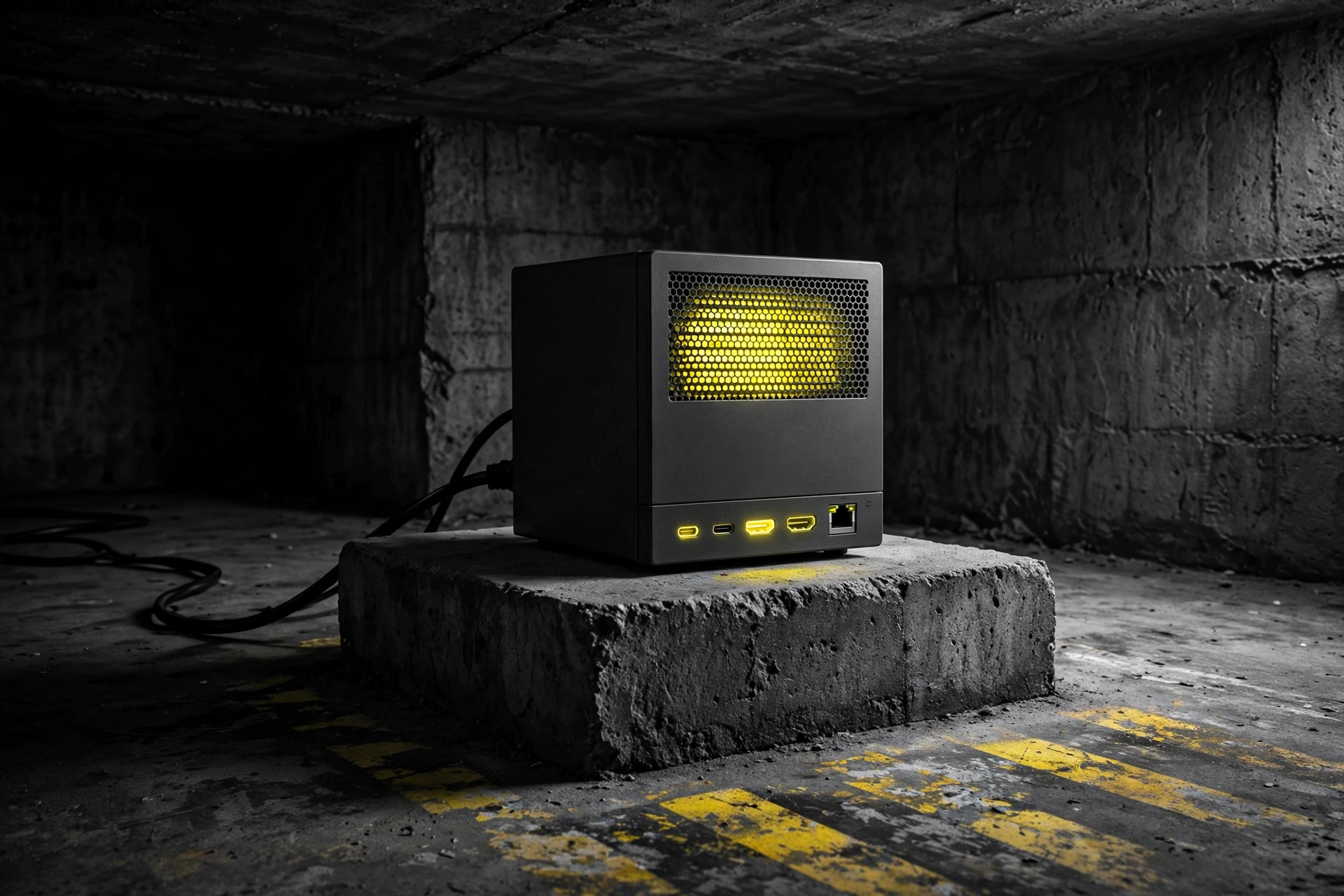
The DGX Spark is a desktop AI computer built around the GB10 Grace Blackwell Superchip, a two die package NVIDIA developed with MediaTek. One die carries a 20 core Arm CPU. The other carries a Blackwell GPU, and the two share one pool of LPDDR5x memory through the NVLink-C2C interconnect. NVIDIA sells it as a personal AI supercomputer, and the honest translation is narrower: it is a development and prototyping appliance for people who work on large models and want that work local, private, and always on.
It is not a gaming PC and it is not a workstation in the usual sense. It runs DGX OS, an Ubuntu based Linux build, and nothing else. It ships with the NVIDIA AI software stack installed, including CUDA tooling, containers, NIM microservices, and a library of playbooks for common jobs such as serving models with vLLM and fine tuning with standard frameworks. NVIDIA states that one unit runs inference on models up to 200 billion parameters and fine tunes models up to 70 billion parameters. Those are company figures for capacity, and published testing backs the capacity claim while arguing hard about the speed that comes with it.
Features and Specifications
| Part | DGX Spark specification |
|---|---|
| Superchip | NVIDIA GB10 Grace Blackwell, developed with MediaTek, TSMC 3nm class process |
| CPU | 20 core Arm: 10 Cortex-X925 performance cores and 10 Cortex-A725 efficiency cores |
| GPU | Blackwell architecture, 6,144 CUDA cores, fifth generation Tensor Cores with FP4 support |
| AI compute | Up to 1 petaFLOP at FP4 with sparsity, per NVIDIA |
| Memory | 128GB LPDDR5x, coherent and unified between CPU and GPU, 273 GB/s bandwidth |
| Storage | Up to 4TB NVMe M.2, self encrypting |
| Networking | ConnectX-7 SmartNIC at 200 Gb/s, 10 GbE, Wi-Fi 7 |
| Ports | 4 USB-C, HDMI |
| Operating system | NVIDIA DGX OS, Ubuntu based |
| Size and weight | 150 x 150 x 50.5 mm, 1.2 kg |
| Power | About 240 watts from a standard outlet |
| Model capacity | Inference up to 200B parameters and fine tuning up to 70B on one unit, per NVIDIA |
Two numbers on that sheet do all the work. The first is 128GB, the memory pool that decides which models fit. The second is 273 GB/s, the bandwidth that decides how fast tokens come out once a model is loaded. For scale, a data centre H100 moves data at roughly 3.35 TB/s, more than twelve times the rate. Every strength and every complaint in this review traces back to that pairing of a huge pool and a narrow pipe.
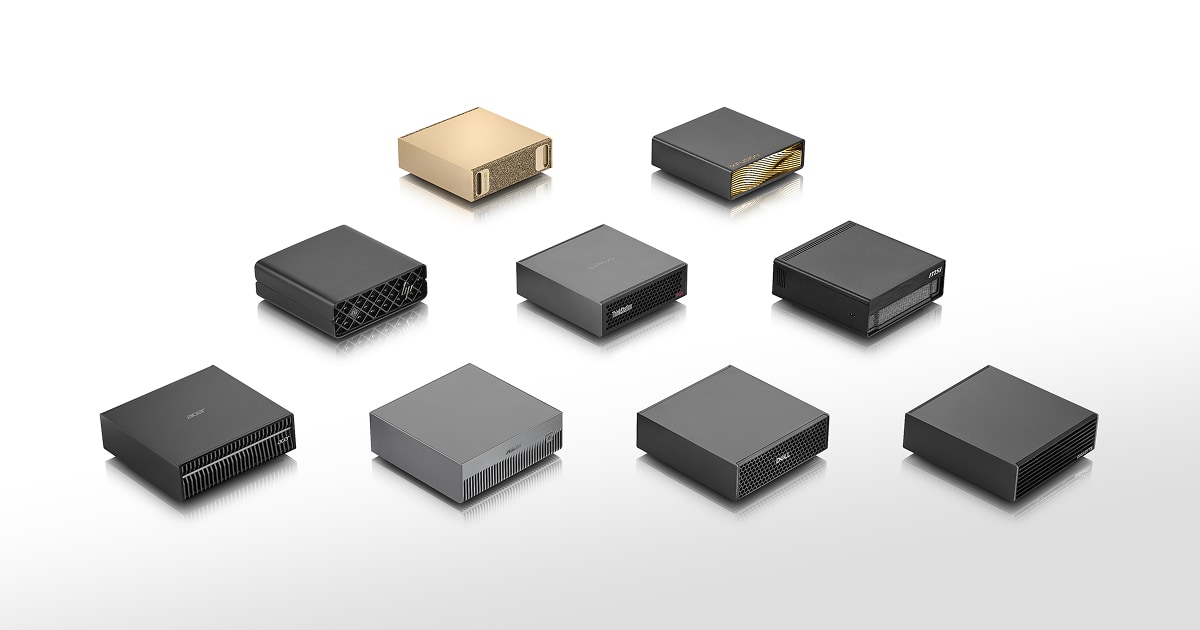
The networking deserves its own line. The ConnectX-7 port is hardware most desktops never carry, and it exists so two Sparks can link directly and pool 256GB of memory for models up to 405 billion parameters, per NVIDIA. In October 2026 NVIDIA added cluster tooling and a 64GB configuration, sold only through Acer, ASUS, Dell, Gigabyte, HP, and MSI from October 23, starting at $4,999. NVIDIA says one 64GB unit supports models up to 100 billion parameters, and that two clustered units delivered up to 1.7 times the performance of one unit in its own Qwen 3.8 27B test. That test result is a company claim, not an independent measurement.
Real World Experience
This is a research review, built from published testing by LMSYS, Ollama, ServeTheHome, and others rather than hands on time in our lab. The picture those sources draw is consistent, and it splits cleanly by model type.
On sparse models, the Spark looks strong. Ollama measured its own release build on the Spark and recorded the 120 billion parameter gpt-oss model, a mixture of experts design that reads only part of its weights per token, at about 41 tokens per second of generation with prompt processing above 1,100 tokens per second. LMSYS, the group behind the Chatbot Arena leaderboard, brought SGLang support for gpt-oss to the Spark and reported around 50 tokens per second on the 120B model and around 70 on the 20B model. For a local coding agent or a private assistant, that is fully usable speed on models that simply cannot load on a normal GPU.
On dense models, the bandwidth bill arrives. LMSYS measured the 20B gpt-oss model under Ollama at 2,053 tokens per second of prompt processing and 49.7 tokens per second of generation. The same suite put the dense Llama 3.1 70B model at 2.7 tokens per second, slower than most people read. Published results for dense 32B class models sit near 10 tokens per second. The pattern never changes: prompt processing is quick, batched throughput is respectable, and one person waiting on one dense model feels every one of those 273 gigabytes per second.
Token generation speed, tokens per second (higher is better)
Single stream decode from published suites. GPT-OSS 20B under Ollama per LMSYS; gpt-oss 120B per Ollama release testing; Llama 3.1 70B per LMSYS. Model type changes the result more than any setting does.
The software story is the counterweight. Reviewers and benchmark teams keep landing on the same point: the stack works. DGX OS arrives with drivers, containers, and frameworks in place, the standard Linux tooling for Ollama and llama.cpp installs the ordinary way, and NVIDIA maintains playbooks for the jobs buyers actually run. The friction that remains is real but specific. The GB10 GPU uses a consumer class architecture variant that lacks some tensor core features of data centre Blackwell cards, and early frameworks and kernels showed uneven support that firmware and software updates have partly closed through 2026. Budget time for that class of surprise if your workflow leans on fresh releases.
What Works
Capacity is the headline and it holds up. A single Spark loads and runs a 120B or 200B class model locally, with no cloud account, no per token bill, and no data leaving the room. For regulated work, private code, and unpublished research, that property alone justifies hardware that looks overpriced on a spec sheet.
The form factor is the second genuine win. This is data centre lineage tooling in a 1.2 kilogram box that draws about 240 watts and sits on a desk without drama. A two unit cluster fits in a shoebox and pools 256GB. Nothing in the PC market matches that density of usable AI memory per litre.
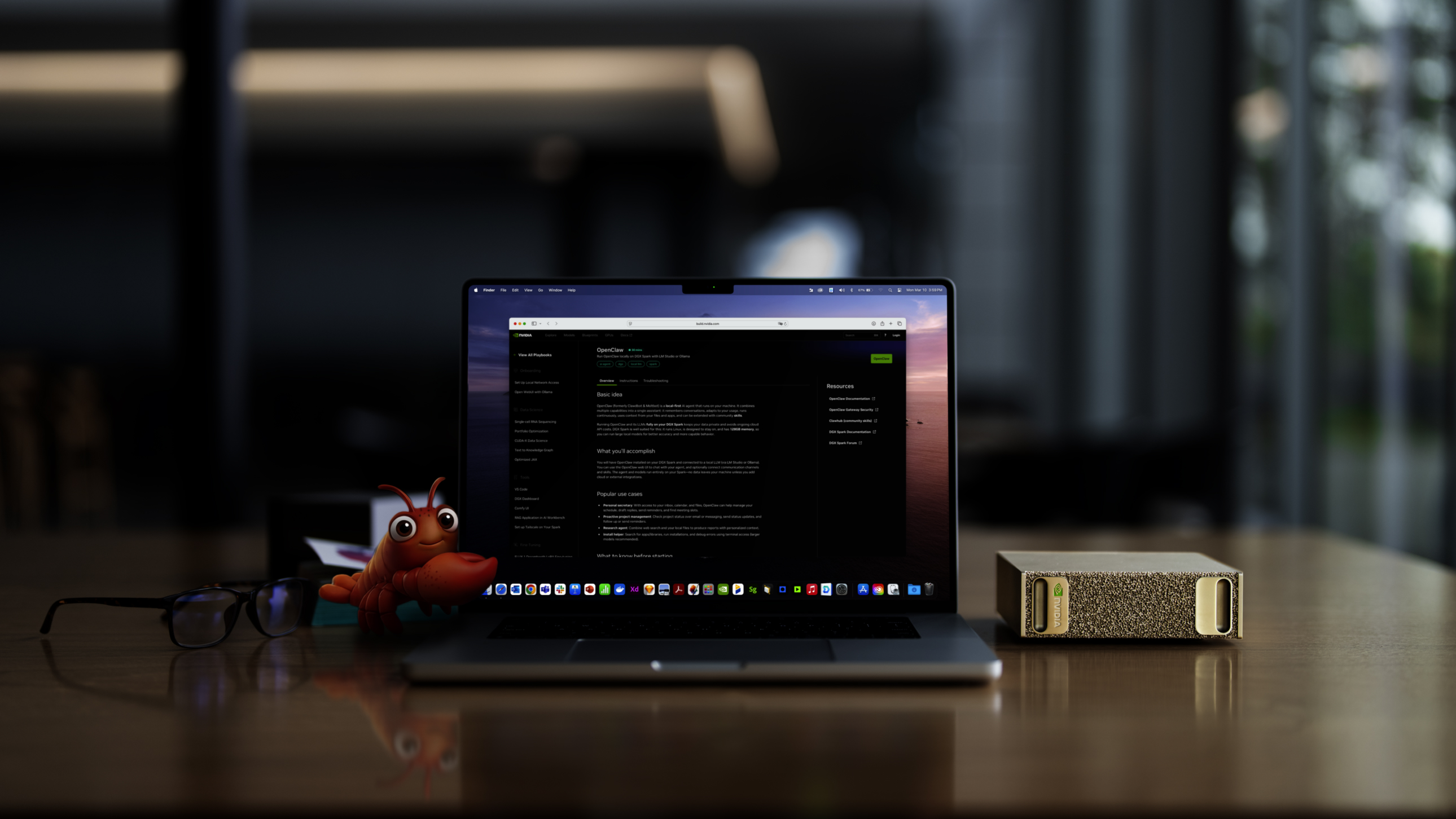
The third win is the on ramp. Because the Spark runs the same CUDA centred stack as the big DGX systems, work prototyped on a desk moves to rented or owned data centre hardware without a rewrite. Teams at places like Stanford have used Sparks exactly that way, prototyping full pipelines locally before scaling them to clusters. That path, desk to data centre on one stack, is the product NVIDIA is really selling.
What Does Not
Speed per dollar is poor, and it got worse as the price rose. An RTX 5090 generates tokens roughly four times faster than a Spark on the 20B model both can run, and a 5090 based PC costs less than a Spark now does. The Spark wins only where the 5090 cannot compete at all, which is past 32GB of model. Buyers whose models fit in a consumer GPU get far more speed for far less money elsewhere.
DGX Spark 128GB price, USD
Founders Edition launch price October 2025; NVIDIA raised the MSRP in February 2026 citing memory supply limits; the October 2026 tier is as reported by ServeTheHome, with partner pricing varying by vendor.
The price path is the hardest part of this review to defend. A rise of roughly 74 percent in a year, blamed on memory costs, turned a stretch purchase into a procurement decision. The new 64GB model makes the framing worse: at $4,999 it costs $1,000 more than the 128GB model did at launch while offering half the memory that is the entire point of the platform. ServeTheHome called $4,999 for a 64GB machine quite high and $6,950 for the 128GB machine lofty. That is a fair summary of the market reaction.
Finally, the platform asks for commitment. It is Linux only and Arm based, so Windows software and x86 habits stay behind. Storage and memory are fixed at purchase. And the resale and upgrade logic of a normal PC does not apply: when you outgrow a Spark, you buy a second Spark or you leave the platform.
Competition
| Option | Memory | Memory bandwidth | Price (USD) | The trade |
|---|---|---|---|---|
| NVIDIA DGX Spark 128GB | 128GB unified | 273 GB/s | About $6,950 | The full NVIDIA stack and ConnectX-7 clustering, at a steep and rising price |
| NVIDIA DGX Spark 64GB | 64GB unified | 273 GB/s | From $4,999 | Same chip and stack, half the capacity that defines the platform |
| RTX 5090 PC | 32GB GDDR7 | About 1.79 TB/s | Varies, typically less than a Spark | Roughly four times the token speed on models that fit, and no path past 32GB |
| AMD Ryzen AI Halo (Strix Halo) | 128GB unified | 256 GB/s | $3,999 | Same capacity class for far less money, on a younger software stack with no CUDA |
| Apple Mac Studio | 96GB to 512GB unified, by configuration | Up to 819 GB/s on M3 Ultra configurations | From $3,999 at M3 Ultra launch | Far more bandwidth and a polished desktop, but macOS and no NVIDIA stack |
| Rented H100 class cloud GPU | 80GB HBM and up | About 3.35 TB/s | Hourly, varies by provider | Real data centre speed with no hardware to own, billed forever and off site |
The table shows the Spark squeezed from both sides. Below it, Strix Halo systems and the Framework Desktop offer 128GB of unified memory for thousands less, and they keep improving. Above it, cloud GPUs offer an order of magnitude more bandwidth with no capital cost. The Spark holds the middle on two assets neither side matches today: the mature CUDA and DGX software stack in a box this small, and 200 Gb/s clustering built in from the factory.
Final Verdict
Buy the DGX Spark if your work needs models between roughly 70B and 200B parameters running locally, privately, and daily, and if your path leads toward NVIDIA data centre hardware later. For that buyer, the capacity and the stack are worth money, the speed limits are known quantities, and the alternatives each give up something that matters. Buy it at the partner level if you can find pricing below the top tier, and favour the 128GB model, because memory is the whole argument for this machine.
Skip it if your models fit in 32GB, if you serve many users at once, or if price matters more than provenance. An RTX 5090 system is faster at everything it can load. A Strix Halo box holds nearly as much for far less. The cloud rents you twelve times the bandwidth by the hour. A year ago, at $3,999, the Spark was an easy recommendation for local AI builders. At about $6,950, it is a specialist tool with a specialist price, excellent at exactly one job and honest about none of its limits in the brochure. The job is real. So is the bill.
This is a research review. It draws on NVIDIA product documentation and its October 2026 DGX Spark 64GB announcement, benchmark suites published by LMSYS and Ollama, and pricing reporting from ServeTheHome, checked October 2026. No hands on testing was performed.
Sources
- NVIDIA: DGX Spark product page
- NVIDIA via ServeTheHome: DGX Spark 64GB launched and big 128GB GB10 price increases
- LMSYS: Optimizing GPT-OSS on NVIDIA DGX Spark
- Ollama: NVIDIA DGX Spark performance
- GPU Smith: NVIDIA DGX Spark review, price, specs and performance
- Product images: NVIDIA
END OF TRANSMISSION
Stay curious. Question everything.