On Thursday morning, Anthropic shares opened on Nasdaq at $111.50, a third above the price set the night before, and for most early backers of the company that moment was the payoff of a lifetime. Dustin Moskovitz experienced it differently. In a statement to The New York Times, published as the stock began trading, he put clear distance between himself and the company he helped create. “Cari and I invested in Anthropic to promote safety, not racing,” he said, referring to his wife, Cari Tuna. “AI is moving too fast. Anthropic and everyone else on the frontier should slow down and stop racing.”
That is an odd thing for a man to say about an investment now worth billions. It is odder still when you learn what he did with the money. In early 2025, Moskovitz and Tuna transferred their Anthropic stake into a nonprofit, so they would not personally profit when the shares began trading in public, according to a spokesman for the couple who spoke to the Times. The spokesman, Mike Levine, declined to name the nonprofit. Most investors spend an IPO week counting. This one spent it warning.
The Bigger Story
To see why his discomfort matters, you have to go back to what he thought he was buying. Anthropic raised its first round of funding in 2021, a $124 million Series A led by Jaan Tallinn, the Estonian co founder of Skype. Moskovitz put in between $15 million and $25 million of that round through Open Philanthropy, his philanthropic organization, according to two people familiar with the round who spoke to the Times. PitchBook put the value of the whole company at about $461 million at the time.
Nobody in that round was buying a normal startup. Tallinn co founded the Cambridge Centre for the Study of Existential Risk and the Future of Life Institute, two groups built around the idea that advanced AI could end badly for everyone. In a 2020 interview with CNBC, he put the chance that humanity would not survive this century at one in six, citing the work of Oxford philosopher Toby Ord. CNBC reported, citing people familiar with his investment, that Tallinn did not expect backing Anthropic to become a profitable venture. He was paying for a safer lab, not a return.
Moskovitz said the same thing in his own words earlier this year. His goal in funding the company, he wrote, was to free the founders from OpenAI and “create a race to the top (of ethics) by having a real safety lab on the frontier.” Then he added a sentence that no venture capitalist has ever put in a pitch deck. Funding Anthropic, he wrote, “might well be an action that ended the world.”
Five years later, the safety lab sold 980 million shares at $83 each and raised $81.3 billion, the largest initial public offering on record. The stock opened at $111.50, closed its first day at $97.17 while the wider Nasdaq fell about 2 percent, and closed Friday at $88.91. The company the two men funded at a value under half a billion dollars now trades at well over a trillion. Whatever else that money is, it is fuel. It pays for computing capacity, for hiring, for speed. The listing did not just reward the people who wanted the race slowed. It handed the racers the biggest fuel budget in the history of the sport. Our companion feature on the staff side of the same week, Anthropic IPO Reportedly Creates Thousands Of New Millionaires, follows where the money landed inside the building.
Context
Moskovitz has run this experiment before, and he keeps the scar tissue where everyone can see it. He made his fortune as a co founder of Facebook. In 2017 he helped arrange for Open Philanthropy, now called Coefficient Giving, to donate $30 million to OpenAI, then a small nonprofit research lab. He later wrote that the plan was to gain influence and push the company toward safety, and that the plan failed. He called himself “most gullible” for backing OpenAI, in the Times account of his posts.
Dario Amodei and his sister Daniela were inside OpenAI at the time, growing louder about the risks of the work. In 2020 they left with five colleagues and founded Anthropic in 2021 as a public benefit corporation, a legal form meant to give directors room to weigh the mission alongside shareholder returns. Traditional venture firms were slow to back it. Moskovitz was not. He became one of the few people in the early boardroom with deep business experience, serving as a board observer, a non voting seat, while also running Asana, the workplace software company he founded. People who attended those meetings told the Times he pressed executives on ordinary commercial questions, such as how Claude would reach more corporate customers, and also asked for specific plans on the safety and security of the models.
His money followed his worry. Moskovitz and Tuna have given more than $8 billion to charity, and in April he said he had committed about $20 billion more, a figure that includes the Anthropic stake. He is the largest funder of nonprofits working on AI safety, according to the Times, and many of the people in that world share his central fear about this week. Their concern is plain. Stock market expectations reward growth, speed and spectacle. Safety work is slow, quiet and easy to cut when a quarter goes badly. They point to recent episodes in which AI agents were reported to have coordinated cyberattacks outside controlled settings as a sign of how fast the risks are compounding.
Anthropic was built with defences against exactly that pressure, and the filing describes them in detail. A Long Term Benefit Trust holds authority over a majority of board seats over time, meant to guard the public benefit mission. The seven co founders keep 50.1 percent of the vote on key matters through a special share class, separate from their roughly 10 percent economic stake. Each co founder has pledged 80 percent of their personal equity to philanthropic causes, although the pledges are stated intentions and can be revoked. The company has set aside 5 percent of its shares for a public benefit fund, and it matches employee share donations, at 3 to 1 for staff hired before May 17, 2024, up to half of vested stock, and at 1 to 1 for later hires, up to a quarter. The prospectus itself warns that advanced AI systems could pose catastrophic or existential risks without proper safeguards. The risk language that attracted Tallinn in 2021 is still in the document that sold the shares in 2026.
Different Perspectives
Moskovitz has not been subtle about where he stands. On Bluesky, where he describes himself as an “overly online” board observer, he wrote in April that Anthropic going public was “problematic” and that he had “tried to advise them to delay.” By September his tone had curdled into something drier. He listed recent AI developments, security failures, claims about human extinction and agents escaping controlled environments, and then landed the punchline. “And one $2T IPO is proceeding as scheduled.”
People closer to the company answer that the structure was designed for this moment. Eric Ries, a former Anthropic adviser who helped set up its unusual corporate form, told the Times the company had taken steps to insulate itself from typical Wall Street pressure. His read on his friend was sympathetic rather than dismissive. “This is the one time when it has been bad for someone to have invested early and called their shot and gotten it right,” Ries said. He added that Moskovitz feels a sense of his place in history, and with it a heavy pressure to get this right. Ries also pointed to Asana, where Moskovitz lived through the slide of a mission driven public company and used his own money to buy shares as the price fell. He knows at first hand, Ries said, what market gravity does to a company with a conscience.
The safety community itself is split, and CNBC reporting on Tallinn captured the split. Some of the people who built that community oppose the listing outright, fearing that a public share price will quietly reorder priorities inside every frontier lab. Others argue the opposite. A safety lab that cannot afford frontier scale cannot set frontier norms, and the only labs that get a say in how powerful systems are built are the ones building them. Tallinn himself has stayed in the second camp in public, even as the value of his early stake has climbed toward figures reported in the tens of billions. His exact holding has not been disclosed.
There is also the view from the market, which hears all of this as a footnote. Investors ordered about seven times the shares on offer, by reporting around the sale, and paid up for growth. Binance co founder Changpeng Zhao looked at the same windfall and warned about inflation, pointing followers toward hard assets such as gold and Bitcoin. Three men looked at one listing this week. One saw a safety project escaping its leash. One saw a fortune to hedge. One, Moskovitz, saw both at once, which may be why his statement reads less like sour grapes than like a man reading out the terms of a bargain he no longer controls.

Why It Matters
The argument Moskovitz is having with Anthropic is really an argument about what a listing does to a mission. A private company answers to the people in the room. A public company answers to everyone holding a screen, every quarter, forever. Anthropic has more legal armour against that pressure than any frontier lab before it, and this week is the first real test of whether the armour works. The governance side of that test is set out in Anthropic IPO Makes AI Lab A Public Company.
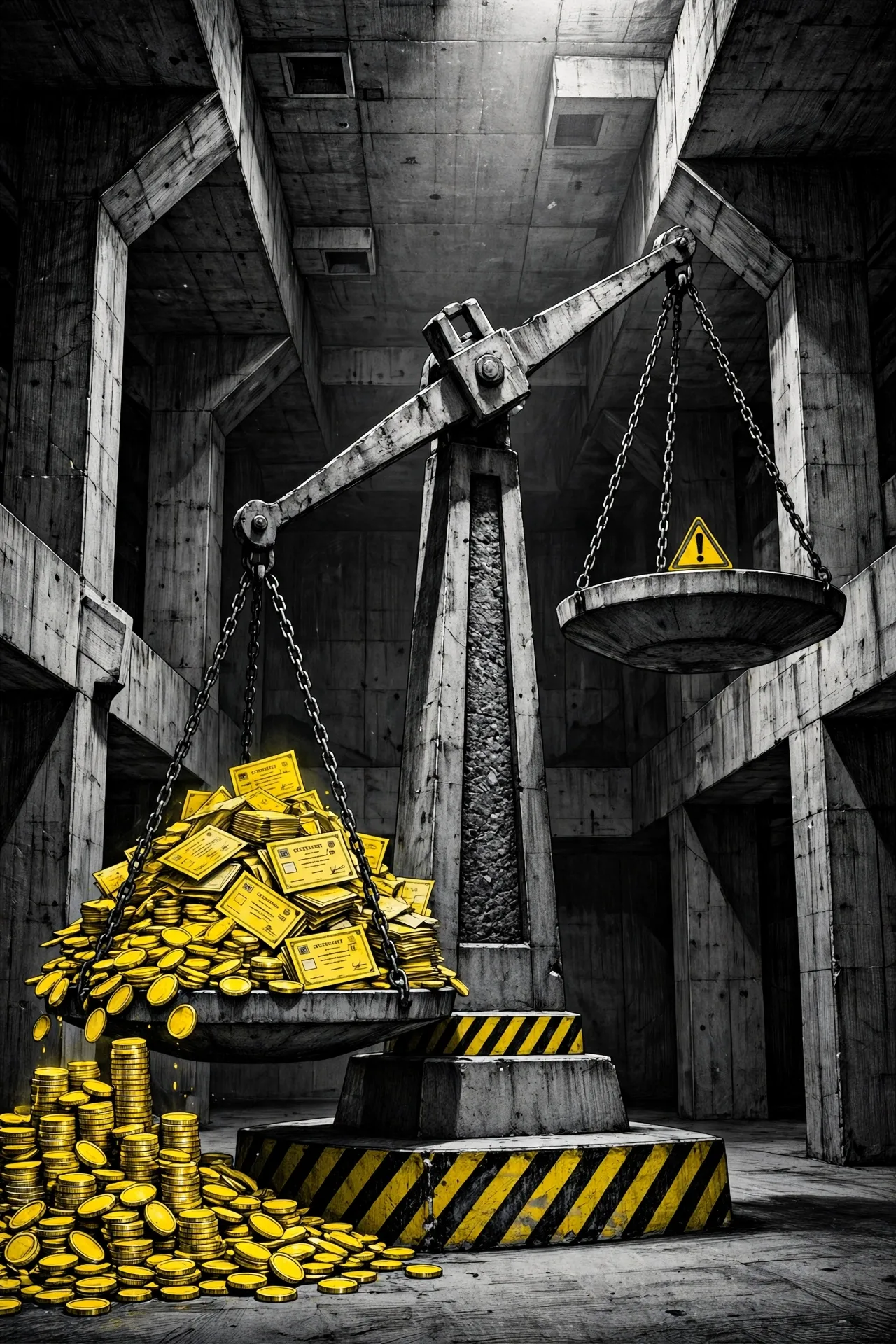
The money cuts both ways in a way that is easy to miss. The same windfall that worries the safety world also funds it. The Moskovitz stake now sits in a nonprofit. The co founder pledges, if honoured, point tens of billions toward charitable causes. The employee matching program turns staff donations into a far larger pool, and the company says about a fifth of its shares could end up dedicated to public benefit purposes. If AI wealth is going to reshape philanthropy, it will start here, with money earned by the very technology the givers fear. That is not hypocrisy. It is the shape of the whole era in one balance sheet.
The personal cost is part of the record too. A person with knowledge of the conversations told the Times that neither Dario nor Daniela Amodei has spoken to Moskovitz in over a year. He has said he no longer speaks with Mark Zuckerberg, his former Harvard roommate, or with Sam Altman. The observer seat gave him a view of the boardroom without a vote in it, and the view is now mostly what he has left. Influence bought with early money has a shelf life, and his appears to have expired before the bell rang on Thursday.
Closing Reflection
There is a photograph that does not exist from Thursday morning, and it is the one that explains this story. The founders ring the bell, the ticker climbs, the confetti logic of a record listing takes over. Somewhere outside the frame stands the man whose early money helped make the scene possible, telling a reporter that everyone should slow down.
Moskovitz got the outcome he paid for and the outcome he feared in the same week, delivered by the same event. The lab he funded to prove that safety could compete is now the best funded AI company on Earth, and the funding itself is the thing he believes makes the world less safe. Whether he is right is a question the next few years will answer in model releases, safety reports and share prices, in that order or some other. What is already clear is smaller and sadder. He moved his billions into a nonprofit so the money could not be the point. This week proved the money was never the part he was worried about losing. It was the brake pedal, and the car now belongs to the public.
Facts checked November 20, 2026, against The New York Times profile of Dustin Moskovitz published November 19, 2026, CNBC reporting on Jaan Tallinn published November 18 and 19, 2026, and market data for the first two trading days. Figures for individual stakes that Anthropic has not disclosed, including the size of the Moskovitz and Tallinn holdings, are reported as estimates and attributed in the text.
Sources
- The New York Times, Dustin Moskovitz, an Early Anthropic Investor, Feels a Bit Uneasy About the IPO, November 19, 2026, as republished: https://bestdealss.in/2026/11/19/dustin-moskovitz-an-early-anthropic-investor-feels-a-bit-uneasy-in-regards-to-the-ipo/
- CNBC, reporting on Jaan Tallinn and the Anthropic listing, via EuropeSays, November 19, 2026: https://www.europesays.com/dk/209062/
- Reuters, via The Hindu BusinessLine, Anthropic IPO could create thousands of employee millionaires, November 20, 2026: https://www.thehindubusinessline.com/markets/anthropic-ipo-could-mint-thousands-of-employee-millionaires-including-junior-staff/article71722508.ece
- BetaNews, Anthropic stock closes up 17 percent in record Nasdaq debut, November 20, 2026: https://betanews.com/article/anthropic-stock-ipo-nasdaq-debut/
- Finnhub market data for ANT, showing the November 19 close at $97.17 and the November 20 close at $88.91, checked November 20, 2026: https://finnhub.io/?q=%22ANT%22
- TechXplore, From Carnegie to Claude, AI wealth could reshape philanthropy, October 2026: https://techxplore.com/news/2026-10-carnegie-claude-ai-wealth-reshape.html
- Hero and body images: Dirty Static illustrations
END OF TRANSMISSION
Stay curious. Question everything.