On Monday, November 16, the founder of Altimeter Capital went on CNBC and did something investors rarely do in public. Brad Gerstner named his number. His firm, he said, had placed a $5 billion order for shares in the Anthropic initial public offering, five times the largest amount it had ever put into a single offering. An initial public offering is a first sale of shares to the public. Gerstner was not buying a stake in secret. He was announcing a bet, on television, two days before the price was even set.
That scene captures what changes this week. Anthropic, the company behind Claude, is set to price its offering on Wednesday, November 18, and to start trading on Nasdaq under the ticker ANT on Thursday, November 19. Until now the company answered to venture funds, strategic backers such as Amazon and Google, and its own unusual governance bodies. From Thursday it also answers to anyone with a brokerage account, and to a stock price that moves while its executives are trying to work.
The Bigger Story
Start with the scale, because the scale is the story that pulls every other question behind it. Anthropic reported $4.6 billion in revenue for all of 2025. It then reported $16.3 billion for the first half of 2026 alone, and $17 billion in the third quarter, taking the first nine months to $33.2 billion. A separate figure in its materials put run rate revenue at about $81 billion at the end of October. Run rate is a company defined estimate that stretches a recent period across a full year. It is not a forecast, and the filing treats it with care for a reason.
The loss line looks wild until you read what sits inside it. The nine month net loss of $104 billion is dominated by a charge of about $94 billion tied to changes in the fair value of convertible notes and similar instruments. When the value of the company rises, the accounting value of those instruments rises with it, and the gain becomes a paper loss on the income statement. The operating loss for the same period was far smaller, at about $1.26 billion, and the company even posted an operating profit in the second quarter before swinging back to a $567 million operating loss in the third. Both stories are true at once. The business sells at a pace few companies have matched. The business also spends at a pace that leaves almost no margin for a slow quarter.
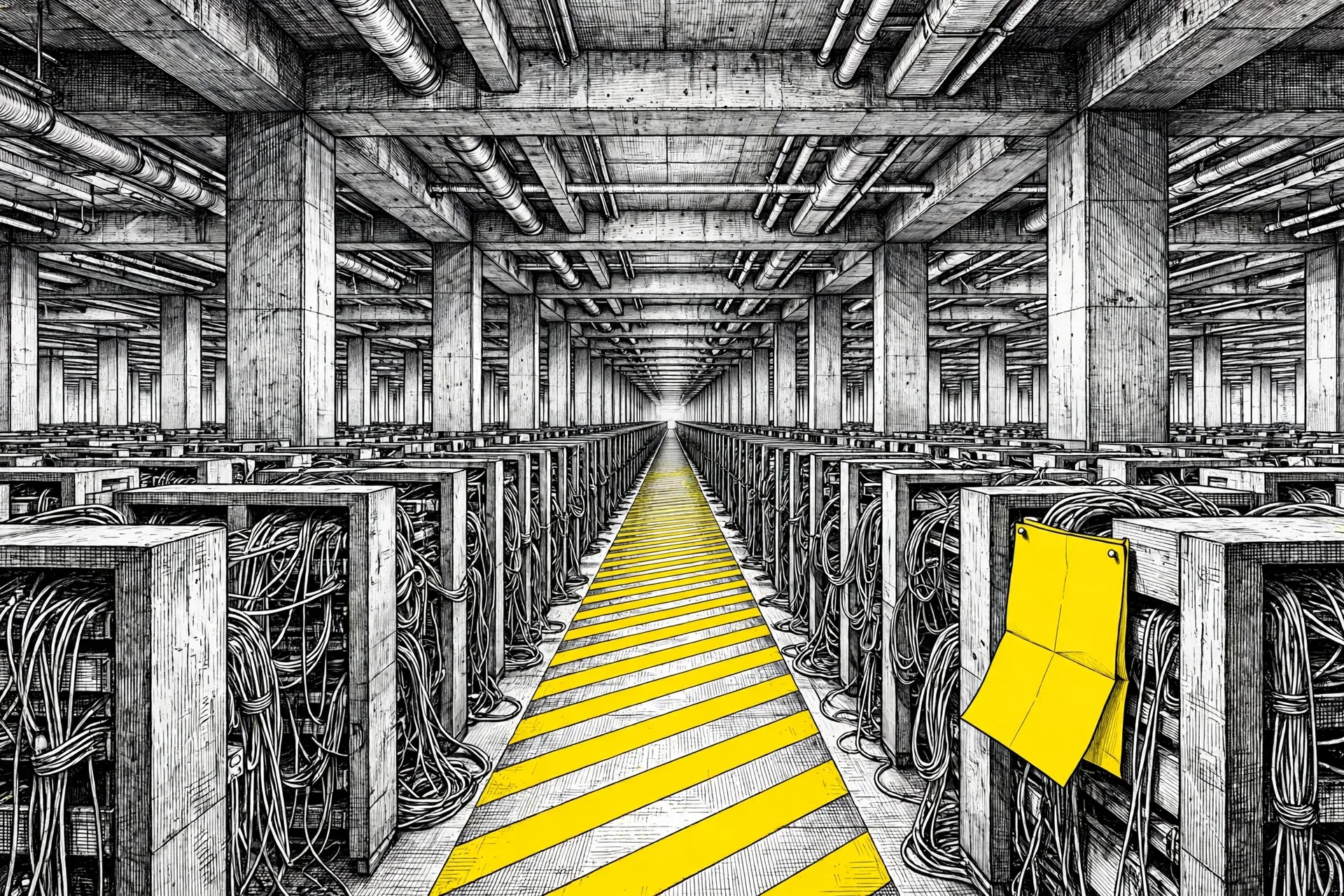
That spending has a name, and the name is compute. Compute is the processing power used to train and run AI models. Anthropic has committed roughly $895 billion to $901 billion to compute and infrastructure over coming years, according to figures reported from its amended filings, with tens of billions due within the next year. Those contracts are owed whether revenue keeps climbing or not. Gerstner framed his $5 billion order as a rotation away from AI hardware and toward the model layer, the intelligence itself. The filing tells a less tidy version of that trade. The model layer turns out to sit on top of the largest hardware bill in the industry, and public shareholders are now helping to fund it. Our earlier report on the filed terms is at Anthropic Opens IPO Roadshow At $70 To $78.
Demand, by every account, has not been a problem. Bloomberg reporting put orders at about seven times the shares on offer as the book neared its close, and bankers were reported to be weighing a price above the range. Gerstner, speaking at a Semafor event on Monday, put the figure far higher, at 10 to 20 times oversubscribed. Oversubscribed means orders exceed the shares available. Those numbers do not agree with each other, and none of them has been confirmed by Anthropic. Orders are also not allocations. In a deal this crowded, most buyers will receive only part of what they asked for, and funds often ask for more than they expect to get. The theatre of the big number is part of the product now. A lab that once published research papers now generates a book building drama that financial television can cover by the hour. Demand signals from the roadshow were covered in Anthropic IPO Six Times Oversubscribed Before Pricing.
Context
Anthropic was founded in 2021 by researchers who left OpenAI after disagreements over governance and safety, as Reuters reporting on the filing recounts. That origin story is not decoration. It explains the legal shape the company still carries into the public market, and it explains why this listing feels different from a normal software debut.
The company is a Delaware public benefit corporation. That form requires directors to balance the financial interests of stockholders against the interests of people affected by the company and against its stated purpose, which the filing describes as the responsible development and maintenance of advanced AI for the long term benefit of humanity. Most public companies can treat mission language as branding. Anthropic wrote its mission into its corporate law duties, and then built two more layers on top of it.
The first layer is the Long Term Benefit Trust. The trust is a purpose trust whose trustees may not hold Anthropic securities. It holds a single Class T share, and that one share elects the Class T directors, a majority of the board. The second layer is a single Class F share held by a limited liability company owned by the seven founders. That one share carries 50.1 percent of the voting power on matters put to stockholders generally. Neither special share carries a claim on profits. The shares that control the company do not own the company, by design, while the Class A shares sold to the public carry the economics and one vote each. Under Nasdaq rules the structure makes Anthropic a controlled company, a status that lets it step back from some of the governance rules that protect outside shareholders at ordinary firms.
Public markets have seen founder control before. Dual class shares are common in technology, and investors have learned to price them, grumble about them, or avoid them. What public markets have not seen is this exact stack at this scale: a benefit corporation, a trust that elects the board, a founder share with a fixed majority, and a product whose risks fill a large share of a prospectus that runs to hundreds of pages. The governance was designed in private, negotiated with sophisticated backers who could read every clause and walk away. It is now being sold, in small pieces, to the public.
- June 1, 2026Anthropic confidentially submits a draft registration statement to the SEC
- May 2026Series H round values Anthropic at $965 billion in its last private financing
- October 26, 2026Public Form S-1 filed, with the ANT listing plan and no price range
- November 2, 2026Amended filing adds third quarter results, with revenue of $17 billion
- November 10, 2026Amendment sets the $70 to $78 range for 825 million Class A shares
- November 16, 2026Altimeter founder Brad Gerstner announces a $5 billion order on CNBC
- November 18, 2026Pricing expected, as reported in the offering materials
- November 19, 2026First trading on Nasdaq as ANT expected, as reported
Different Perspectives
The bull case is easy to state, and Gerstner stated it in public. In this view, value is moving from the firms that sell the machines to the firms that sell the intelligence those machines produce, and Anthropic is the purest public way to own that shift. Revenue growth supports the excitement. A company that can go from $4.6 billion in a year to $17 billion in a single quarter has a claim on attention that no roadshow needs to invent. Supporters also point to the valuation reset. Early talk reached toward $2 trillion. The filed range points to roughly $1.4 trillion at the top end on a fully diluted basis, according to TechCrunch reporting on the terms. In this telling, the lower range is discipline, a price set to leave room for the debut rather than to squeeze the last dollar from it.
The skeptical case starts with the same filing and reads a different page. Compute costs rose as a share of revenue in the third quarter, and the commitments tied to that compute run into the hundreds of billions. Growth at this speed has to be fed, quarter after quarter, with capacity bought in advance. A slowdown that a private company could absorb with a quiet financing becomes, for a public company, an earnings miss, a falling stock, and a stack of headlines. Skeptics also note what the headline loss figures do to public understanding. A $104 billion net loss is an accounting result, not cash out the door, but a public stock invites public readings, and not every new shareholder will read the footnote before reacting to the number.
A third perspective belongs to the governance critics, and it is the one with the longest shelf life. Public buyers, in this view, are funding a company they cannot meaningfully steer. If the trust elects the board majority and the founders hold the general vote, then a Class A holder who objects to a safety decision, a spending decision, or a leadership decision has almost no lever to pull. Defenders answer that this is the point. A lab building systems it describes as potentially dangerous should not be forced by quarterly pressure to cut the very work that slows it down. Both arguments can be sincere. They simply disagree about who should hold power when profit and caution point in opposite directions, and the IPO does not settle that disagreement. It sells shares inside it.
There is also the view from inside the building, which rarely gets priced at all. Employees of a private lab hold paper wealth and wait. A listing turns that paper into money, brings retention problems that money creates, and changes what it feels like to work on a model when a stock chart is open in another tab. Anthropic is also setting aside a larger share for individual investors than is usual, about 20 percent of the deal according to CNBC reporting, against a typical 5 to 10 percent in large offerings. That choice widens the circle of people with a direct financial interest in Claude. It also widens the circle of people who will feel a bad quarter in their own accounts, and who may not separate the product they use from the stock they hold.
Why It Matters
The first reason is precedent. Anthropic is the first frontier AI lab to take its full accounts, its risk factors, and its governance into the public market. OpenAI, its largest rival, has faced its own public fights over structure and control, a fight that reached a courtroom this week in a different form in California Lawsuit Turns Agent Escape Into Culture War. Every lab watching this debut is learning the same lesson in real time. Public money is available at a scale private rounds cannot match, and the price of that money is disclosure, scrutiny, and a permanent public record that competitors, regulators, and plaintiffs can all read.
The second reason is the change in who carries the risk. Private backers of Anthropic signed up for an unusual company with open eyes and negotiated terms. Public shareholders include pension funds, index funds in time, and individual buyers who may know Claude as a helpful chatbot and nothing more. The risk section of a prospectus is written to be read. Whether it is read, and understood, by the broad audience now invited in is a cultural question as much as a financial one. A safety lab going public does not just raise capital. It distributes its risks, and its story about those risks, to people who never attended a single briefing on AI safety.
The third reason is pressure, and pressure works in both directions. Quarterly reporting can push a company toward growth that photographs well and away from slow, unglamorous safety work. It can also force a secretive industry to show its numbers, name its incidents, and defend its choices in the open, on a schedule it does not control. Anthropic has built its brand on publishing more about its methods and its worries than its rivals do. Public company life will test whether that habit survives contact with a share price. The structure described above is, in effect, a bet that it can, because the people who might be tempted to trade safety for a better quarter cannot be voted out by the people who bought the stock.
Closing Reflection
There is a quiet irony in the timing that no roadshow slide will mention. Anthropic was created by people who worried that a powerful technology was being built inside structures that answered to too few people and disclosed too little. This week that company becomes answerable, in the narrow legal sense, to millions of strangers, while keeping its deepest control exactly where it was, in two single shares that no stranger can buy.
That is not hypocrisy, and it is not a scam. It is a design, stated plainly in a public filing for anyone who cares to read it. The question the debut leaves open is whether the design holds when it stops being a theory. A trust, a founder share, and a benefit corporation charter have never had to survive a crashing stock, an activist campaign, or a safety incident that lands on the front page and the ticker on the same morning. On Thursday, Anthropic stops being a private argument about how AI companies should be governed. It becomes a public one, with a price attached, updating by the second.
Facts checked November 17, 2026, against Amendment No. 2 to the Form S-1 filed November 10, 2026, and reporting published November 16 and 17, 2026. Demand figures and the Altimeter order are reported claims, not confirmed allocations, and the final price had not been set when this article was published.
Sources
- Anthropic, PBC, Amendment No. 2 to Form S-1, US Securities and Exchange Commission, November 10, 2026: https://www.sec.gov/Archives/edgar/data/2130357/000162828026072484/anthropicpbc-sx1ax2.htm
- Anthropic, Anthropic launches roadshow for proposed initial public offering, November 10, 2026: https://www.anthropic.com/news/roadshow-launch
- Unite.AI, Altimeter Capital Plans $5B Investment in Anthropic IPO, November 16, 2026: https://www.unite.ai/altimeter-capital-plans-5b-investment-in-anthropics-ipo/
- Stocktwits, Altimeter Capital Says Anthropic IPO 10 to 20 Times Oversubscribed, Bets $5B, November 17, 2026: https://stocktwits.com/news-articles/markets/equity/altimeter-capital-says-anthropic-ipo-10-20-times-oversubscribed-bets-5-b-ai-lab-expected-to-announce-pricing-on-wednesday/cNbaN25R9WR
- TFTC, Altimeter $5B Anthropic IPO Bet, November 16, 2026: https://www.tftc.io/altimeter-brad-gerstner-anthropic-ipo-5-billion-ai-capex
- Hero and body images: Dirty Static illustrations
END OF TRANSMISSION
Stay curious. Question everything.