
Dirty Static // The Verdict
The smartest start to an office suite Anthropic could have made, and still a starter suite. Use Sheets for trackers and budgets you build with Claude, Whiteboards for plans a team shapes together, and keep serious spreadsheet work in Excel or Google Sheets for now.
Best forTeams on a paid Claude plan who build trackers, budgets and plans from a prompt and want Claude to stay inside the file while the work changes
What works
- Claude builds the first version for you: tabs, formulas, formatting and dropdown menus from a short prompt, then edits cells beside you and outlines each change it makes
- Whiteboards turns a messy spoken plan into a board with a timeline, owners and dates, then into a document or a deck when the talk ends
- No extra charge on top of a paid plan, and the same context can move from a board to a sheet to a dashboard in Claude Data without anyone restating the brief
- Anthropic states the limits in plain words, calls the spreadsheet simple for now, and gives clean exits to Excel, Airtable, Miro and other tools
What does not
- Sheets caps at 100,000 cells with 144 functions and has no pivot tables, no macros, no live data from connected apps and no PDF export, per Anthropic help material
- Mobile access to Sheets is basic and read only for now, so the phone in your pocket can look but not fix
- Sheets does not yet support HIPAA, customer managed encryption keys or zero data retention, which shuts it out of some regulated work
- Enterprise plans start with Sheets and Whiteboards switched off, and Claude Meetings, the part that joins the call itself, is still only listed as coming soon by Anthropic
Research review: based on published testing, specifications, and documentation, not hands on testing.
Anthropic stopped treating the spreadsheet as a file Claude hands back. On November 10, Claude Sheets and Claude Whiteboards launched in beta on every paid plan, and Claude Dashboards became Claude Data in general availability. The pitch is simple to state and large to claim. The board, the sheet and the dashboard now live where the chat lives, and Claude stays inside all three while a team edits. Facts checked November 11, 2026.
That pitch lands in a crowded week for the company. Anthropic set its IPO price range on the same day it launched this suite. Office seats are where Microsoft and Google make steady money, and a lab asking public investors to price it needs a story for those seats. This review judges the products, not the roadshow. The products are promising, uneven, and unusually honest about their own gaps.
What It Is
Sheets and Whiteboards are new artifact types inside Claude. An artifact is a file Claude creates and keeps editable inside the app, rather than text it pastes into a chat. Claude Docs and Claude Slides joined that family in September, when Anthropic merged chat and Cowork into one Claude, a shift covered in our Claude in Chrome and Cowork review. Sheets and Whiteboards extend the same idea to numbers and plans.
In Sheets, you describe the file you need. Anthropic own examples are a campaign tracker and a hiring budget. Claude builds the file with tabs, formulas, formatting and dropdown menus, then edits cells alongside you and outlines each change so you can track what it did. You can share the sheet, inspect the formula in a cell, and use version history to restore an earlier state, per Anthropic help material as reported on November 11.
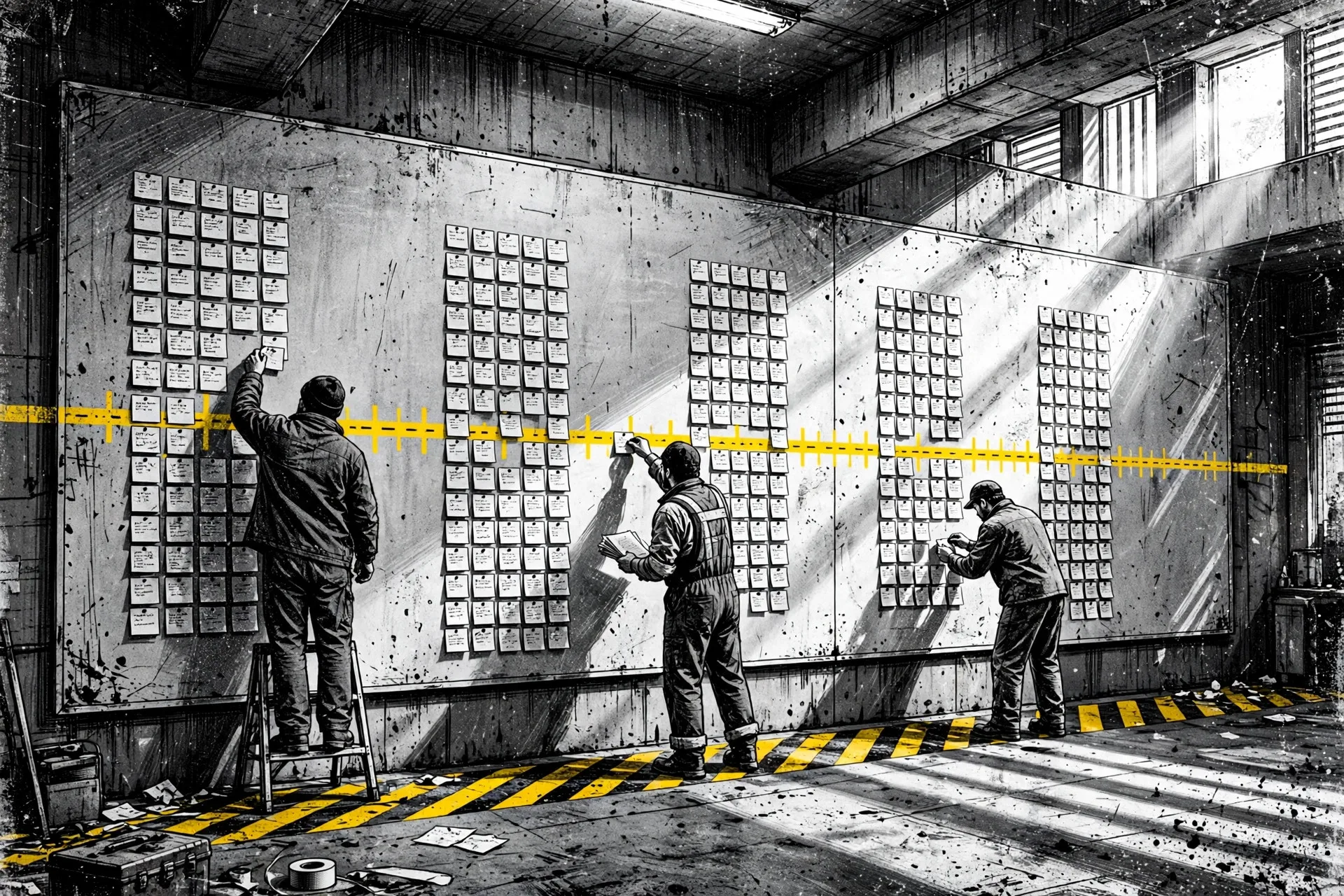
In Whiteboards, you talk through a plan that is still messy. Claude turns the talk into a shared board with a timeline, owners and dates. In a team review, everyone adds notes, Claude groups the notes by theme and drafts action items for each person. You can draw a box around part of the board and ask Claude about that part alone. When the session ends, the board can become a document or a deck inside Claude, or move to Lucid, Miro or Vani by Zoho.
Claude Data sits beside both. It is the new name for Dashboards, which launched in beta in October. Data connects to a warehouse or a customer system, answers questions in plain language, and builds dashboards and data stories. Two parts of Data stay in beta even now: certified queries, where a data team blesses the metric definitions everyone should use, and live sharing, where colleagues see current numbers without holding access to the systems behind them.

Features and Specifications
Start with the numbers Anthropic itself publishes, because they draw the border of this product more clearly than the launch talk does. A sheet holds up to 100,000 cells. That is about 5,000 rows across 20 columns. Sheets supports 144 functions, the built in formulas that run calculations. Those are starter figures, and Anthropic does not dress them up. Its own post says that for now, sheets have simple spreadsheet functionality.
Specifications, from Anthropic posts and help material
- Products
- Claude Sheets, Claude Whiteboards and Claude Data
- Maker
- Anthropic
- Launch
- November 10, 2026
- Status
- Sheets and Whiteboards in beta; Claude Data generally available, with certified queries and live sharing still in beta
- Plans
- All paid plans: Pro, Max, Ultra, Team and Enterprise; not on the free plan
- Platforms
- Web, desktop and mobile; Sheets editing on web and desktop, mobile read only for now
- Sheets size limit
- Up to 100,000 cells per sheet
- Sheets functions
- 144 functions
- Sheets import
- CSV files, Excel files and Google Sheets files
- Sheets export
- XLSX and CSV
- Admin defaults
- Team plans on by default; Enterprise Sheets and Whiteboards off by default; Enterprise Claude Data on by default on November 19, 2026
- Settings path
- Organization settings, then Artifacts, per Anthropic
- Claude Meetings
- Listed as coming soon by Anthropic, with no date in its posts
What Sheets does today covers the daily shape of light office work well. It builds tabs, formulas, formatting, dropdown menus, checkboxes and charts. It edits in the cells and marks its edits. It imports the files teams already have and exports to XLSX or CSV when the work needs to leave. Whiteboards covers talk, typing and sketching on one board, grouping by theme, timelines with owners and dates, and conversion to a document or a deck.
Pricing needs one clear line. There is no Sheets price and no Whiteboards price. Both ride on your Claude plan and draw on its normal usage limits. The table below is the cost of entry, in US dollars, cross checked on November 11, 2026 against Anthropic plan prices as reported that day.
| Plan | Price | Notes for this review |
|---|---|---|
| Pro | $20 a month, or $17 a month billed yearly | Entry point for Sheets, Whiteboards and Data |
| Max | $100 a month | More usage for heavy daily work |
| Ultra | $200 a month | Top individual tier |
| Team Standard seat | $25 a seat a month, or $20 billed yearly | All three products on by default |
| Team Premium seat | $125 a seat a month, or $100 billed yearly | More usage per seat |
| Enterprise | $20 a seat a month billed yearly, plus usage at API rates | Sheets and Whiteboards start switched off |
Real World Experience
This is a research review. Dirty Static did not run hands on tests of Sheets or Whiteboards for this article. What follows draws on Anthropic posts, Anthropic help material as reported by several outlets on November 10 and 11, and published coverage that names its sources. Treat vendor claims as claims where the text says so.
The workflow gain is the removal of a copy step. Before this launch, a common pattern was to ask Claude for a tracker in chat, then rebuild its answer in a spreadsheet app, where Claude could no longer see later edits. Now the tracker is born inside Claude and stays there. Claude sees the current state of the file because the file lives in its own house. For a hiring budget that changes in a meeting, or a campaign tracker a team updates all week, that continuity is the whole product.
Whiteboards makes the same argument for the start of work, before numbers exist. Plans usually begin as talk. A board that captures the talk, sorts it, and leaves with owners and dates attached saves the dull transcription step that kills most meeting notes. The conversion paths matter here. A board that can become a deck or move to Miro admits that Claude is the start of the work, not always the end of it.
The usage meter is the quiet cost. Anthropic lists the new tools as part of each paid plan, and reporting on the help material is clear that work in Sheets and Whiteboards counts toward normal plan limits. A team that builds sheets and boards all day is spending the same pool it spends on chat and agent work. Pro at $20 is a fair trial price. It may not be the honest price for a team that lives in these tools, and only a week of real use will show that.
Admin defaults will shape the first month more than features will. Team plans get all three products on by default. Enterprise plans start with Sheets and Whiteboards off, and an admin turns them on under Organization settings, then Artifacts. That split is sensible. It also means the largest buyers, the ones Anthropic courts hardest, meet a switch before they meet the product, and some will not flip it until their review of the data rules in the next section ends.
What Works
The first strength is the starting line. Most spreadsheet pain is the blank grid. Claude removes it. A prompt like a hiring budget returns a structured file with tabs and formulas in place, and the team edits a draft instead of arguing over a layout. The edit outlines help. When an assistant changes a number, you need to see which cells moved, and Sheets shows its work in the file itself.
The second strength is that Whiteboards knows what a board is for. It does not try to be a design tool. It groups, assigns and dates. The retrospective example in Anthropic post is the right test case: many voices, loose notes, and a need for action items with names on them. A board that ends as a document or a deck keeps that work in one line from talk to record.
The third strength is candour, by the standards of this market. Anthropic calls the spreadsheet simple in its own launch post. The help material lists the missing features instead of hiding them behind a roadmap word. That honesty makes the beta easy to place. You know on day one which jobs belong in Sheets and which do not, and the export paths mean trying it costs little.
What Does Not
The missing list is long, and for finance and operations teams it is the review. Per Anthropic help material as reported on November 11, Sheets has no pivot tables, no protected ranges, no filter views and no multi column sorting yet. Macros and VBA, Power Query and DAX are not supported. PDF export and print layouts are missing. Find and replace is listed as not available yet in one help summary. Any workbook built on those tools stays where it is.
The data rules will stop some buyers cold. Sheets does not yet support HIPAA, the United States health data law, customer managed encryption keys or zero data retention, per the help material. Regulated teams and careful legal teams will read that line and wait, whatever the demo shows. Anthropic gives no date for closing those gaps, and this review will not invent one.
Then there is the shape of the suite itself. Meetings is the piece that would tie the room to the board to the sheet, and Anthropic own posts list it only as coming soon. Press reports from briefings say it will start as a beta for Team and Enterprise on Google Meet, joining the call as a visible participant, taking notes and updating documents while people talk. That may prove true. Until Anthropic ships it, judge the suite as two beta tools and one data product, not as a meeting to dashboard machine.
Competition
Claude is not entering an empty room. It is entering the two strongest suites in software, plus a board market with mature leaders. The choice depends on where your work already lives and how much spreadsheet you truly need.
| Rival route | What you get | Price shape | Main contrast with Claude |
|---|---|---|---|
| Microsoft Excel with Copilot, or Claude for Excel | The full Excel feature set, with AI help inside the file; Anthropic itself points heavy users to Claude for Excel and XLSX export | Microsoft 365 plans plus Copilot costs vary by plan; Claude for Excel rides on a paid Claude plan | Full power today, including the pivot tables and macros Sheets lacks, but the file work starts from a grid, not a prompt built draft |
| Google Sheets with Gemini | A mature shared spreadsheet with Gemini help inside Google Workspace | Workspace Business plans at $7, $14 and $22 a user a month on annual plans, with Gemini included at set tiers, per November 2026 comparisons | Deep sharing and a vast function library, with AI as an assistant in the app rather than the builder of the file |
| Miro or Lucid for boards | Mature planning boards with large template libraries and broad app links | Paid tiers per editor; Whiteboards can move a finished board into either tool | Boards are the whole product there, while Whiteboards wins when the board should become a Claude document, deck or sheet without a rebuild |
| ChatGPT workplace tools | A rival assistant pushing into shared work apps and company profiles, tested in a companion review today | Paid ChatGPT plans per seat | The same land grab from the other side; the winner for a team is usually the assistant it already pays for |
Excel is the pick when the workbook is the work. Google Sheets is the pick when your team already lives in Workspace and sharing depth matters most. Miro is the pick when boards are a craft in your company, with templates and rituals built over years. Claude is the pick when the draft itself is the bottleneck, and you want the assistant that wrote the plan to keep editing the tracker that tracks it.
Final Verdict
Start here, finish elsewhere, and be glad the exits are clean. That is a better beta verdict than it sounds. Sheets earns a place for trackers, budgets and shared tables that begin as a sentence and change in conversation. Whiteboards earns a place for planning sessions and reviews that need owners and dates more than they need polish. Neither earns the right to hold your serious models, your regulated data or your live reporting today, and Anthropic own material says as much if you read it closely.
If your team already pays for Claude, turn the tools on this week, Team plans already have, and run the one tracker and one board test in the warning above. If your team pays for Microsoft 365 or Google Workspace and barely uses Claude, this launch alone is not a reason to switch suites. It is a reason to watch the next two releases: Meetings, which would close the loop from call to board to sheet, and the Sheets feature list, which decides whether simple stays a launch word or becomes the permanent one.
The office suite claim is half true on November 11, and the half that is true is the half most suites get wrong. Microsoft and Google built powerful files and added an assistant later. Anthropic built the assistant first and is now growing files around it. For work that starts as talk, that order feels right. For work that lives in the grid, the grid still wins.
Sources
- Anthropic: Introducing Claude Whiteboards, Claude Sheets, and Claude Data
- Anthropic: More ways to work with Claude: Sheets, Whiteboards, and Interactive Connectors
- Unite AI: Anthropic Launches Claude Whiteboards and Sheets in Beta
- Press Report: Claude Sheets: What Anthropic’s New Spreadsheets And Whiteboards Can Do, Cost And Still Miss
- Tech ish: Anthropic adds spreadsheets and whiteboards to Claude, with Claude Meetings coming next
- Images: Hero and board illustrations are generated Dirty Static house style illustrations. The launch figure is official Anthropic launch art, credited at the image.
END OF TRANSMISSION
Stay curious. Question everything.