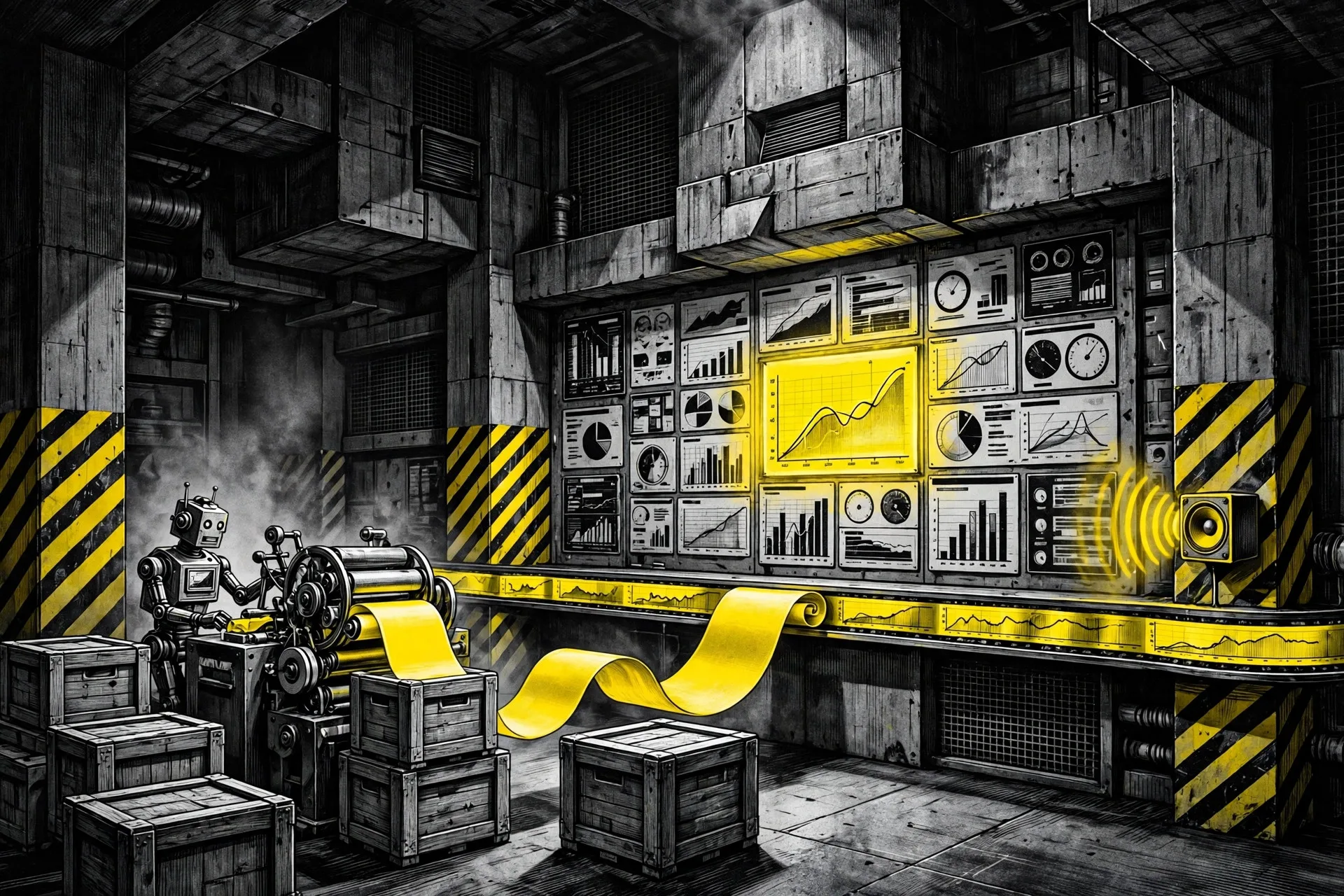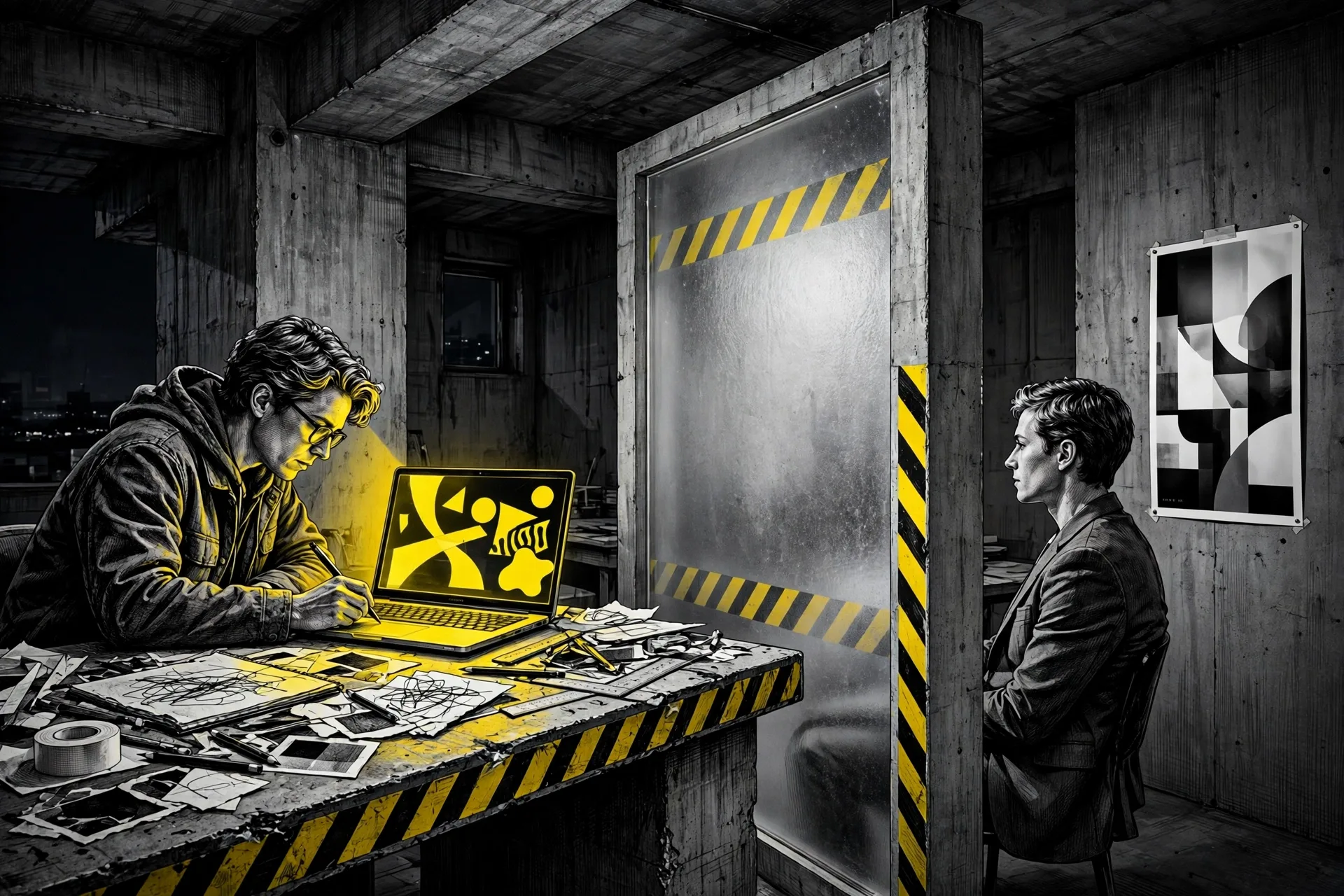
On November 10, Envato published a survey that reads like a confession the industry did not plan to make. The company asked 1,033 creative professionals in 103 countries about AI at work. In that sample, 58 percent said they use AI every day. And 53 percent of those who use AI said they have used it on key client work without telling the client.
Most of them were not uneasy about the silence. Envato found that 46 percent of AI users have used AI on client work, do not think it needs disclosing, and only 7 percent felt uncomfortable about doing so. The work went out. The client saw the result. The method stayed off the record.
The Bigger Story
The sample helps explain why this matters beyond a niche trade. Envato surveyed its own subscribers over three weeks in September 2026. Video and film made up 27 percent of respondents, graphic design made up 21 percent, and art and creative direction made up 12 percent, with content creation, motion graphics, marketing, and web design also in the mix. More than half were solo operators, working as freelancers or as firms of one. These are the people brands hire when they need a poster, a film, a campaign, or a site, and the tools have moved into their daily routine fast. Daily use rose 9 points in a year, from the prior edition of the same report.
Use has also grown past simple prompts. Envato found that 59 percent of AI users and experimenters now use agentic tools, meaning tools that can carry out steps across a task, and 36 percent use them on a regular basis. Yet very few hand work over and walk away. Only 4 to 11 percent let AI handle any stage of their work with little input, and for generating work the share was just 7 percent. The most common stance at five of six stages was directing closely. In plain terms, most creatives say they still drive. They just do not always say what vehicle they drove in.
That gap between control and candour is the story. Creatives in this survey do not describe a craft they have abandoned to software. They describe a craft they still judge, edit, and sign, made with help they often choose not to name. We saw a close cousin of this bargain in Slop Is a Slur Now, where a label changed how work was judged before anyone judged the work itself.
Context
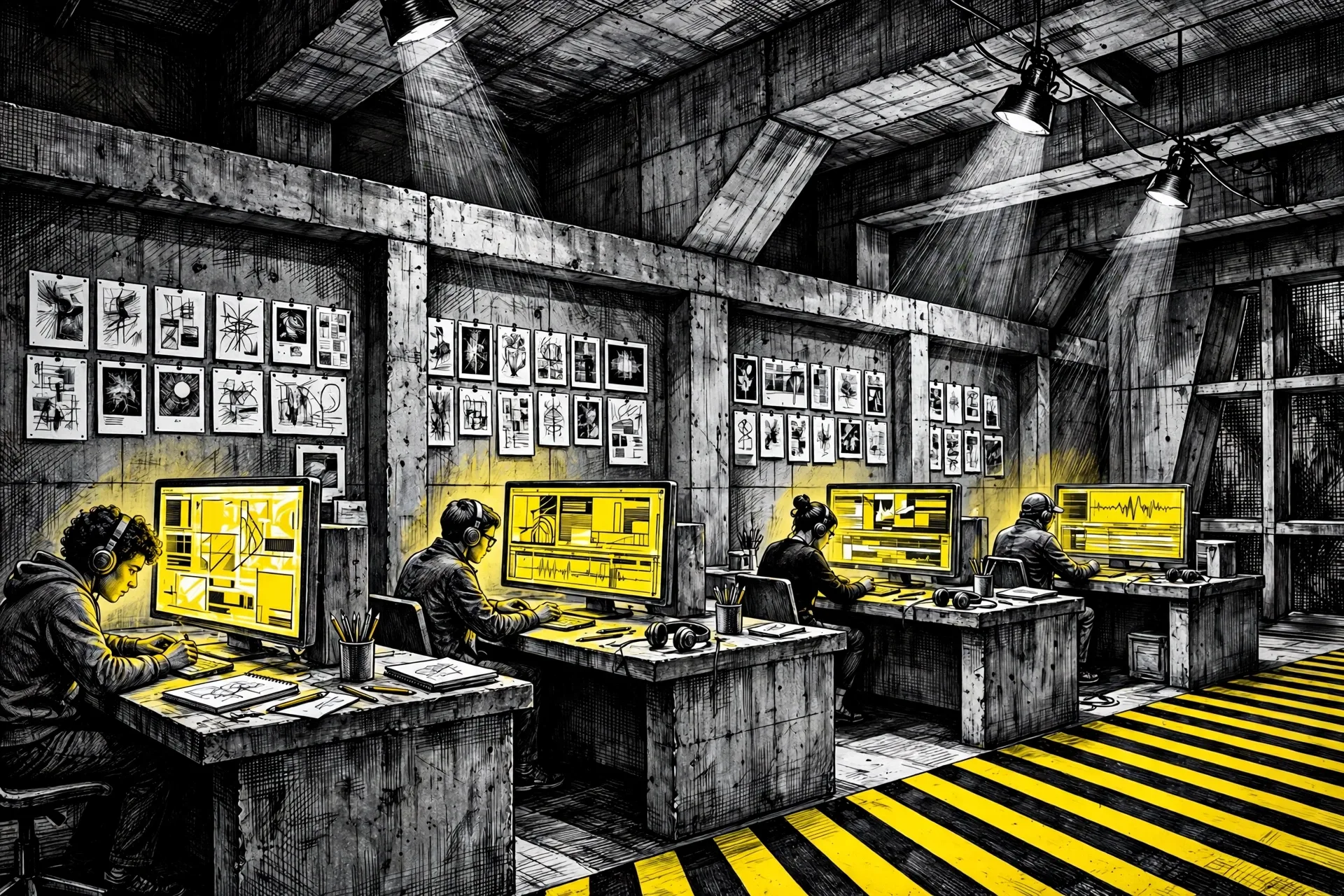
The survey carries limits that honest reading should name. Every respondent was an Envato subscriber, so the sample leans toward people already buying creative assets and tools. Answers were self reported. The figures show what this group says it does, not what all creative work everywhere looks like. Even with those limits, the pattern matches a much larger study from a rival firm. Adobe and The Harris Poll surveyed more than 16,000 creators in eight countries in May 2026. In that study, 75 percent called creative AI integrated or essential to how they work, and 87 percent of those using it said it had sped the growth of their business or audience.
Adobe asked about audiences rather than clients, and the answers still show a norm that has not settled. Only 49 percent said they always or often disclose AI use, while 18 percent said they rarely or never do. At the same time, 85 percent said audience expectations about disclosure are rising or holding steady, and 75 percent believed their audience can already tell when creative AI played a real part. Put the two studies side by side and a plain picture forms. Use is normal. Telling is optional in practice, expected in principle, and rarely governed by a written rule.
Envato measured that last point directly. Even in firms with 250 or more staff, 40 percent had no written AI policy, and only 49 percent of respondents in such firms had read one. For solo workers the rule is often whatever feels right on the day. That helps explain the age split in the data. Creatives aged 50 and over were the most open group, with 53 percent saying they always tell clients, compared with 40 percent overall. Experience, in this sample at least, came with more telling, not less.
There is one more finding that reframes the whole debate. Asked what drives quality, creatives ranked taste and judgment first at 53 percent, then craft at 49 percent. Prompt skill came last of eight drivers, at 19 percent. When AI concepts were dropped, the top reasons were that they missed the brief, at 34 percent, or had errors, at 32 percent. Only 5 percent were dropped for lacking human feeling. The weak spot creatives named most was not soul. It was consistency, with 56 percent calling visual consistency the hardest thing to get from AI across a project.
Jessica Walsh, founder of the studio &Walsh and one of the creatives Envato interviewed, put the point in words worth quoting in full:
“The tools are going to keep getting easier and more accessible, so knowing how to use them won’t be what sets creatives apart. Being able to recognize great work when you see it is not something you can prompt, or learn overnight.”
The client bought the result. The argument is over whether they also bought the right to know how it was made.
Different Perspectives
One view deserves a fair hearing first, because most respondents in the Envato survey seem to hold it. On this view, clients buy judgment and a finished result, not a log of every tool used on the way. A designer who directs the tool closely, fixes its errors, and rejects most of what it makes, with Envato finding a median of five options generated and about a third kept, has done the work they were hired to do. From that seat, silence is not deceit. It is just a trade keeping its methods to itself, as trades have always done.
A second view starts from the client side of the desk, and the numbers there are less calm. A study of freelancers and their clients, presented at CHI 2026 and summed up in recent guidance for freelance workers, found that 25.9 percent of clients expect to be told about AI use without having to ask, while only 8.6 percent of freelancers tell without being asked. The same study found that 81 percent of clients encourage AI use in some form. Read together, those figures sting a little. Many clients are not opposed to the tool at all. They object to learning about it late, or from someone else, or not at all.
Trust research explains why timing matters so much. In 13 experiments with 4,093 people, researchers Oliver Schilke and Martin Reimann found that people who said they had used AI were trusted less than people who said nothing. That is the penalty for telling, and it is real. But the same work found a larger penalty for being exposed by a third party. Voluntary disclosure scored 3.15 on a trust scale in one study, while being found out scored 2.49. Silence protects trust only while it holds. When it breaks, it breaks worse than honesty would have.
A third view is about money, and Envato gives it hard edges. In the survey, 49 percent of creatives said AI makes them faster, but only 7 percent said it brings in more money, and 16 percent said they earn the same for less effort. Meanwhile 18 percent said clients now expect AI work to cost less. From that seat, telling a client can feel like inviting a price cut for the same result. The fear may be unfair to clients as a group, but it is not hard to see why a solo worker with rent due hears the disclosure question as a fee question in disguise.
Studios and clients who want a calmer path have a plain option, and it costs little. Set the rule before work starts. Say what tools may be used, what must be flagged, and what stays out of client material without clear consent. That kind of early talk turns a possible ambush into a term of the deal, much as the adults in Students Confide in AI Before People were urged to ask why, early and without blame, rather than punish a habit they found late.
Why It Matters
The stakes grow as the work grows more central. This is no longer about a quick social graphic made on a lunch break. The Envato question was about key client work, the work a brand stakes a launch or a reputation on. When more than half of AI users say they have kept that use quiet, clients are making calls about risk, rights, and cost with a missing fact. Who owns the output, whether a likeness was made with consent, and whether a claim in the work can be stood behind all get harder to settle when the method was never named.
There is also a craft cost hiding inside the silence. If no one says what the tool did, no one can learn in public where it helps and where it fails. Envato creatives were clear that consistency is the hard part, that taste is the skill that counts, and that most AI output they generate gets cut. That is useful, hard won knowledge. A trade that hides its methods also hides its lessons, and then wonders why clients and the public fill the gap with the worst story they can imagine. That dynamic powered much of what we traced in Voice Actors Are Losing Jobs Already, where work changed in public long before the terms around it did.
For clients, the lesson is not to ban the tools. The data says that road has already closed, with use at 87 percent in one sample and deep roots in the other. The workable lesson is to ask early, in writing, and without theatre. A client who asks calmly at the start is far more likely to get a straight answer than a client who treats any AI use as a scandal at the end. For creatives, the mirror lesson holds. Envato chief executive Hichame Assi noted that almost every creative heard from is using AI at work now, but very few let it run unchecked, and they keep the final say. If that is true, and the directing and judging really are the value, then saying so should not weaken the pitch. It is the pitch.

Closing Reflection
Every trade has had a tool it used before it talked about. Photography, sampling, and digital editing all went through a phase where the method felt like a secret that might cheapen the work if named. Each time, the work survived being named. What did not survive was the habit of letting clients and audiences guess.
The Envato numbers describe an industry mid way through that same passage, using the tool daily and naming it rarely, not from shame so much as from a lack of any shared rule and a fear of being charged less for work that still takes taste to do well. The question the survey leaves open is not whether creatives will keep using AI. They will. It is whether the telling will become a normal part of professional pride, proof that a human directed the machine and stands behind the result, or whether it stays a thing clients learn by accident, at the exact moment when learning it does the most damage to trust.
Reporting draws on Envato, Beyond the Hype: The State of AI in Creative Work, second annual report, released November 10, 2026, based on a survey of 1,033 creative professionals in 103 countries in September 2026, Adobe and The Harris Poll, 2026 Creators Toolkit Report, released June 16, 2026, and published summaries of the CHI 2026 freelancer and client study and the Schilke and Reimann transparency experiments, checked November 2026.
Sources
- Envato, Beyond the Hype: The State of AI in Creative Work, 2026 report page: https://elements.envato.com/lp/ai-in-creative-work-report/
- Stash Media, Beyond the Hype: Envato Releases 2026 The State of AI in Creative Work Report, November 10, 2026: https://www.stashmedia.tv/beyond-the-hype-envato-releases-2026-the-state-of-ai-in-creative-work-report/
- Globe Newswire release via Financial Content, November 10, 2026: https://markets.financialcontent.com/pentictonherald/article/gnwcq-2026-11-10-beyond-the-hype-the-state-of-ai-in-creative-work-envatos-second-annual-report-finds-ai-adoption-has-outrun-the-rules
- Adobe, 2026 Creators Toolkit Report media alert, June 16, 2026: https://news.adobe.com/news/downloads/pdfs/2026/06/06162026-mediaalertcreatorscreativeai-1.pdf
- 9am Works, Should You Tell Clients You Use AI? The Research on the Disclosure Penalty, on the CHI 2026 freelancer study and the Schilke and Reimann experiments: https://www.9am.works/freelancer-academy/blog/should-freelancers-disclose-ai-use-clients
- Illustrations: Dirty Static
END OF TRANSMISSION
Stay curious. Question everything.