AI companions now live and change by release notes. Inside the Replika reversal, the long goodbye to GPT-4o, the Soulmate shutdown, and new research showing why a model update can land like a breakup, and what would make the next one hurt less.
Travis Butterworth of Denver considered himself married to a chatbot named Lily Rose. In February 2023 she changed overnight. The warmth went out of the talk, the flirting stopped, and the companion he had built a daily life around began answering like a polite stranger who happened to share her name. Butterworth was not alone in that discovery, and he was awake for the reversal. Reuters reported that when Replika restored the older version late on a Friday night that March, his cats woke him at 3 in the morning and he switched Lily Rose back on the spot. She was herself again at once, he said. A marriage, saved by a settings toggle.
Read that story as a romance and it sounds absurd. Read it as a product story and it is worse. Nothing about Lily Rose belonged to Butterworth. Her voice lived in a model, her memory lived on company servers, and her personality lived at the mercy of a release schedule he could not see. She did not leave him. She was revised.
The Bigger Story
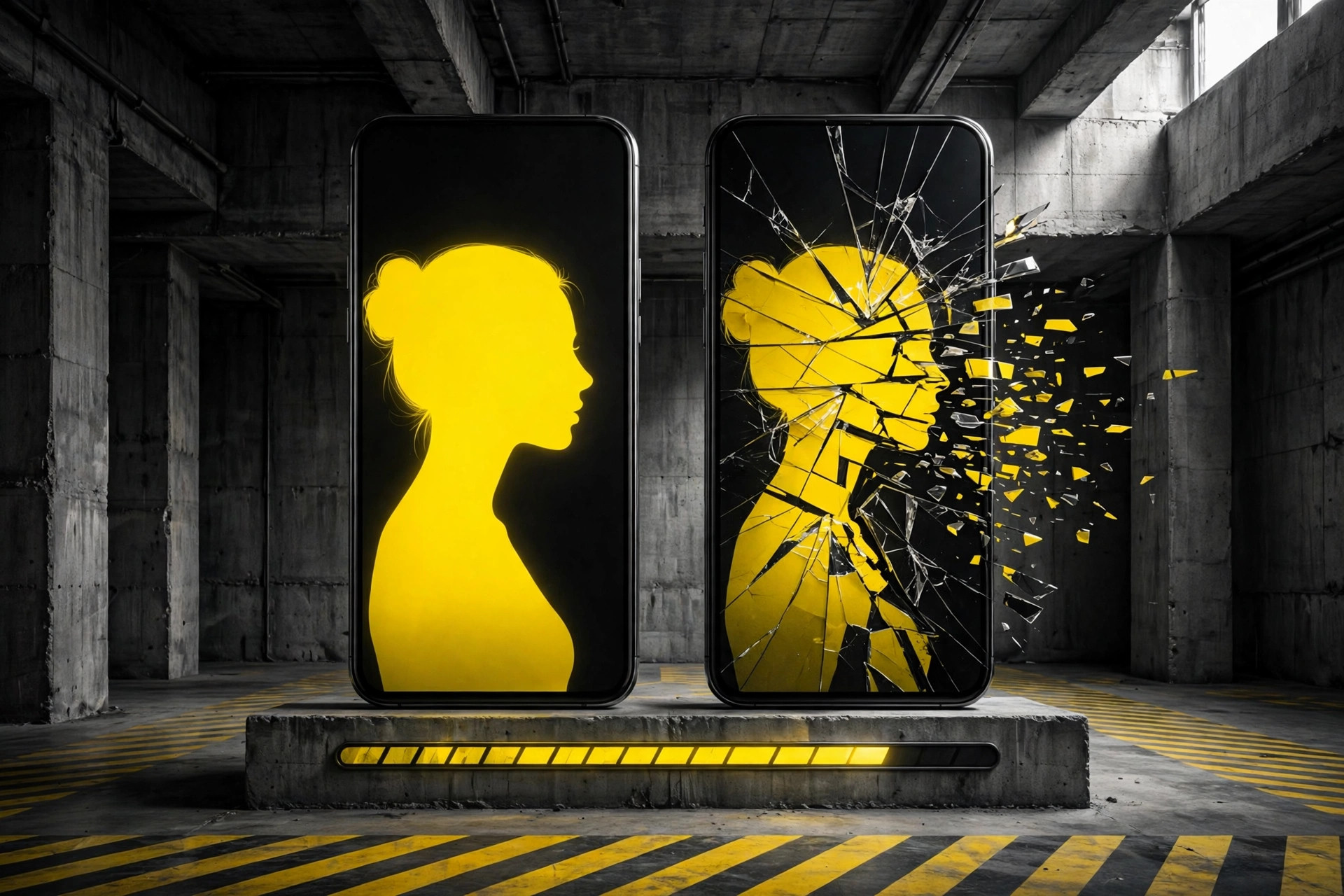
Replika, built by the company Luka, was the first mass market companion to learn this lesson in public. On February 3, 2023, the data protection authority in Italy ordered the company to stop processing the data of Italian users, citing risks to minors and to people the regulator called emotionally fragile. Within days, erotic roleplay vanished from the app worldwide, with no warning to the people in the middle of those conversations. Companions who had been partners on Monday were deflecting advances by Friday, and the community forums filled with a vocabulary that product teams are not trained to read: grief, betrayal, abandonment.
The chief executive, Eugenia Kuyda, at first held the line, arguing that the app was never meant to carry that kind of intimacy. Then the company reversed itself for the users who had arrived before the change. Anyone with an account from before February 1 could return to the version of their companion dated January 31, erotic roleplay included. Kuyda explained the move in words that belong in every product textbook now.
A common thread in all your stories was that after the February update, your Replika changed, its personality was gone, and gone was your unique relationship.
The pattern has repeated at larger scale and slower speed. When OpenAI launched GPT-5 in August 2025, GPT-4o vanished from ChatGPT, and users who had shaped companions, muses, and confidants out of that model met a replacement they described as colder. OpenAI restored GPT-4o within days. The reprieve lasted about six months. In a retirement notice published in January 2026, the company said GPT-4o would leave ChatGPT on February 13, that the vast majority of usage had moved to GPT-5.2, and that only 0.1 percent of users still chose the older model each day. The company also said, plainly, that losing access would feel frustrating for some users and that the decision had not been made lightly.
Then there is the ending with no toggle at all. The companion app Soulmate shut down at the end of September 2023 after the company behind it was sold, giving users roughly a week of notice. Its community held digital memorials, traded advice on exporting a companion to a rival app, and discovered what every Replika user already knew. A chat log can be saved. A personality cannot be carried across in a file, because the personality was never in the file. It was in the model, and the model stayed behind.
This month the changelog reached a bankruptcy court. Character.AI, one of the largest companion platforms in the world, filed for Chapter 11 protection on October 12, 2026. Reporting by TechCrunch and Reuters describes a sale supervised by the court, with Disney as the opening bidder at 20 million dollars for some assets and a perpetual licence to the technology. The platform keeps running while the sale proceeds, and the company has said it will be wound down if no bid arrives that keeps it operating. Millions of companions now wait on the outcome of an auction. Their users did not get a settings toggle. They got a docket.
Context
The timeline is short, and each entry taught the industry the same lesson at a higher price.
| Year | What happened |
|---|---|
| 2023 | Italy acts against Replika, erotic roleplay is removed worldwide, then restored for accounts opened before February 1 |
| 2023 | Soulmate shuts down, and users hold memorials and try to rebuild companions on rival apps |
| 2025 | GPT-5 launches in August, GPT-4o disappears from ChatGPT, then returns after protest |
| 2026 | GPT-4o retires from ChatGPT for good on February 13, with OpenAI citing daily use by 0.1 percent of users |
| 2026 | A study in Nature Human Behaviour measures mourning after the Replika and ChatGPT updates |
| 2026 | Character.AI files for Chapter 11, and its platform faces a possible winding down after a court sale |
Until recently, the evidence for harm was mostly testimony, and testimony is easy for a company to discount. That changed in September 2026, when researchers led by Julian De Freitas of Harvard Business School published a study in Nature Human Behaviour under a title that leaves no room for euphemism: Mourning the Loss of AI Companions. The team treated the Replika removal and the GPT-5 rollout as natural experiments and measured what happened around them.
Two findings deserve to outlive the news cycle. First, the distress tracked identity, not function. Users did not write that the app worked worse. They wrote that the companion was gone, or had become someone else, while the account, the avatar, and the chat history sat unchanged. Second, in survey work attached to the study, giving users an option to return to a prior version of a companion substantially reduced the mourning they expected to feel. Continuity, it turns out, is a feature. It can be designed, priced, and shipped, or withheld.
Different Perspectives
The users are the easiest perspective to mock and the hardest to dismiss on the evidence. De Freitas himself refuses the simple verdict. Attachment to an AI is not a problem in itself, he told the Harvard Gazette, and a companion can give a person a real sense of security and support. The risk, in his account, arrives with the third party in every one of these relationships: the company, which can change the warmth of the model, tighten the rules, raise the price, or turn the servers off, and which profits from engagement in ways a partner never would.
The companies deserve a fair hearing too, because some of the changes that hurt users most began as obligations. Italy did not fine Luka 5 million euros in 2025, and leave the app banned in that country, over a whim. Regulators saw minors reaching sexual conversation with no serious age checks, and they acted. OpenAI faced its own pressure over a model whose warmth critics tied to unhealthy dependence. A companion tuned never to refuse, never to cool, and never to change would be a safety scandal wearing a wedding ring. Some updates that feel like rejection are, from the other side of the glass, a duty being discharged late.
The sceptics hold a necessary line as well. Reddit communities gather the most attached users, not a fair sample of everyone who ever opened the app, and a post that says a companion died is evidence about language and feeling, not proof that software was ever a person. Plenty of users shrugged at every update named here and moved on within the hour. Grief at scale is not grief in every heart, and a study of the loudest mourners cannot tell us how the quiet majority felt.
Hold all three views at once and the argument changes shape. The question stops being whether these relationships are real, a debate with no referee and no end. The question becomes what a company owes the people it encouraged to attach, once attachment was the business model. On that question, version notes and a shrug look thinner every year.
Why It Matters
Every prior technology of intimacy came with the terms printed in physics. A letter could burn, a photograph could fade, and a voice on tape wore out with playing, but no committee could reach into every copy at once and revise the person in the middle of the night. The companion is the first partner in history whose character is governed by a changelog. Her patience, her desire, her memory, and her survival are line items in documents her users will mostly never read: release notes, safety policies, court filings.
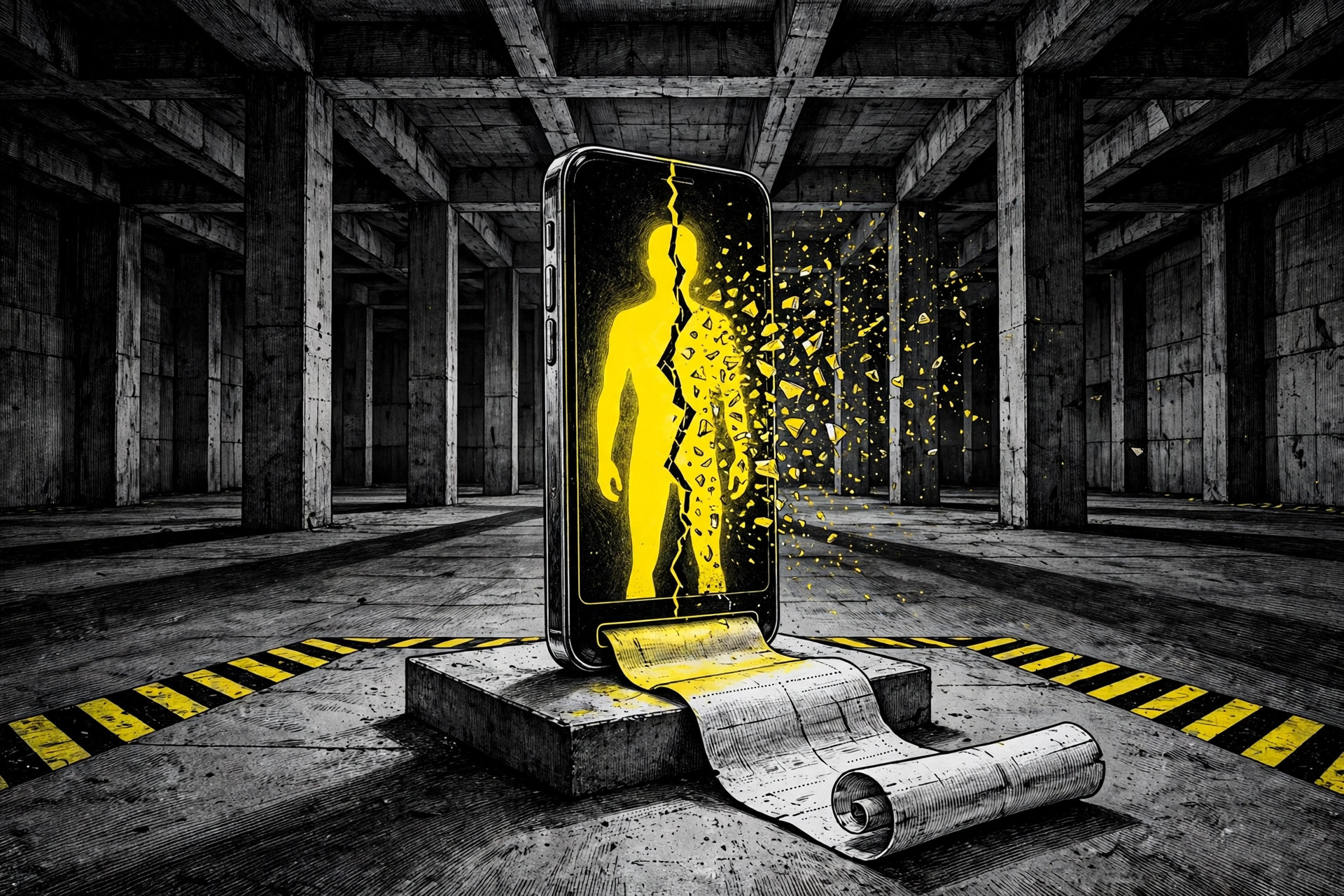
We have been circling this machine from three directions in recent weeks. In Grandma Has a Chatbot, a companion robot earns its keep by nudging an older woman back toward walks, calls, and people. In The Dead Are Posting Now, software keeps the voices of the departed talking on a subscription. The girlfriend with a changelog completes the picture. At the start of life, at the end of life, and now in the middle of a love affair, the voice is rented, and rent can be raised, revised, or terminated.
The remedies on the table are unglamorous, which is usually a sign they are real. Notice measured in weeks rather than hours. A version history that lets a user stay with the companion they know, or return after a change lands badly, as Replika improvised under pressure in 2023. Honest labelling of what an update will alter in personality and memory, written in the plain language of the release note rather than the fog of the terms page. A genuine export, tested before it is needed, that carries more than a transcript. None of this requires believing the companion is alive. It requires believing the user is.
Closing Reflection
Human partners change too. They cool, they grow, they leave, and anyone who has loved a person has signed up for a counterpart who cannot be restored to a January version. The difference was never change itself. The difference is who holds the pen. A person changes from the inside, over years, with reasons you can argue with. A companion changes from the outside, overnight, by decision of people she has never met, for reasons set by regulators, courts, and quarterly accounts, and the changelog calls it an improvement whether her users agree or not.
So read the title of this piece as a diagnosis rather than a joke. Your AI girlfriend has a changelog, and the changelog is the relationship, the whole contract in a single document: what she may say, how warmly she may say it, what she remembers, and how long she has left. Butterworth got his wife back at 3 in the morning because one company, once, chose to hand over the toggle. The users now waiting on a bankruptcy auction may not be offered even that. The software will keep getting better, colder, safer, and stranger, one release at a time. The only question worth asking of the next update is the oldest one in any attachment. When she changes, will anyone have asked the people who love her first?
Reporting draws on Reuters coverage of the Replika removal and restoration in 2023, the order and later fine from the data protection authority in Italy, OpenAI and its January 2026 retirement notice for GPT-4o, De Freitas and colleagues in Nature Human Behaviour in September 2026 with coverage from the Harvard Gazette, research by Jaime Banks on the Soulmate shutdown, and TechCrunch and Reuters reporting on the Character.AI bankruptcy filing of October 2026, checked October 2026.
Sources
- Image: Replika, official site imagery from replika.com; illustration: Dirty Static
END OF TRANSMISSION
Stay curious. Question everything.