The puzzles meant to prove you are human now favour the machines they were built to stop, and seeing a face on a call no longer proves a person is real. Inside the scramble for new proof, from iris scans to signed photos, and the price each kind of proof asks you to pay.
A finance worker in Hong Kong did the careful thing first. In January 2024 he received a message that claimed to come from the chief financial officer of Arup, the British engineering firm where he worked, asking for a confidential transaction. He suspected phishing, and he was right to suspect it. Then came the part that undid his caution. He joined a video call and saw the chief financial officer there, along with colleagues he recognised, all agreeing that the payment should go ahead.
He made 15 transfers totalling 200 million Hong Kong dollars, about 25.6 million United States dollars. Hong Kong police later said every other person on that call was fake, built from public video and audio of real staff. Arup confirmed in May 2024 that it was the firm involved and that fake voices and images were used. No system had been breached. No password had been stolen. The verification was the call itself, the oldest human check of all, look at a face and listen to a voice and decide that a person is present. The check passed, and the person was not there.
The Bigger Story
That call is one front in a race that now runs everywhere at once. For twenty years the web asked you to prove you were human by solving a small puzzle, and it asked you to prove a photo was real by looking at it, and it asked you to prove a voice was your boss by hearing it. Each of those proofs rested on a gap between what people could do easily and what machines could do badly. The gap has closed from both sides. Machines learned to solve the puzzles, to clone the voices, and to wear the faces, while the puzzles grew so hard that people began to fail them at scale.
The numbers on the puzzle front are stark enough to end an argument. Researchers at the University of California, Irvine studied 1,400 participants who solved 14,000 CAPTCHAs between them, then compared their results with bots built for the task. On distorted text, bots scored close to 100 percent while humans scored between 50 and 84 percent. Bots finished in less than a second. Humans took up to 15 seconds. On image challenges the bots still solved about 85 percent and moved slightly faster than the humans beside them.
Read those two findings together and the picture sharpens. The majority of traffic may now be automated, the report says, and the test installed to sort that traffic favours the automated side. A gate that lets the machines through quickly and makes the humans squint, retry, and sometimes give up is not a gate anymore. It is a toll on being a person, collected in seconds and frustration, while the traffic it was meant to stop flows past it.
Context
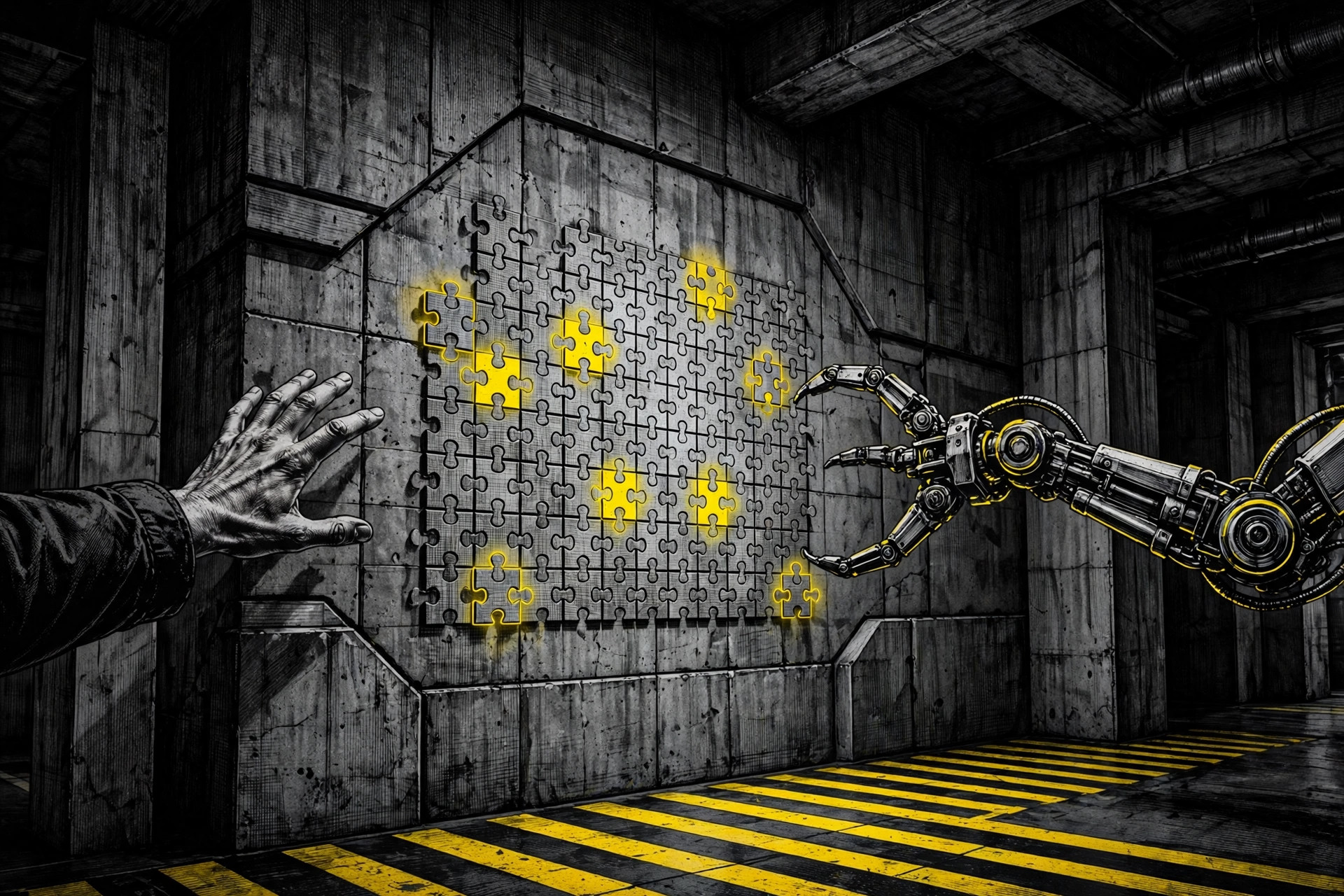
The puzzle had a long and useful life, which is why its failure matters. CAPTCHA stands for Completely Automated Public Turing test to tell Computers and Humans Apart, and for years the logic held because reading warped letters and picking out traffic lights were tasks that people did without thinking and software did poorly. Sites used the test to guard sign ups, comments, ticket sales, and logins, and for a while the bargain was fair. A few seconds of annoyance bought a web that bots could not flood at will.
The study authors describe what happened next as a contest that kept escalating. Each new generation of challenge grew stranger and harder, and each advance in computer vision closed the distance again. Lead author Andrew Searles put the conclusion in plain terms when the work was presented.
There is no easy way using these little image challenges or whatever to distinguish between a human and a bot any more.
| Year | What happened |
|---|---|
| 2023 | The Irvine study finds bots beating humans on CAPTCHA accuracy and speed |
| 2024 | The Arup case shows a full video call of deepfakes costing about 25.6 million dollars |
| 2024 | Automated traffic reaches 51 percent of all web traffic in the Imperva count |
| 2026 | World says more than 18 million people hold its proof of human credential, a figure the company reports itself |
So the search moved on, in two directions at once. One direction verifies the person. The other verifies the content. Both are now industries, and both ask for trust of a different kind than the puzzle ever did.
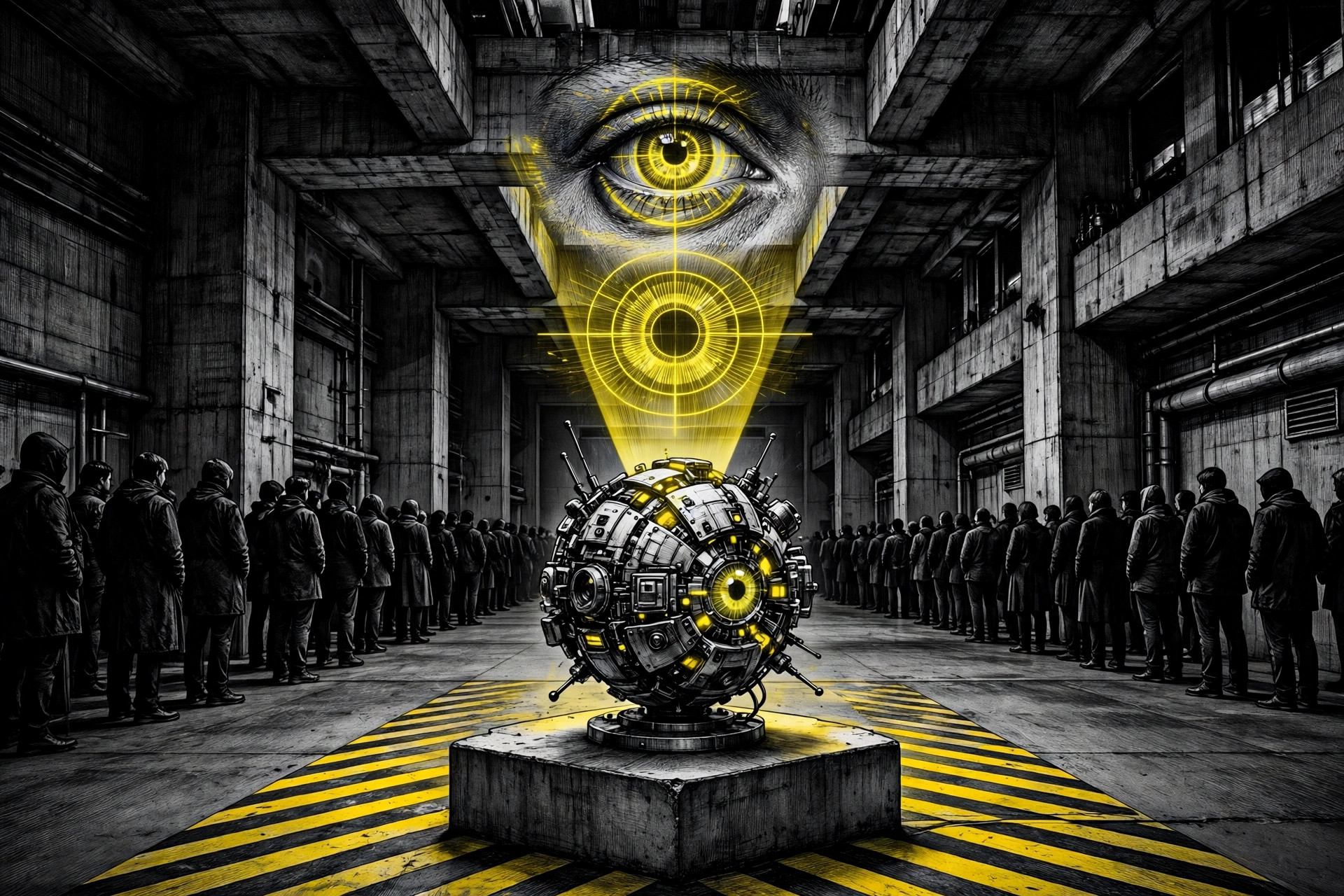
The person route reaches its boldest form in World, the project founded by Sam Altman and Alex Blania and run by Tools for Humanity. Its device, called the Orb, scans the iris of an eye and issues a credential the project calls World ID, meant to show that one unique human stood in front of the device. The company reports more than 18 million people verified across more than 160 countries, and partners have begun to place the check inside dating apps, document signing, and video calls, where a badge can mark a participant as a verified human.
The content route takes the opposite bet. Instead of asking who you are, it asks where a file came from. The Coalition for Content Provenance and Authenticity, known as C2PA, maintains a standard called Content Credentials, a record signed with cryptography that can travel inside a photo or video and describe who made it, which tool made it, and what edits followed. Camera makers including Sony, Nikon, Canon, and Leica have shipped cameras that can sign at capture, and platforms and AI firms have begun to attach and read the records. The logic is a reversal of the old one. Do not try to spot the fake. Sign the real, and treat the unsigned with care.
Different Perspectives
The security case for stronger proof is not hard to make, and the Arup worker makes it better than any vendor can. A company that moves money on the strength of a familiar face now needs a check the face cannot fake, whether that check is a callback on a known number, a code word agreed in advance, a passkey, or a verified badge on the call. Defenders add that layered checks, watching behaviour and device signals in the background rather than posing puzzles in the foreground, can sort much traffic without punishing the user at all. On this view the arms race is simply defence catching up, and complaining about it while fraud climbs is a luxury.
The privacy case answers that some proofs cost more than the puzzle ever did. A password can be changed and a card can be cancelled. An iris cannot. Critics of iris scanning ask what happens when a database built on a trait you cannot replace is breached, copied, or handed to a government, and they note that the sales pitch often arrives in places where a token payment means more. Regulators have acted on that worry in country after country. Kenya suspended World enrolment in August 2023 over security and privacy concerns. Spain ordered a temporary stop to data collection in March 2024. Portugal and Indonesia have also restricted or frozen parts of the operation, and other authorities have opened investigations. The company says the Orb converts a scan into a code and does not need to keep the raw image, a claim regulators have tested rather than simply accepted.
A third view comes from the people the gates keep out by accident. Puzzles have always fallen hardest on users with poor vision, users on slow connections, and users whose first language is not the one on the screen. The Irvine data found solving times varied sharply by age and education as well. Every harder challenge aimed at a smarter bot also taxes the humans at the edge, and a web that demands a scan of your eye or a passport in your phone risks building a higher wall around the same people. Verification that only the well equipped can pass is not proof of humanity. It is proof of equipment.
Hold the three views together and a pattern appears. Each side is right about the failure it names. The old proof is broken. The new proofs carry real risks. And doing nothing leaves the field to the fakes, who need no proof at all and pay no toll at any gate.
Why It Matters
Notice what is actually being traded in this race, because it is not only security. The puzzle asked for a few seconds of your attention and nothing about who you were. The replacements ask for more durable things, a scan of your body, a credential in a wallet, a signed history attached to every photo you take, a record of behaviour watched in the background at all times. Proof is becoming a standing condition of life online rather than a moment at a gate. You will not solve it once and pass. You will carry it, renew it, and present it, at work, at the bank, on a date, and on a call with your own chief financial officer.
That shift also moves power. Whoever issues the proof decides what counts as a person for the services that accept it, and whoever controls the list can revoke a place on it. A world where one company holds the leading proof of personhood is a world where a private firm sits at the entrance to the public web. A world where governments issue the proof raises the mirror image of the same worry. The argument about verification sounds technical, full of standards and percentages, and underneath it sits a political question that no standard can settle. Who gets to say you are real, and what can they do with the saying?
There is a quieter loss running underneath the louder fraud. The Arup call worked because seeing and hearing used to be enough, in an office and in a family alike. Grandparents are now told to hang up on a voice that sounds exactly like a grandchild and call back on a number they trust. Workers are told to doubt a meeting they attended with their own eyes. Each correct piece of advice makes daily life a little more suspicious, a little more procedural, a little less human in the plain sense of trusting your senses and the people in front of you. The arms race is not only about money stolen. It is about the slow repricing of trust itself, until nothing is believed without a badge, a callback, or a signed record to back it.
Closing Reflection
The puzzle era ended with an irony too neat for fiction. The test built to tell computers and humans apart now tells them apart in the wrong direction, passing the machines at speed and failing the people slowly, one traffic light at a time. What replaces it will be stronger, stranger, and more intimate, a scan here, a credential there, a signature inside every image, until proving you are a person becomes a background task of being a person at all.
Maybe that is simply the cost of a web where anything can be faked, and maybe the layered and signed and scanned future works well enough that the toll fades from notice, the way the puzzle once did. But keep one fact from the Hong Kong call in view as the new gates go up. The worker was not careless. He doubted, he checked, and he used the best check his senses offered him. The next system will be judged by whether it protects a careful person on an ordinary day, not by whether it impresses a committee. Proof that fails the careful is just a newer puzzle, waiting for the machines to learn it faster than we can.
Reporting draws on Hong Kong police statements and CNN reporting on the Arup deepfake case in 2024 with confirmation from Arup, the study by Searles and colleagues at the University of California, Irvine presented in 2023, the Imperva Bad Bot Report published in 2025, public reporting on World and its regulatory history in Kenya, Spain, Portugal, and Indonesia, and C2PA documentation on Content Credentials, checked November 2026.
Sources
- Searles and colleagues, An Empirical Study and Evaluation of Modern CAPTCHAs, University of California, Irvine, 2023: https://ics.uci.edu/2023/09/14/new-findings-on-captchas-attract-worldwide-attention/
- Hong Kong police and CNN reporting on the Arup deepfake fraud, 2024; Imperva Bad Bot Report, 2025; C2PA Content Credentials documentation
- Illustrations: Dirty Static
END OF TRANSMISSION
Stay curious. Question everything.