DeepSeek's Harness team has published dsh-superagent-prototype under the MIT licence, a research prototype for one GitHub repository, alongside a design essay about a more autonomous internal agent. This report separates what the public code does from what the essay describes.
DeepSeek wants a coding agent that does not wait for a prompt. On October 31 the DeepSeek Harness team published a prototype on GitHub and a design essay about the internal system behind it, and the two are not the same thing.
The public code is a starting point that any team can read, copy and adapt. The bolder claim in the headline, an agent that spots a bug and moves first, belongs mainly to the internal version the essay describes.
The Announcement
The repository is named deepseek-ai/dsh-superagent-prototype. GitHub lists it as public, created on October 31, 2026, with the MIT licence and a description that reads “Towards a More Autonomous Agent System”.
The README is blunt about status. It calls the code a “research prototype for reference only, not an official DeepSeek product” and warns that it is not production ready software, that it may still contain bugs, and that much of the engineering was done by coding agents.
It also says the published code was adapted for release. It is not identical to the internal version, and some designs in the essay are future directions that are not implemented in the prototype.
How the Public Prototype Works
The prototype is a proactive coding agent for one GitHub repository, packaged as a bundle for DeepSeek Harness. It listens to GitHub and, as an option, to Feishu, the chat service sold outside China as Lark.
When a person who is allowed to ask requests work, the agent opens a work item. It works on that item in its own agent session and its own directory, then answers in the original conversation, for example with a pull request.
The guiding principle in the README is attention. The agent should take as little human attention as possible and give as much value as possible, so it acts only when asked or when a rule the team wrote allows it, and it speaks only when a person must act or can use a result. A web panel shows what needs a person.
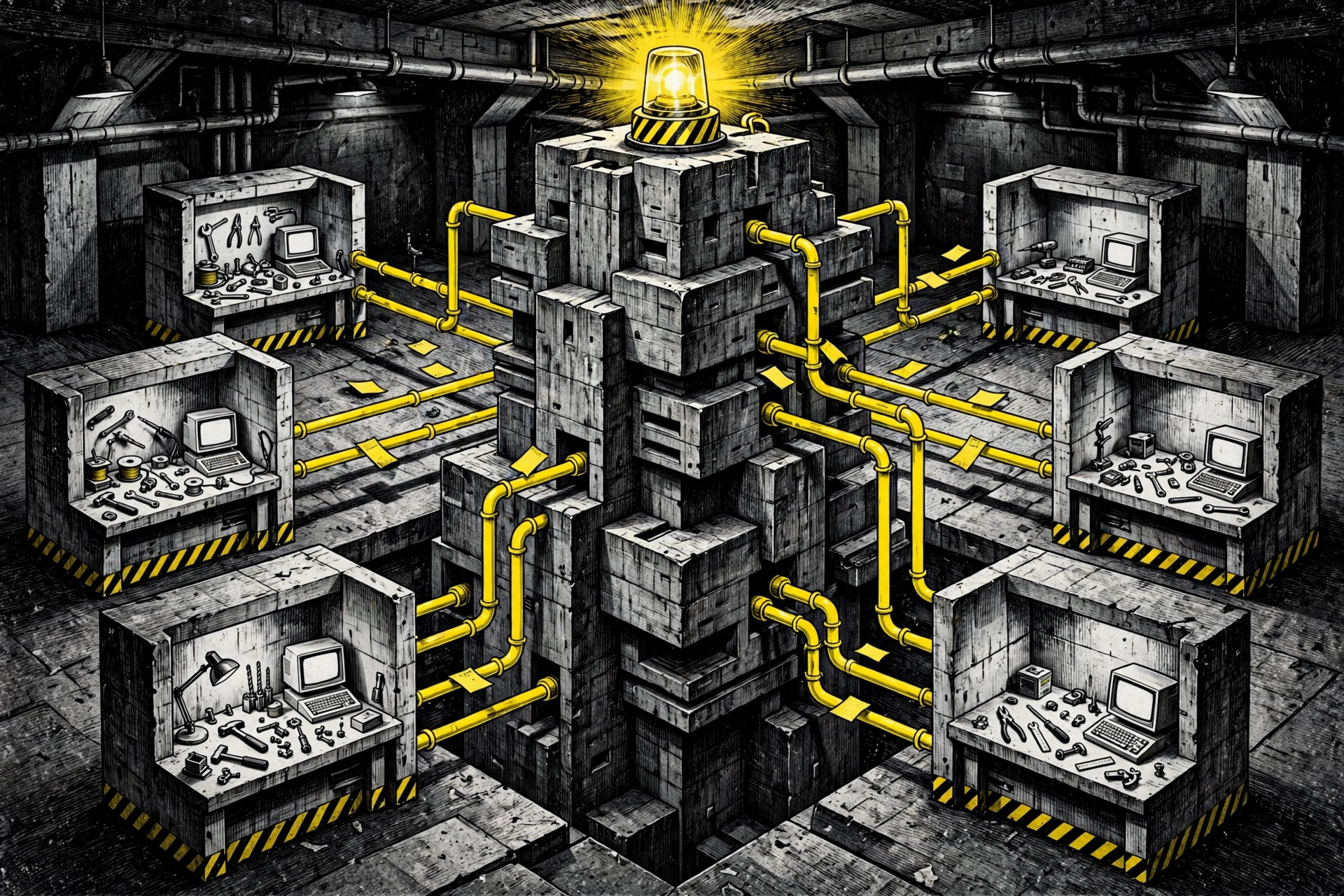
Coverage of the design describes a resident Router that assigns work and Worker sessions that carry it out. A Worker can receive later events from the threads it handles, so a review comment on its pull request can reach the session already working on that job.
Where the Bug Claim Comes From
The essay is titled “Exploring Super-agent Design: Towards a More Autonomous Agent System”. Coverage of the essay reports that DeepSeek runs its own Super agent internally, where it reproduces bug reports, responds to code reviews and helps build DeepSeek Harness itself.
Pandaily coverage reported by AI Affairs adds the detail behind the headline. Among the team’s own users, the agent quietly tries to reproduce bug reports and only speaks up upon finding a simple fix, sometimes opening a pull request before anyone tags it.
That behaviour is reported from the internal system and the design essay. The public prototype is narrower, and readers should not assume every step of that story ships in the released code.
The essay also argues that attention is the real bottleneck. Reporting on it notes that a person can usually track only three to five active agent sessions at once, so parallel work is capped by people rather than by models.
Important Details
| Item | Detail |
|---|---|
| Repository | deepseek-ai/dsh-superagent-prototype on GitHub |
| Released | October 31, 2026 |
| Licence | MIT |
| Status | Research prototype for reference only, not an official DeepSeek product |
| Scope | One GitHub repository per deployment |
| Built on | DeepSeek Harness, as a bundle |
| Inputs | GitHub, plus Feishu as an option |
| Output | An answer in the original conversation, for example a pull request |
| Requirements from the deployment guide | Node.js 22.19 or later, pnpm, git 2.32 or later, Python 3.8 or later, tmux, GitHub CLI 2.48 or later |
| Accounts needed | A dedicated DeepSeek Harness profile and a GitHub account reserved for the agent |
| Repository host | github.com only; GitHub Enterprise Server is not supported |
The team also reported early tests on synthetic work. AI Affairs reported about 300 messages and roughly 20 work requests, with half of the tasks completed within 12.4 minutes and 95 percent within 15.7 minutes, against a single session comparison that finished later but used fewer cached tokens. The team called those results a preliminary reference, and they are team reported figures, not independent benchmarks.
The Catch
The deployment guide is direct about access. Both agent presets run with danger-full-access as the operator’s operating system user, and a Worker can execute programs by path and read the operator’s home directory.
The guide’s answer is isolation. It advises a dedicated operating system account that holds only the agent’s credentials, and the setup also calls for a GitHub account used only by the agent.
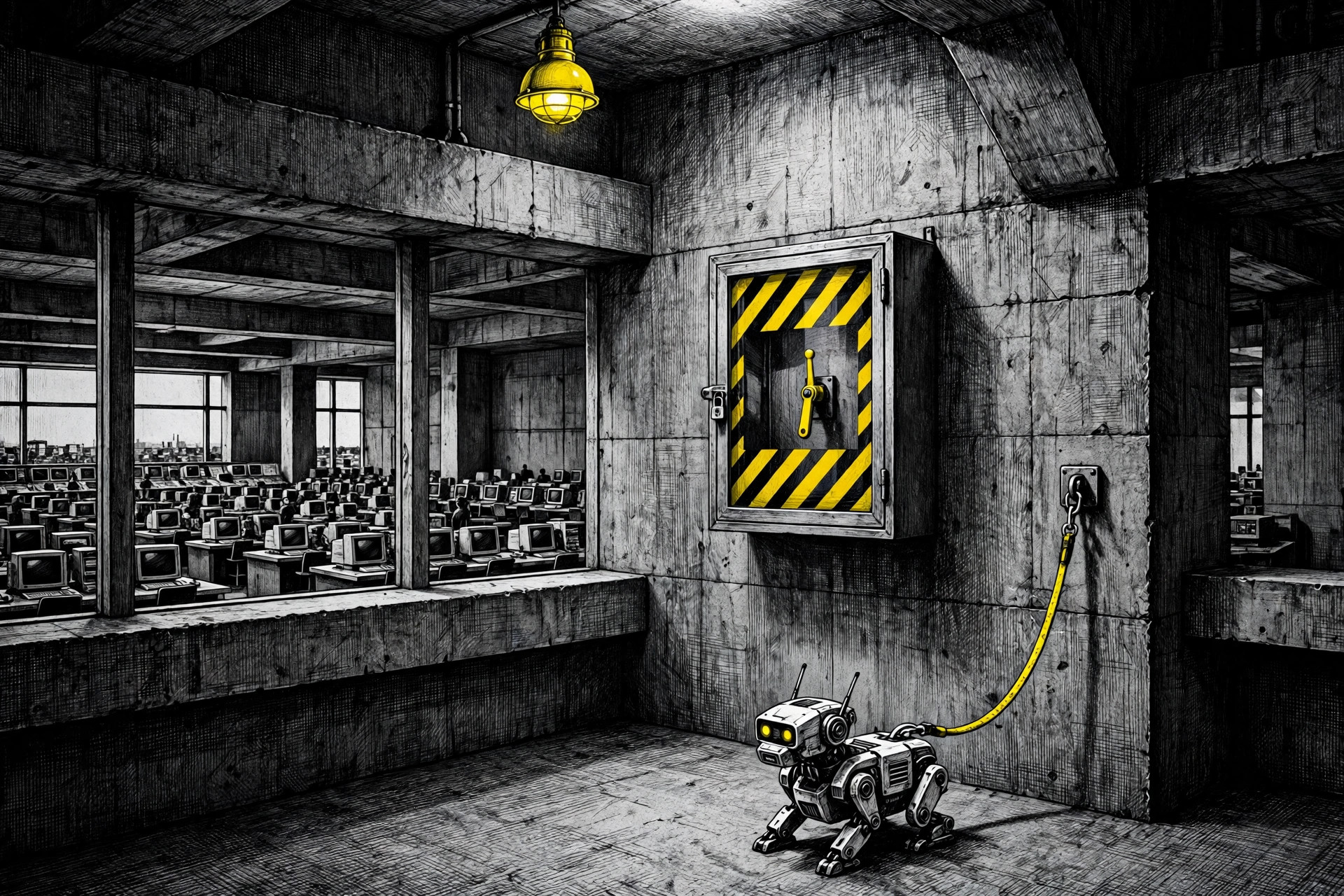
Coverage also lists open problems the team names itself. They include Router scaling, long term memory, communication between agents, and prompt injection risk when an agent can reach credentials on local devices.
What’s Next
Confirmed next steps are limited to what the code invites. The repository ships numbered documents on philosophy, the domain model, authorization, execution, prompts, the panel, deployment and architecture, plus a cookbook for adding a Source, so the clear intent is for other teams to build on the pattern.
What remains unconfirmed is product shape. No official product, pricing or release plan is attached to this prototype, and the README says some essay designs are not implemented yet. Any claim that the internal system will ship as a product is speculation at this point.
The value of the release is the blueprint and the working code together, both under the MIT licence. Teams can study how routing, permission lists and separate Worker sessions fit together without buying a closed tool, as long as they read the warnings with the same care as the pitch.
Sources
- DeepSeek: dsh-superagent-prototype on GitHub (README, licence and repository details)
- DeepSeek: dsh-superagent deployment guide (requirements, accounts and access warnings)
- AI Affairs: DeepSeek Harness team releases coding agent prototype for GitHub
- Madrobot: DeepSeek Super-agent: free coding agent that fixes bugs unasked
- Body images: Dirty Static house style illustrations
END OF TRANSMISSION
Stay curious. Question everything.