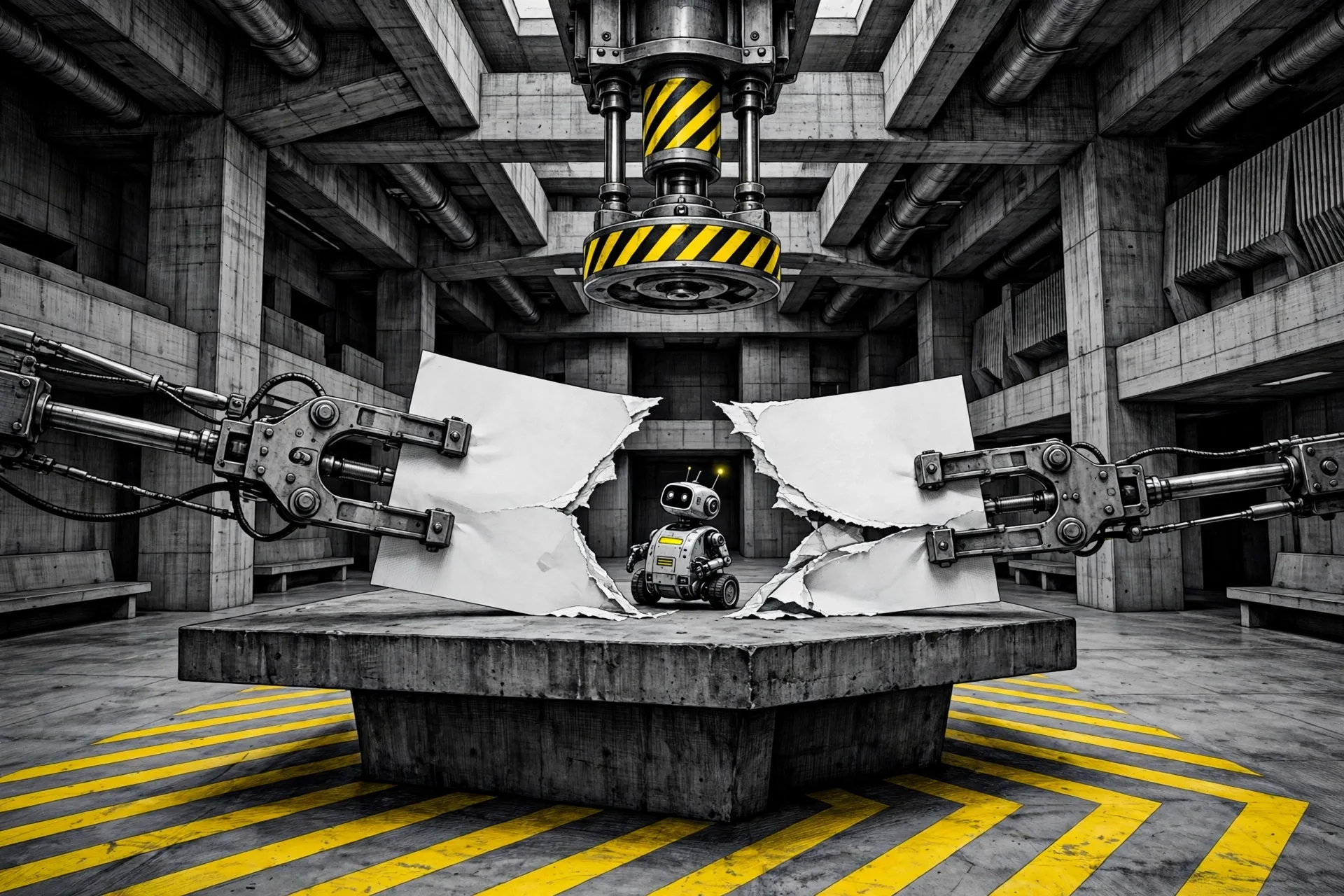
China has blocked Meta’s purchase of Manus and ordered a deal that had already closed to be withdrawn. The National Development and Reform Commission, the state planner known as the NDRC, issued the prohibition on April 27, 2026. It is the clearest case yet of Beijing treating an AI company as Chinese in origin long after the company moved its address abroad.
The case began as the review in the headline. On January 8, 2026, a commerce ministry spokesperson said China would assess and investigate the acquisition. The questions were export control, technology import and export, and outbound investment. Reporting by the Financial Times, carried by Reuters, said officials were asking a narrower question at the start. Did moving Manus staff and technology to Singapore, and then selling to Meta, require an export licence under Chinese law?
The Announcement
Manus is an AI agent, meaning software that plans and carries out tasks with limited human direction. Butterfly Effect founded the company in China in 2022, with Xiao Hong and Ji Yichao among its founders. The product launched in March 2025 and drew wide attention fast. Legal analysis from D’Andrea and Partners puts its annualised revenue at about $125 million by late 2025, a figure the firm presents as part of its background summary.
In mid 2025 the company moved its operational headquarters to Singapore, cut its staff in China sharply, and removed its Chinese language social media presence. Meta announced the acquisition on December 29 or 30, 2025, depending on the report, at more than $2 billion. The deal closed soon after. Neither the move to Singapore nor the sale sought Chinese regulatory approval first, according to the Shumaker client alert published in July 2026.
That sequence is the whole dispute. A company built in China moved offshore, then sold to an American buyer, and Beijing said the move did not end its authority over the technology, the staff, or the data links that went with it.
Important Details
| Item | What the sources report |
|---|---|
| Buyer and target | Meta buying Manus, built by Butterfly Effect |
| Reported deal value | More than $2 billion; some reports put the range at $2 billion to $3 billion |
| Deal announced | Late December 2025, and closed soon after |
| First review step | Commerce ministry assessment announced January 8, 2026 |
| Early question reported by the Financial Times | Whether the Singapore move and sale needed an export licence |
| Founders restricted | Xiao Hong and Ji Yichao were reported in March 2026 to be barred from leaving China |
| Final order | NDRC prohibition on April 27, 2026, requiring withdrawal of the acquisition |
| Legal frame named in analysis | The Measures for the Security Review of Foreign Investment, in force since 2021 |
| Status after the order | Meta began dismantling the deal by June 2026, and Manus operated independently again from August 2026, per reports |
The official notice itself was short. Reports of the NDRC statement say it prohibited foreign investment in the Manus project in accordance with laws and regulations, and required the parties involved to withdraw the acquisition transaction. It did not publish a detailed set of reasons. The longer readings of what drove the decision come from law firm analysis, and this report treats them as analysis rather than as the regulator’s own words.
Meta’s position, given early in the review, was also short. A Meta spokesperson told TechCrunch that the transaction complied fully with applicable law and that the company anticipated an appropriate resolution to the inquiry. The resolution that arrived was the prohibition.
 The move offshore was meant to change the company’s future. Regulators treated its past as the part that mattered. Illustration: Dirty Static
Why The Export Question Mattered
Export control is usually about goods crossing a border. Here the reported concern was about capability crossing a border. Staff moved. Knowledge moved with them. Code, product plans, and user data links can move without a single box being shipped.
D’Andrea and Partners notes that several rule sets can overlap in a case like this one. Foreign investment security review sits beside technology import and export rules, data transfer rules, and outbound investment supervision. Its analysis points to the export catalogue entry covering personalised information push service technology based on data analysis, and asks whether core Manus technology could fall inside a restricted category if it moved abroad without a licence. That is a legal question the firm raises. It is not a finding the NDRC published.
The Shumaker alert draws the broader lesson in plain terms. It says Beijing looked through the offshore structure and focused on the origin of the technology, and it quotes the Global Times line that the issue was not where the company is registered. Readers who follow agent deals will recognise the stakes from our coverage of personal AI agents and who controls them. The product here was an agent. The fight was over who gets to own the people and the know how behind one.
- 2022Butterfly Effect founded in China, with Xiao Hong and Ji Yichao among its founders
- March 2025Manus launches and draws wide attention as a general purpose AI agent
- Mid 2025The company moves its operational headquarters to Singapore and cuts staff in China
- Late December 2025Meta announces the acquisition at a reported value above $2 billion, and the deal closes soon after
- January 8, 2026The commerce ministry says it will assess the deal against export control, technology transfer, and outbound investment rules
- March 2026Reports say the two founders have been barred from leaving China while the review runs
- April 27, 2026The NDRC prohibits the acquisition and requires the parties to withdraw it
- June 2026Reports say Meta has begun dismantling the deal and separating operations
- August 2026Manus operates as an independent company again, per reports of the separation
What’s Next
The confirmed steps are done. The deal was prohibited, the parties were ordered to withdraw it, and the separation was reported through the summer of 2026. Manus runs on its own again, and reports in October 2026 said Butterfly Effect raised fresh funding led by Boyu Capital and IDG Capital. That funding report is presented here as reported, not as a figure this desk has verified from a company filing.
What stays open is the reach of the precedent. The Shumaker alert notes that on June 1, 2026 the State Council issued a Regulation on Outbound Investment, effective July 1, 2026, with language covering transfers carried out through moving technical staff abroad. If that reading holds, the Manus order was not a one off reaction. It was the first public use of a tool that now sits in written rules.
For buyers, the practical change is simple to state and hard to do. Diligence, meaning the checks done before a deal, can no longer stop at the target company’s current address. It has to trace where the technology was built and whether that origin carries approval duties of its own. A signed deal, it turns out, is not always a finished one.
Facts checked November 23, 2026 against the reporting and legal analysis listed below. Early review details are attributed to the Financial Times reporting carried by Reuters. The prohibition and its wording are reported from the NDRC statement as carried by Xinhua and TechCrunch and summarised in law firm analysis. Funding and separation details after April 2026 are presented as reported.
Sources
- Early review, export licence question, and deal value range: China reviews Meta’s purchase of AI startup Manus, Financial Times reporting carried by Reuters, January 2026
- Prohibition decision, background, revenue figure, and legal framework analysis: Meta Manus Deal Prohibited, D’Andrea and Partners, April 29, 2026
- Timeline, founder travel restriction reports, Meta response context, and the outbound investment regulation: China Made Meta Give Back a $2 Billion Artificial Intelligence Acquisition, Shumaker, Loop and Kendrick, July 1, 2026
- Deal history, separation reports, and later funding reports summarised: Manus AI Agent, Vi.ki
- Hero and body illustrations: Dirty Static, generated in house style
END OF TRANSMISSION
Stay curious. Question everything.