
Dirty Static // The Verdict
The strongest compact RTX Spark laptop for creators who will actually use local AI and CUDA, provided you skip the 24GB base model and pay for memory. Buy at 48GB or more, or do not buy it for AI at all.
Best forCreators and developers who want local AI, CUDA tools and a superb OLED screen in a 1.48 kg laptop they can carry every day
What works
- Up to 128GB of unified memory in a 14 inch laptop, with up to 96GB that can be given to the GPU for large local models
- Published native ARM tests put the GPU near an RTX 5070 Mobile in ray tracing benchmarks, and local image generation near a desktop RTX 5080 in one suite
- A 3K Tandem OLED touch screen with 120Hz, full DCI P3 cover and Delta E under 1, in a thin metal body with ports on both sides
- A 90Wh battery and quiet cooling in daily use, with about 8 hours of mixed work and more than 11 hours of video playback in published tests
What does not
- Price climbs brutally with memory: $2,599.99 at 24GB, $6,499 at 128GB in the US, and the base memory undercuts the whole local AI pitch
- Copilot+ features such as Recall and Click to Do were missing at launch in published reviews, despite the price and the AI branding
- Windows on ARM still means emulation for older software, and some creator tools and benchmarks did not run or ran slowly at launch
- Memory is soldered, storage tops out at 1TB from ASUS, and heavy AI or creative work cuts battery life to about 5 to 6 hours
Research review: based on published testing, specifications, and documentation, not hands on testing.
The ASUS ProArt P14 arrived on October 16, 2026 with a claim that sounds like a dare. A 14 inch laptop, 1.48 kilograms, thin enough to slip into a daily bag, built to run large AI models on its own GPU memory pool of up to 128GB. That pool is the product. Everything else about this machine, from its lovely OLED screen to its painful price ladder, hangs off whether you need that memory in a body this small.
Our wider RTX Spark laptops comparison covered the whole first wave and reached a clear split: nothing runs local AI faster in a laptop, and gaming is not the reason to buy one. This review narrows the lens to the P14 alone, the machine several launch reviewers singled out, and asks the narrower question a buyer faces. Is the compact ProArt the right way to buy into RTX Spark, and which version of it makes sense?
What It Is
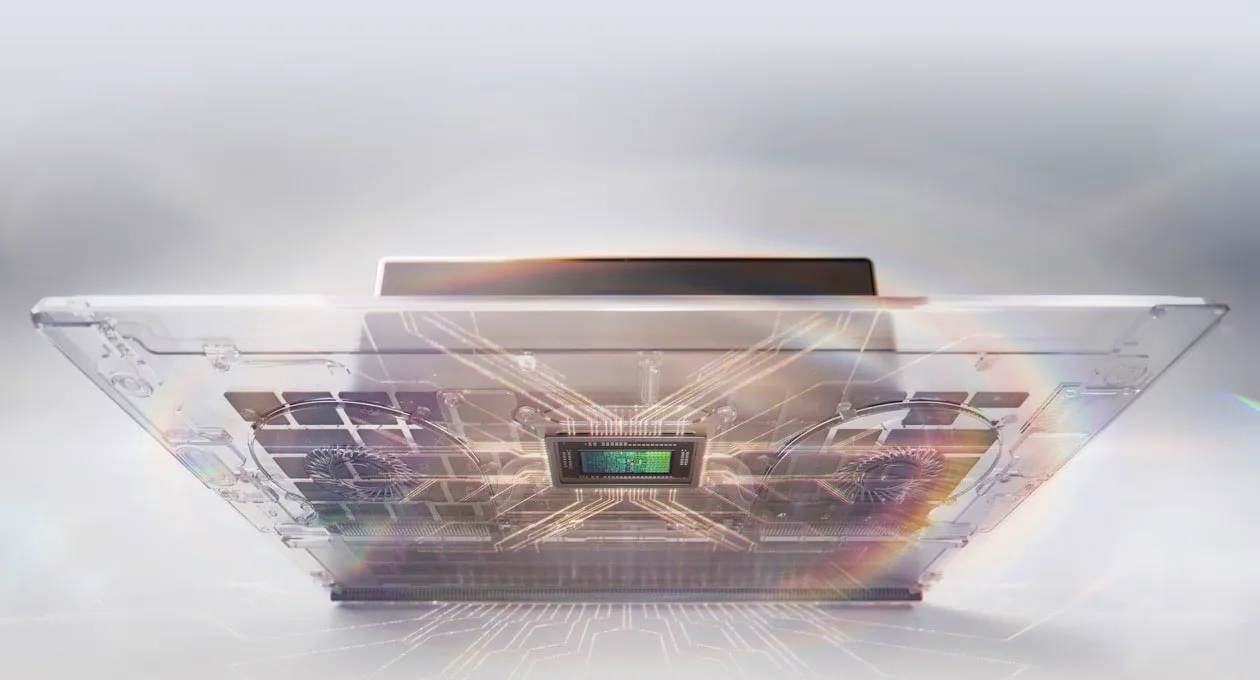
The ProArt P14, model H7407BA, is a creator laptop built on NVIDIA RTX Spark. That platform pairs an Arm based Grace CPU with a Blackwell RTX GPU on one chip, linked by NVLink C2C rather than a separate graphics card on a bus. It is NVIDIA first Windows PC chip in about 13 years, per Pocket lint, and the P14 is among the first laptops to ship with it.
ASUS sells the P14 in two chip tiers and four memory tiers in the US. The top tier has a 20 core CPU and a 6,144 core GPU. The lower tier has an 18 core CPU and a 5,120 core GPU. Memory runs from 24GB to 128GB, all of it one shared pool that the CPU and GPU draw from, and all of it soldered, so the tier you buy is the tier you keep.
That sharing is why the machine exists. A normal creator laptop gives its GPU 8GB or 12GB of its own memory, and a large model that needs more simply does not load. On the P14, Ultrabookreview notes that up to 96GB of the pool can be given to the GPU on the 128GB model. ASUS claims the top model supports language models up to 120 billion parameters with a context window of one million tokens. Those are company claims with conditions about model choice and quantization, and they only apply at the top of the range.

Features and Specifications
The screen is the part every reviewer praised without a caveat about tiers. The top panel is a Tandem OLED, which stacks two OLED layers to lift brightness and lifespan. ASUS lists it at 700 nits with a peak of 1,600 nits for HDR, 100 percent DCI P3 colour, Delta E under 1 and Pantone validation. A lesser OLED panel at 500 nits and 1,100 nits peak ships on some versions, so check the exact panel on the exact model before paying.
Specifications
- Maker
- ASUS, model H7407BA
- Chip
- NVIDIA RTX Spark N1X, 20 core Grace CPU and 6,144 core Blackwell GPU at the top, or 18 core CPU and 5,120 core GPU
- AI compute
- Up to 1 petaflop at FP4, per NVIDIA and ASUS
- Memory
- 24GB, 32GB, 48GB, 64GB or 128GB LPDDR5X unified, soldered
- Storage
- 512GB or 1TB M.2 NVMe PCIe 4.0 SSD, one slot
- Display
- 14 inch 3K 2880 by 1800 OLED touch, 120Hz, 100 percent DCI P3, Delta E under 1, stylus support
- Battery
- 90Wh, 140W USB C charger
- Ports
- Three USB4 Type C, one USB A 3.2 Gen 2, HDMI 2.1, audio jack, SD 4.0 card reader
- Wireless
- WiFi 7, Bluetooth 5.4
- Camera
- Full HD with infrared for Windows Hello, plus presence sensing
- Size and weight
- 31.07 by 21.89 by 1.39 to 1.59 cm, 1.48 kg
- Colours
- Nano Black, Neo White
The ports deserve credit. Three USB C ports split across both sides means charging never dictates your desk layout, and a full size SD card reader plus HDMI saves the dongle hunt that most thin laptops impose. CGMagazine and Pocket lint both called out the selection, and for a camera carrying creator it is a real daily advantage over rivals that went all in on USB C.
US price by memory tier (USD)
US prices checked November 10, 2026. Base and 32GB and 128GB from ASUS launch pricing as reported by Pocket lint, Ultrabookreview and CGMagazine; 48GB from the ASUS US shop listing. Retailers set final prices.
Real World Experience
This is a research review. Dirty Static has not tested the P14, and nothing below is presented as our own hands on work. The account draws on published testing by Ultrabookreview on the 128GB model, Pocket lint on the 20 core model, CGMagazine, and Creative Bloq on a 32GB model, all working on launch period software in mid October 2026. Facts were checked on November 10, 2026, and launch software findings may have moved since.
Start with the AI work, because the numbers are startling. In Ultrabookreview testing with ComfyUI, the P14 generated an image with the Flux.2 model in 17.29 seconds using NVFP4 precision. A laptop on AMD Ryzen AI Max+ 395, the closest Windows rival with a large shared memory pool, took 188.84 seconds on the same task in FP8. A full desktop with an RTX 5080 took 16.78 seconds. Read that again with the form factors in view: in this one generation task, a 1.48 kg laptop ran beside a desktop card and an order of magnitude ahead of its nearest integrated rival.
MLPerf Client image generation, Flux 2 Klein 4B (images per minute, higher is better)
Ultrabookreview testing, Performance mode, launch period drivers, checked November 10, 2026. The desktop system is a Ryzen 9 system with an RTX 5080 card.
General speed is strong but less dramatic. Pocket lint recorded Geekbench 7 scores of 2,689 in a single core test and 22,705 in the multi core test, with an OpenCL GPU score of 108,317. Ultrabookreview found the chip trading blows with rival high end laptop chips on CPU work, with the Qualcomm Snapdragon X2 Elite Extreme ahead on both single and multi core scores in Cinebench 2026. The honest summary is a fast CPU, not a record setting one. The GPU and the memory pool carry this machine.
Graphics split by how the software was built, and this split runs through every RTX Spark review we have covered, including our DGX Spark research review, where capacity and speed pulled in opposite directions. Ultrabookreview found native ARM tests such as 3DMark Speed Way at 2,892 and Port Royal at 8,752, about on par with a laptop RTX 5070 Mobile. Tests and games that run through x86 emulation landed lower, near an RTX 5060 laptop. In Cyberpunk 2077 at Ultra settings with ray tracing off, the same review measured 36 frames per second at 3K and 40 at 2.5K without frame generation. That is playable, respectable, and not a reason to buy this laptop.
Battery life depends entirely on the load. CGMagazine measured more than 11 hours of video playback, about 8 hours of writing, browsing and music in Whisper mode, about 5 to 6 hours under heavier browsing and creative apps, and a fast drain under demanding AI work. Creative Bloq reported a similar shape, about 8.5 hours of mixed work in Whisper mode. The 90Wh cell is large for this size of laptop, and light work rewards it. Push the chip and the reward ends early.
Heat and noise drew praise. Ultrabookreview called the thermals excellent, with quiet fans in daily use, about 48 dBA at head level in Performance mode under a game load, and under 35 dBA in Whisper mode while keeping about 75 to 80 percent of full performance. Pocket lint noted some coil whine at times under heavy load. For a creator recording voice work in the same room, the quiet modes matter as much as the peak scores.
What Works
The display and the build are easy wins. Reviewers across outlets praised the Tandem OLED for brightness and colour accuracy, the metal body for rigidity, the keyboard borrowed from the Zephyrus line for feel, and the large haptic touchpad. CGMagazine called the P14 the best all round RTX Spark laptop it had tested, and its summary praised the screen, the keyboard and the port selection in a body that matches a 14 inch MacBook Pro in footprint while sitting slightly slimmer.
The local AI case is real at the tiers that can hold the models. CUDA runs natively on RTX Spark, which no rival shared memory platform on Windows offers today. ASUS says more than 1,000 RTX accelerated apps are supported, including Adobe tools, Blender and ComfyUI. That is a vendor claim, but the published ComfyUI and Blender results above show the claim has substance in the apps creators actually name first.
Portability with this much memory is the quiet breakthrough. A 128GB memory pool used to mean a desktop or a server. Here it travels at 1.48 kg with a battery that can last a light working day. For a developer who demos local agents on client sites, or a video editor who generates and grades on location, that combination has no Windows rival at this size right now.
What Does Not
The price ladder is the first problem, and it is steep enough to change the verdict by tier. Ultrabookreview priced the 128GB review model at $6,499 and noted a 128GB MacBook Pro 14 with M5 Max at $6,699, a 128GB HP OmniBook X 14 from $5,199 and a Surface Laptop Ultra at $5,899. The P14 is not out of line with its own wave at the top, but the wave itself is expensive, and the P14 base model is the trap in the range. At 24GB it costs $2,599.99 and cannot do the large model work that justifies RTX Spark. Buyers paying for the badge at the base tier get a fine creator laptop and miss the point.
Software readiness is the second problem. Windows on ARM runs older x86 apps through the Prism translation layer, which Pocket lint found improved and largely painless for common apps. The edges still show. Creative Bloq reported that the Cinebench GPU test and several other benchmarks did not support the system during its testing, and that Topaz Video AI results trailed laptops with an RTX 5050. Ultrabookreview flagged widely scattered results in the SPECviewperf suite. None of this is unique to ASUS, and all of it can improve with drivers and native ports, but a pro buyer should check each must have app by name before spending.
Upgrade limits close the list. Memory is soldered with no path up, storage is one slot capped at 1TB in ASUS own range, and the supplied drive in the Ultrabookreview unit was a PCIe Gen 4 part that performed unevenly in its tests despite the slot supporting Gen 5 speeds. On a machine pitched for large models and large media, storage will feel tight first.
Competition
The choice is rarely P14 or nothing. It is P14 against its own sibling, against the rest of the Spark wave, and against Apple.
| Option | Starting price | What it offers instead |
|---|---|---|
| ASUS ProArt P16 | $2,799.99 | The same platform in a 16 inch body with a 4K OLED screen, a 99.9Wh battery and room for up to 2TB of storage, at 1.77 kg |
| Microsoft Surface Laptop Ultra | $2,599 | The reference Spark design with the widest port set in the wave; the 128GB model lists at $5,899, below the top P14 |
| HP OmniBook X 14 | $2,999 | Another compact Spark option; Ultrabookreview lists its 128GB model from $5,199, the lowest top tier price it recorded |
| Apple MacBook Pro 14, M5 Max | Not stated in sources used | The creator default outside Windows, with a 128GB model at $6,699 per Ultrabookreview; no CUDA, which ends the argument for CUDA bound AI work |
| AMD Ryzen AI Max+ laptops | Varies | A similar shared memory idea on x86 Windows with no emulation layer, and far slower AI generation in the published tests above |
For most Windows creators, the P16 is the P14 hardest rival because it solves the screen size and storage limits for $200 more at the base and gives up the carry anywhere size. If the laptop lives on one desk, buy the larger machine. If it lives in a bag, the P14 keeps its case.
Final Verdict
The ProArt P14 is the RTX Spark laptop we would point a travelling creator at first, with one condition stated plainly. Buy the memory. At 48GB and above, the published record supports the pitch: a superb screen, a quiet and rigid body, CUDA based local AI at a speed no rival integrated platform matched in launch testing, and a battery that lasts through light work days. At 24GB, the same laptop is an expensive OLED ultraportable whose headline feature you did not actually buy.
Wait if your key apps lack native ARM builds or if Copilot+ features matter to you today, because launch software is the weak layer and it is the layer most likely to improve. Buy now, at a high memory tier, if local models and CUDA tools are your daily work and your current laptop cannot load them. That buyer exists, and for that buyer this small machine does a job nothing else in its bag size class can do yet.
Sources
Facts checked November 10, 2026.
- ASUS, ProArt P14 (H7407) official product page and technical specifications, for chip tiers, display panels, memory and storage options, ports, battery, size and weight, and the 120 billion parameter and one million token context claims, which are ASUS claims. Product images credited to ASUS in the captions above.
- ASUS US shop, ProArt P14 48GB listing, for the $3,699.99 price of that tier.
- Ultrabookreview, Asus ProArt P14 review, for the 128GB price of $6,499, the 32GB price of $3,099, benchmark suites including ComfyUI, MLPerf Client, 3DMark and Cinebench, GPU memory allocation up to 96GB, thermal and noise readings, and rival 128GB prices.
- Pocket lint, The Asus ProArt P14 is ready for tomorrow’s local AI era, for the $2,600 rounded starting price, Geekbench 7 and OpenCL scores, the missing Copilot+ features at launch, and the Prism emulation account.
- CGMagazine, ASUS ProArt P14 Laptop Review, for its best all round assessment among Spark laptops it tested, its Cyberpunk 2077 results with DLSS, and its battery life account across light and heavy work.
- Creative Bloq testing as summarised in published RTX Spark coverage, for the 32GB model battery account and the launch period app and benchmark support gaps in Topaz Video AI and Cinebench.
- Dirty Static, RTX Spark Laptops Compared, for the first wave lineup, launch date and starting prices across the six makers.
END OF TRANSMISSION
Stay curious. Question everything.