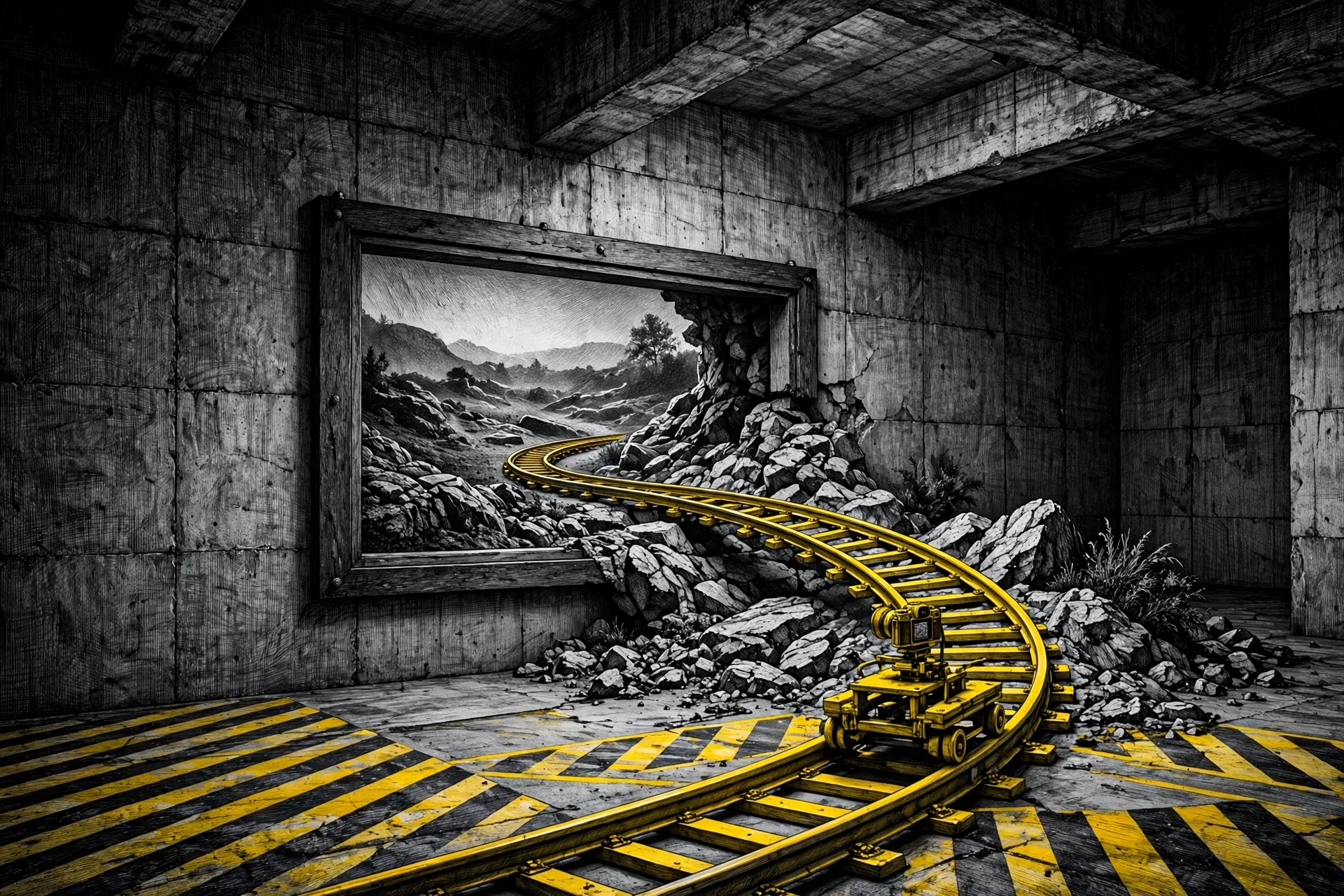
A photograph locks one decision forever. The camera stood in one place, and every other place it could have stood is gone. You can crop the frame, stretch it, or paint past its edges, but you cannot move two steps to the left and shoot the scene again. Adobe is testing a tool that claims you can.
Project Sight Span was one of ten research projects shown at Adobe MAX Sneaks on November 11, 2026. It takes a single image and builds a navigable environment around it. You step inside, move the viewpoint, and compose shots beyond the original frame, including a look back at what stood behind the camera. Adobe describes it in one plain sentence: a single image can be the beginning of an entire world.
Adobe Project Sight Span
Official siteAn experimental tool from Adobe Labs that rebuilds a single image as a space. Primary use case: exploring new camera angles after a shoot has ended, for stills and for camera controlled video, on photos, paintings, and illustrations alike.
Key features: navigation inside a scene built from one image; new viewpoints composed beyond the original frame, including views from behind the original camera position; objects and backgrounds generated to fill what the frame never showed; the style of the source image carried into the new views; a final render step that restores detail once an angle is chosen.
How it works
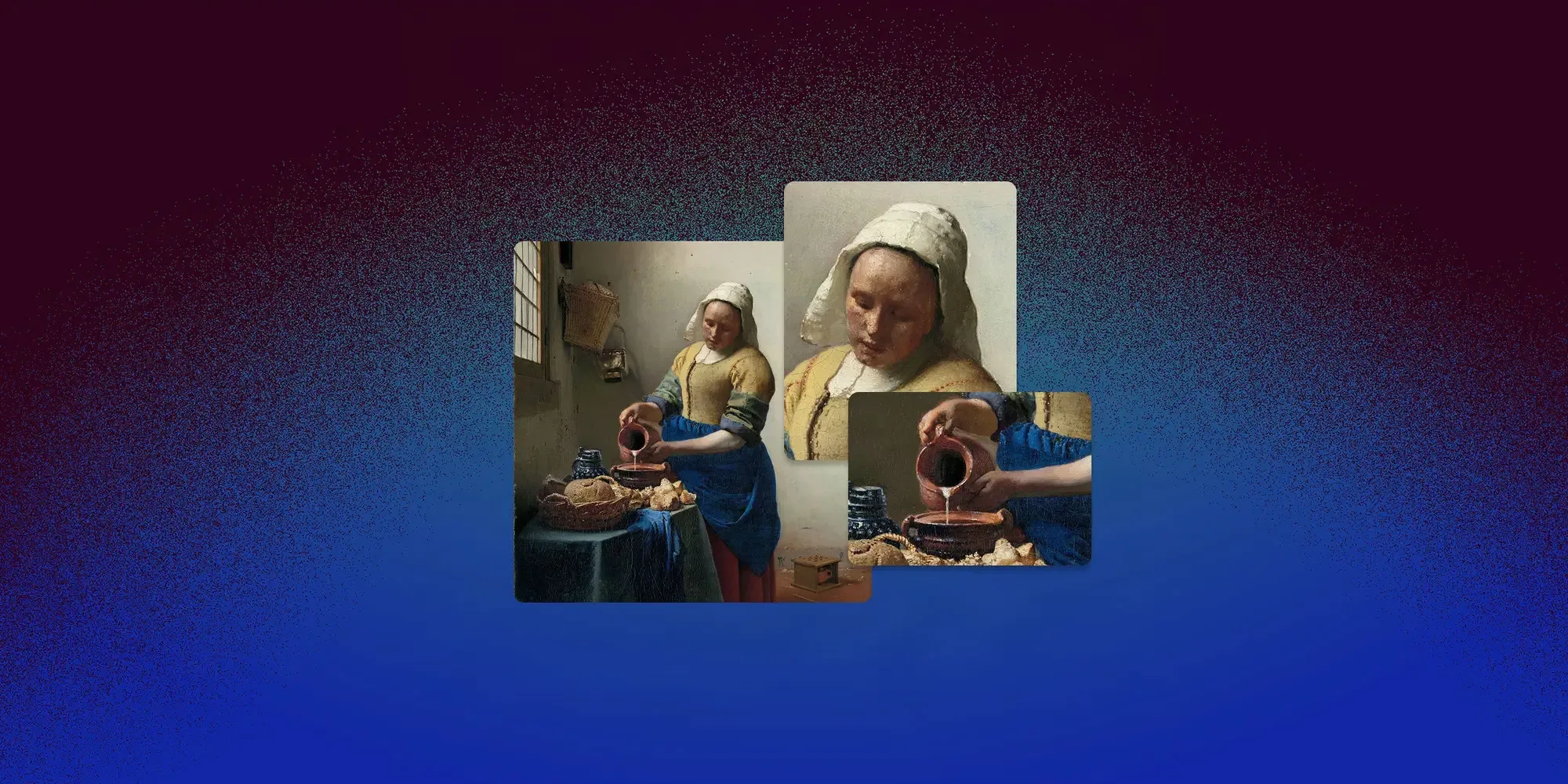
Reporting from DPReview, which attended MAX, lays out a two step build. Sight Span first creates a lightweight 3D scene that you can move through while you hunt for a composition. Once you settle on a viewpoint, a separate image generation step renders that view in full.
That split explains the flaw every account of the demo mentions. While you navigate, the scene looks rough, pixelated and ill defined in The Verge account of the demonstration. The detail arrives only after you lock an angle and the render step runs. As a way to scout compositions that trade is sensible: a fast and ugly preview you can steer beats a slow and pretty one you cannot. As a way to judge final quality while you move, it tells you very little.
The deeper point sits under the workflow. The model must infer geometry and detail that the photograph never recorded. A view from behind the original camera is not hidden data waiting to be uncovered. It is a plausible invention, built to match the style and contents of the frame it came from.
What the demonstration showed
The reports agree on the range of inputs. Sight Span works on photographs, paintings, and illustrations, and it works to preserve and replicate the artistic style of the source. In The Verge demonstration, faces and tattoos stayed recognizable after the viewpoint moved, which matters for portraits: a new angle that scrambles the subject is a novelty, not a tool.
Adobe points to two uses of its own. A product photograph can be tried from alternative angles without a reshoot. A location can be scouted for possible views before anyone travels to it. Both uses share one condition: the user needs a convincing view, not a true record. A photographer teaching composition can also use an invented angle to show a class what a different camera position would have done, a use DPReview raises from the education side.
Adobe research scientist Gautham Mysore framed the wider Sneaks theme for The Verge as giving experienced creatives more precise control, and he pointed to camera positioning in Sight Span as one example. That framing is the strongest argument for the project. The control on offer is a camera move, a decision photographers already understand, rather than another text prompt asking a model to guess what you meant.
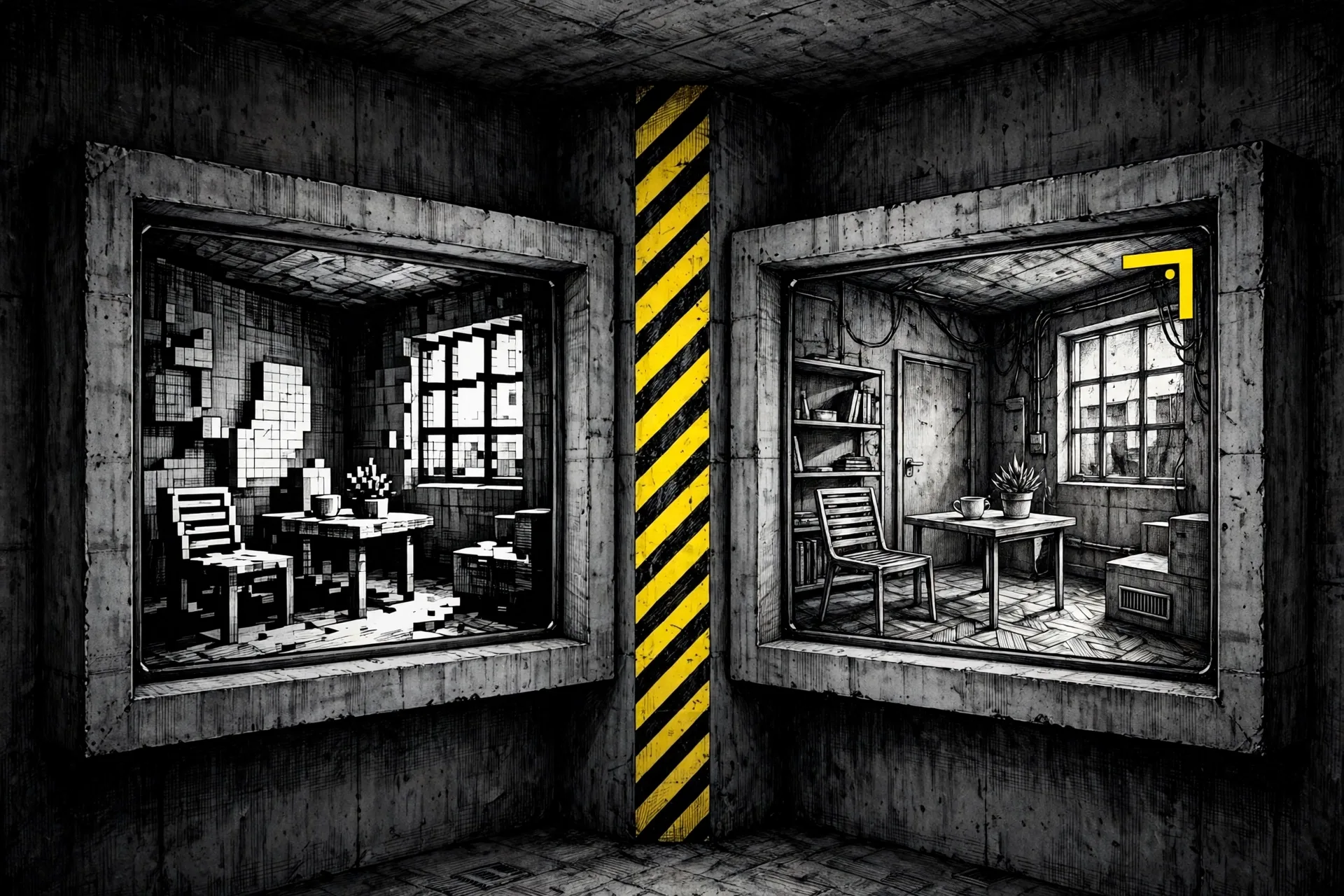 Rough while you move, sharp once you choose. House illustration of the preview and render split described in MAX reporting. Illustration: Dirty Static
Status and access
Sight Span at a glance
- Status
- Research preview, shown at Adobe MAX Sneaks on November 11, 2026
- Input
- One flat image: a photograph, a painting, or an illustration
- Output
- Rendered still images and camera controlled video from new viewpoints
- Access
- No public trial; not part of the Adobe Labs Playground previews
- Price
- None announced
- Release date
- None announced, and Adobe has not committed to shipping it
- Facts checked
- November 12, 2026
Context matters before anyone files this under vapor. Sneaks is a research showcase, but it is not a graveyard. DPReview notes that several projects from earlier Sneaks sessions later arrived as Photoshop features, and Adobe has for the first time put two of this year projects into public hands through the Labs Playground. Sight Span may follow that road into Photoshop or Firefly. It may also stay a stage demo. Adobe has given no basis for choosing between those futures, and this profile does not invent one.
Our own Arsenal has covered the other side of the Adobe question before: ArtCraft and the open source Adobe suite clones exist because creators want pro grade image tools without a landlord. Sight Span is the landlord working on a feature no clone can match this year, which is exactly why its terms, if it ever ships, will matter as much as its quality.
Who it is for
Best for, if it ships: photographers and art directors who need one more angle from a finished shoot, product teams testing compositions without booking a studio again, and location scouts who want a rough sense of a view before a trip. Painters and illustrators get the same offer in their own medium, since the tool carries style into the new views.
Everyone else should treat it as a signal, not a plan. A new viewpoint from Sight Span is generated content. It cannot serve as evidence of what a place looked like, it cannot extend a photojournalist record, and it cannot be scheduled into client work on the strength of a conference demo. If a project needs a real second angle this month, the only honest tool is still a camera, taken back to the scene.
What Works
- A camera move is a control creative people already understand, and it beats steering a model with prose
- Works across photos, paintings, and illustrations, and carries the source style into new views
- The scout then render split keeps navigation fast and saves detail for the chosen frame
- Adobe suggested uses are concrete: product angles and location scouting
What Does Not
- No product, no price, no release date, and no public trial to test any claim
- Navigation looks rough and pixelated until a view is locked and rendered
- Every view past the frame is invented, so results are interpretations, not records
- Adobe has not said which app it would join, or whether it ships at all
Final Thoughts
Sight Span asks a clean question: what if the frame was a starting point instead of a verdict. The idea is strong because the desire behind it is real. Every photographer has a shot that failed by two steps, and every art director has a product photo that needed one angle nobody captured.
The honest grade today is promising and unproven. The demo shows navigation, style retention, and recognizable subjects, and it also shows rough previews and a hard truth at the center of the tool: past the edge of the frame, Sight Span does not recover your scene. It writes a new one in your scene style. If Adobe ships it with that truth printed on the box, photographers will find real uses for it. If the marketing forgets the truth, the arguments will be loud, and they will be deserved.
This profile is a desk assessment built from Adobe own MAX Sneaks post and reporting from MAX by DPReview and The Verge. No hands on test is claimed. Prices, access, and plans above are the published ones as of November 12, 2026.
Sources
- The ten Sneaks projects, the Sight Span description, and the Labs Playground access list: Adobe MAX 2026 Sneaks, Adobe Blog
- The two step scene and render build, suggested uses, and the note that new angles are generated interpretations: Adobe showing off experimental features, DPReview
- Demo detail, style retention, recognizable faces and tattoos, the rough navigation look, and the Gautham Mysore control quote: Adobe previews four AI experiments for creative workflows, Unite.AI, reporting The Verge
- Body image: Adobe, via DPReview. House illustration: Dirty Static
END OF TRANSMISSION
Stay curious. Question everything.