On stage at the AI Engineer CODE Summit on November 12, Brandon Thomas gave AutoCraft the full pitch. “AutoCraft is a completely autonomous software factory that we’re going to open source,” he said, as reported by Latent Space. Then you open the repository, and the first line of the README calls it something much quieter: a model harness for maintaining GitHub repositories with a large backlog.
Both descriptions are in this story, and the distance between them is the interesting part. The factory is the pitch. The harness is what you actually install: a pipeline of model steps that reads everything in your issue tracker, does the sorting and much of the work, and stops to ask a person before it does almost anything that matters.
AutoCraft
Official siteA model pipeline for repositories whose backlogs have outgrown their maintainers. Primary use case: triaging, deduplicating, labelling, reviewing, fixing and merging GitHub issues and pull requests at a scale no human team can read line by line, while keeping a person in charge of every decision that writes to GitHub.
Key features: a full local mirror of every tracked repo in SQLite, refreshed every minute; thirteen pipeline stages from duplicate detection to a post merge review; a merge queue that lands pull requests in CI checked batches of up to 50; a per issue conversation between Opus and a maintainer, with action cards; and an MCP server that lets contributors work the decision inbox through their own agents.
Advantages: human approval gates every GitHub write, per repo, and every write lands in an audit table; untrusted code runs only in a separate build environment; and the license lets you pick MIT or Apache 2.0. Limitations: there are no published releases yet; setup is a real project involving Node 24, the Claude Code CLI, bubblewrap and a GitHub OAuth app; and every model call runs through Claude accounts, with Jev the only second source.
What it is
AutoCraft comes from the storytold team behind ArtCraft, the project rebuilding the Adobe suite as free apps, which we covered in ArtCraft Cloned the Adobe Suite for Free. Success created the problem this tool exists to solve. Thomas told the conference audience that about 4,000 developers are now contributing, more than 300 applications are in development, and the apps are being downloaded about 1.7 million times a day. Those are his numbers, delivered from a stage during a promotional talk, and they should be read as claims rather than audited figures. The strain behind them is easier to believe. “There’s not enough time in the world to deal with the amount of stuff that’s coming in,” he said, per heise’s report of the talk, calling his projects’ queues “the largest backlog in the world.”
His own summary of the growing pains was blunter. “We’ve run into a lot of gotchas — like permissions, GitHub, scaling, CI,” he said. “CI is falling over.” AutoCraft is the internal machinery ArtCraft built to survive that inflow, now published for anyone to run. It was written for the storytold craft apps, but it can track repositories owned by other GitHub organizations or users with a single command, autocraft repos track owner/name, and no source edits.
Thirteen stages, most of them with a brake
The pipeline runs in a fixed order, and the README’s own stage table is admirably plain about where the models work and where they wait.
It starts with housekeeping. Sync mirrors every issue, pull request and comment into the local database each minute, reads the CI state of each default branch every two minutes, and builds a vector of each item’s title and body so similar items can be found later. Duplicates compares open items against each other and against anything closed in the last year. Classify gives each open item one type label plus security and needs decision flags. Priority scores what is left from P0 to P4 and ranks the work for the stages that follow.
Then the judgement calls. Decide prepares every open question for an operator, with a summary, a recommended pick and drafted answers, and it is where ambiguous cases get kicked to a person. Label writes the settled labels to GitHub, and never changes a label a person set. Review sends Opus through every wanted pull request at its current head and produces a verdict with a complete fix list, writing nothing to GitHub until the final review is posted. Fix writes a patch where the fix is clear, tests it in a sandbox and opens a pull request. Fix-up applies the small fixes from a review to the contributor’s branch, or posts them as a comment when the branch cannot be pushed to.
The landing sequence is the most engineered part. Verify treats upstream CI as the verification for repos that have it; a repo without CI, or a bugfix that touches a test file, gets a model planned build in a separate build environment instead. Merge queue lands passing pull requests in integration batches of up to 50, checked by upstream CI on the batch itself, and before any pull request enters a batch, Opus reviews its head commit a second time, adversarially and independently of the first review. Act posts the comments and closes that follow an operator’s answers, from fixed templates. Finally, Post-merge review sends Opus over everything the pipeline merged, and each defect it finds that no open item covers becomes a new follow up issue.
The model casting is deliberate. TypeSafe’s Jev model goes first in Duplicates, Classify and Priority, with Haiku giving a second opinion and Sonnet or Opus refereeing disagreements; when Jev is unavailable or out of credit, Haiku covers its work. Opus handles reviews and the per item conversations. Sonnet does much of the fixing. It is a sensible division of labour: cheap models for volume, expensive ones for judgement.
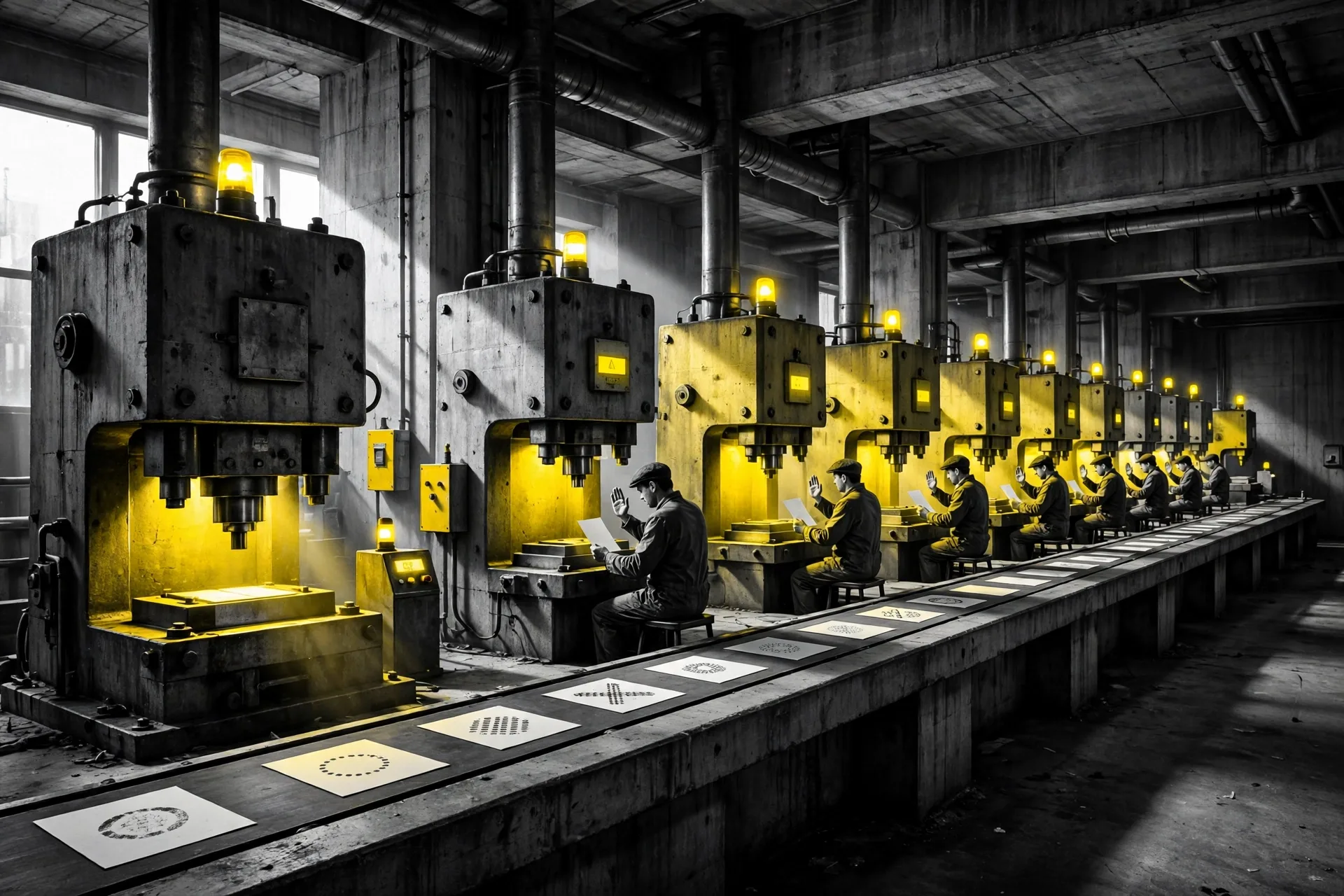
The humans are the point
Here is the sentence in the README that gives the whole design away: “The pipeline is built around maintainers’ judgement, which is the limited resource, not around token cost.” Nearly every stage in the table carries a stop for a person. Duplicate calls, scope disagreements, merge decisions outside the rules, verification failures: all of them wait. Every GitHub write needs an operator’s approval for that specific repo, approvals are granted on the dashboard and cannot be set from the command line, and each step has a daily limit on top of that.
Each issue and pull request also gets its own running conversation between Opus and a maintainer, with action cards the maintainer can run. Contributors are not locked out of the machinery either. They can connect their own agent to the dashboard’s MCP server with a personal token scoped to their role, operator, maintainer or viewer, and work the inbox from their own tools. What they send back arrives as feedback. An operator still answers, and decision answering through MCP is currently disabled entirely.
Set that beside Thomas’s advice to the same audience: for backend work, schema migrations and API design, “let your humans do that,” but for desktop apps, games and anything basically immutable, “throw your agents at it and give them full confidence.” He mentioned, almost in passing, that someone in the community has 40 machines rebuilding Unreal Engine in Rust unattended. AutoCraft is what that philosophy looks like when it grows up and has to be trusted with other people’s pull requests. The confidence is real, but it is fenced.
Built like it expects trouble
The trust boundaries read like they were written by someone who has already been burned, which, given the gotchas quote, they probably were.
Only one module, src/github/write.ts, may write to GitHub. Every write is recorded in an audit table, and a test fails if any other file writes. Model calls that use tools run inside a bubblewrap sandbox with read only access to checkouts of the tracked repos. Untrusted code runs only in a separate build environment, as a worker under another OS user with rootless Podman, never anywhere near the GitHub or Claude credentials. The dashboard requires GitHub sign in, splits people into operator, maintainer and viewer roles, and listens on 127.0.0.1:8993 by default, behind whatever proxy you put in front of it.
That is a serious amount of restraint for a tool whose pitch was autonomy, and it is the strongest argument for taking the project seriously. Anyone can wire a model to a GitHub token. Wiring it so the model physically cannot write outside one audited door is a different class of work.
What it takes to run
Requirements
- Runtime
- Node 24 or later, pnpm, TypeScript run directly
- GitHub access
- The gh CLI, signed in, with write access to approved repos
- Models
- The Claude Code CLI and Claude accounts you enable; TypeSafe Jev optional
- Sandbox
- bubblewrap; Podman plus a second OS user for build environments, optional
- Utilities
- git, sqlite3, curl
- Dashboard
- Listens on 127.0.0.1:8993 by default, GitHub OAuth sign in
- License
- Dual MIT or Apache 2.0, at your option; the ArtCraft brand mark is excluded
None of this is a weekend install for a small project, and it is not meant to be. You run the dashboard, the runner, the sync timer and the backups yourself; the repo ships systemd units and a Docker Compose layout for exactly that. Newly tracked repositories start with their pipeline switched off, and new Claude accounts start disabled, so the system does nothing at scale until a person has deliberately turned each piece on. As of November 19, 2026, the repository is public with about 1,534 commits and no published releases, which tells you both the pace and the maturity in one glance.
The defaults also confess the tool’s origins. A bare repo name still resolves to the storytold org, and the operating instructions are written around ArtCraft’s own repositories. Tracking outside repos works, but you are adopting a tool mid journey from internal system to public project. PhotoCraft itself makes the same point from the other side: Thomas says it has just passed 60 percent parity with Photoshop, while its GitHub page claims about 76 percent for feature breadth and about 46 percent for professional readiness. Impressive, openly scored, and unfinished.
What Works
- Mirrors the whole backlog into a local database you own, refreshed every minute
- Human approval gates every GitHub write, per repo, with every write in an audit table
- Only one module can write to GitHub, and a test fails if anything else tries
- Contributors can work the decision inbox through their own agents over MCP
- Dual licensed MIT or Apache 2.0, and it tracks repos outside the storytold org
What Does Not
- No published releases yet, and you operate the dashboard, runner, sync and backups yourself
- Setup is heavy: Node 24, the Claude Code CLI, bubblewrap and a GitHub OAuth app before the first decision
- Every model call runs through Claude accounts, with Jev the only second source
- Defaults and documentation are still written around ArtCraft's own repositories
Which should you choose
Choose AutoCraft if your backlog has become the bottleneck. If issues and pull requests arrive faster than maintainers can even sort them, the early stages alone, sync, duplicates, classify, priority, are worth the install. Sorting is the unglamorous half of maintenance, and it is the half humans are worst at sustaining.
Choose AutoCraft if you want agent labour with an audit trail. The single write module, the per repo approvals and the second adversarial review before a merge make this one of the few agentic maintenance setups you could defend to a security minded team. The brakes are the feature.
Look elsewhere if you want a hosted service. There is nothing to sign up for. AutoCraft is infrastructure you run, with accounts you size and limits you set, and no releases to pin a deployment to yet. A small repo with a quiet tracker will never repay that effort.
Look elsewhere if your team cannot build on Claude. The pipeline’s models, tooling and setup all assume Anthropic accounts. A shop committed to another vendor’s models is looking at a rewrite, not a configuration change.
Final thoughts
The gap between the talk and the README is the story here. On stage, AutoCraft was a completely autonomous software factory. In the repository, it is a careful piece of supervised automation that stops, asks, logs and sandboxes its way through a backlog, and treats maintainer attention as the scarcest thing in the building. The second version is less exciting and much more believable.
That restraint also makes AutoCraft the most revealing artefact of the whole ArtCraft experiment. The apps proved agents can write software at a scale nobody budgeted for. AutoCraft is the admission that writing it was the easy part. What breaks first is the human system around the code: the triage, the review queue, the CI, the permissions. Thomas built a factory for that problem too, and then, wisely, staffed it.
Sources
- Pipeline stages, models, trust boundaries, requirements, dashboard and license: storytold/autocraft on GitHub
- The talk, “Let’s Open Source the World,” AI Engineer CODE Summit, November 12, 2026: AI Engineer
- Talk report, Thomas quotations and PhotoCraft parity figures: Latent Space
- Backlog scale, the Adobe clones follow up and the Anthropic dependence remarks: heise online
- Background on the Crafting Apps suite: Dirty Static, “ArtCraft Cloned the Adobe Suite for Free,” linked in the article above
- Hero and pipeline illustrations: Dirty Static, generated in house style
END OF TRANSMISSION
Stay curious. Question everything.